

The textile industry is facing a fundamental change. Rising demand for natural fibres is coming up against limited resources, while synthetic materials are coming under increasing criticism. A research team at The Hochschule Niederrhein is working on a possible alternative and has now received one of the most prestigious grants for spin-offs from science.
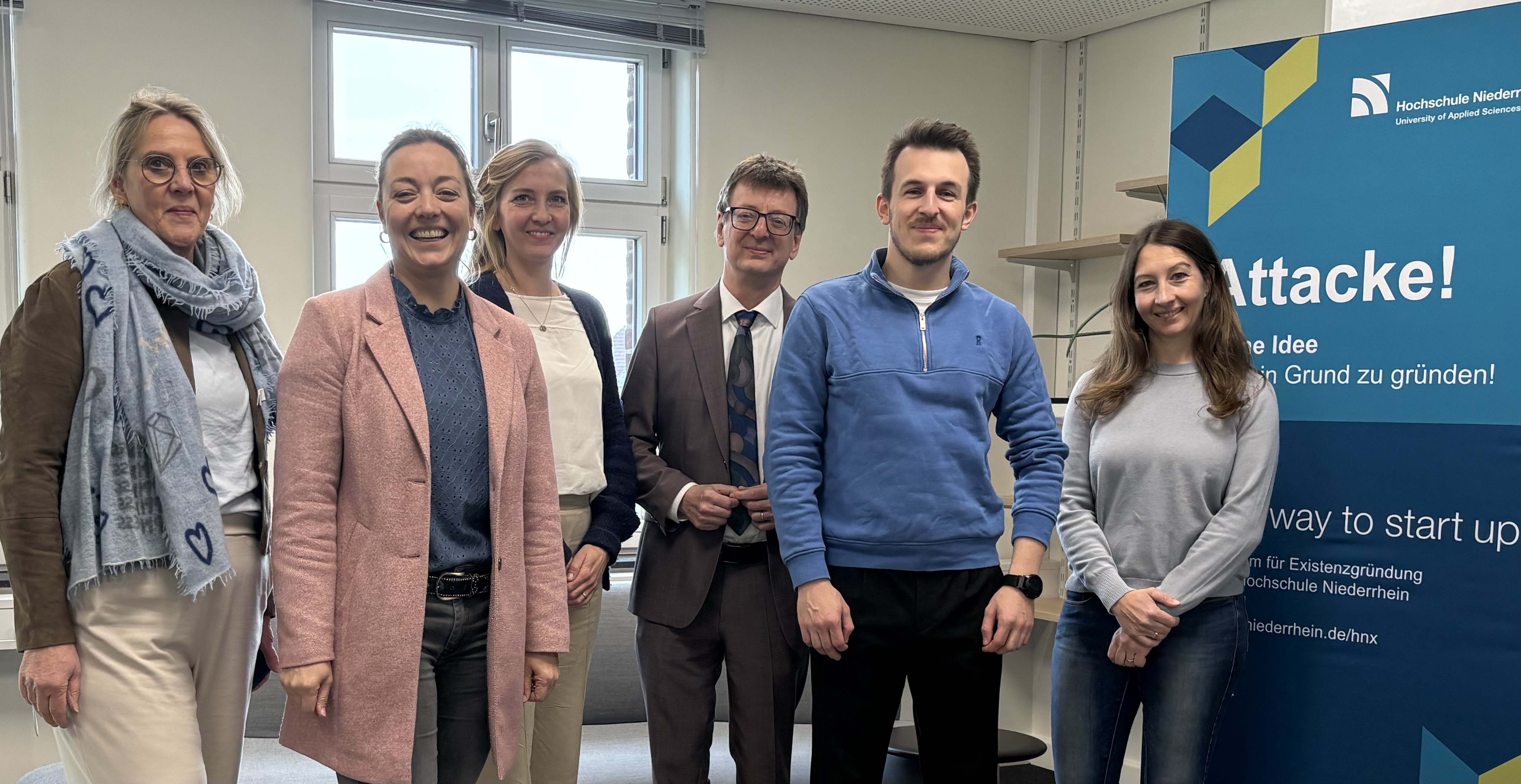
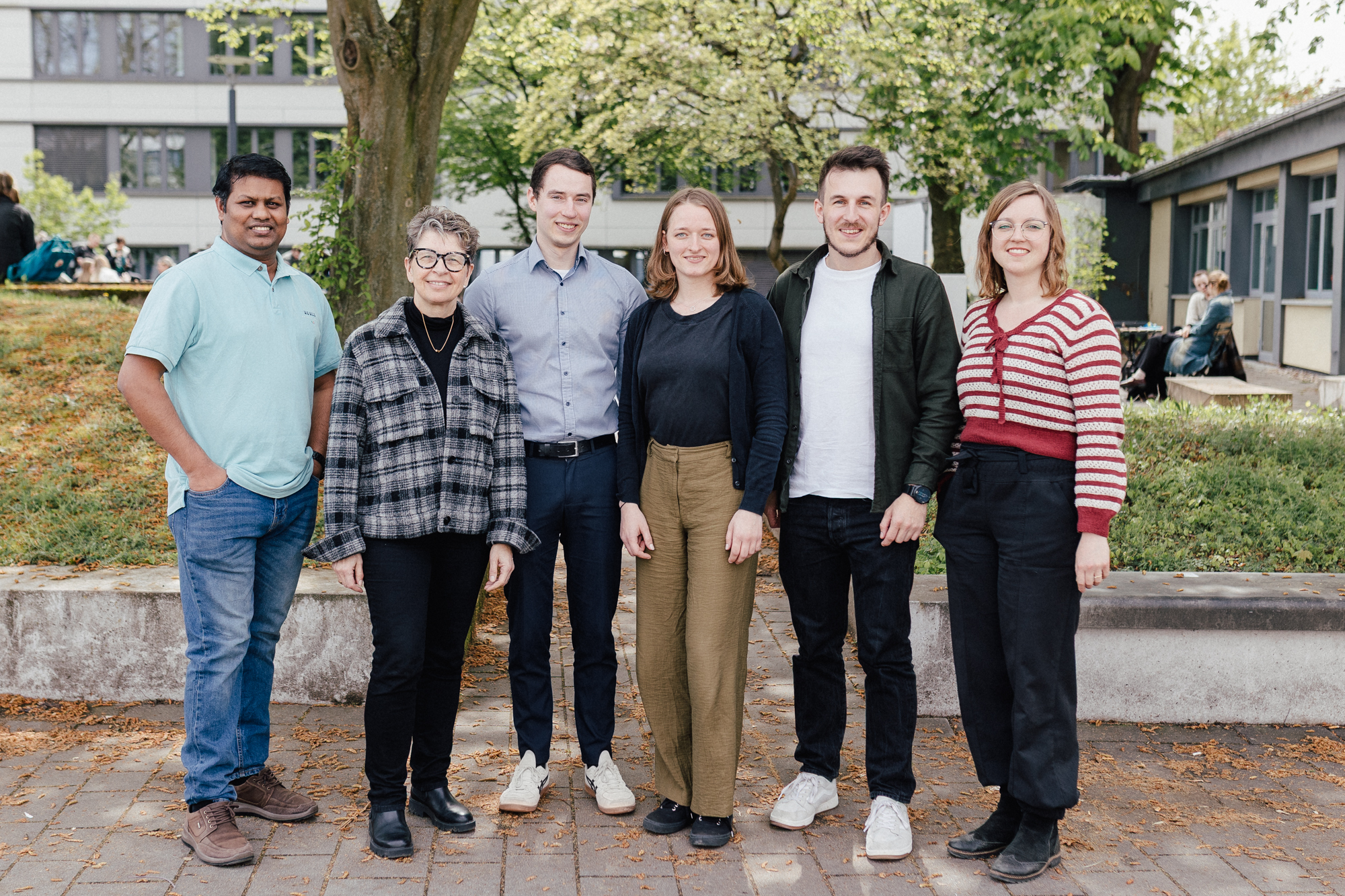
The "Algacore" project, led by Leon Blanckart, research assistant at the Faculty of Textile and Clothing Technology in Mönchengladbach, is supported by the EXIST research transfer funding programme. With a funding volume of around 968,000 euros and a term of 18 months, the approval is one of the rare successes of universities of applied sciences in this programme and underlines the scientific quality and economic potential of the project.
From April, the five-strong team will be working on the development of a new type of fibre resource based on freshwater algae. "Our aim is to develop special green algae as an alternative source of textile raw materials and thus create a more sustainable basis for textile production," says project manager Leon Blanckart. The researchers are thus responding to a fundamental challenge currently facing the global textile industry. The demand for natural fibres is constantly increasing, while the production of traditional raw materials is reaching its ecological and capacity limits. The cultivation of cotton requires large amounts of water, arable land and pesticides, while synthetic fibres are made from non-renewable resources and can release microplastics.
The predecessor project "AlgaTex", which was funded by the Federal Ministry of Education and Research and spent four years investigating filamentous green algae as a potential fibre of the future, came to an end in February of this year. The starting point was Leon Blanckart's Bachelor's thesis, which developed into a comprehensive research project. Together with the affiliated institute for Plant Science and Microbiology (IPM) at the University of Hamburg and various industrial partners, the team worked on the optimisation of cultivation processes, fibre preparation and processing as well as initial approaches to textile product development. The knowledge gained in the project now forms an important foundation course for the new "Algacore" research project.
"With Algacore, we want to show that innovative materials can be developed from renewable raw materials that are both ecologically sound and industrially usable," says Leon Blanckart. "Our aim is to create a real alternative to existing fibre materials and make textile production more sustainable."
In the coming months, the team intends to further develop the research results and create the foundation course for founding a company. The project is being supervised by Professor Ellen Bendt and Professor Dr Groten from the Faculty of Textile and Clothing Technology as well as the HNX team for business start-ups.
The EXIST research transfer funding programme is an initiative of the Federal Ministry for Economic Affairs and Energy. It supports particularly ambitious technology-orientated spin-offs from universities and research facilities with the aim of bringing innovations into application more quickly.