Water shortage, damage, heat, pests – when plants are under stress, they react: Their leaves droop; they reduce growth or photosynthesis in order to repair damaged tissue; and they produce protective and defence proteins to ward off aphids and other pests. But how can stress symptoms be detected at an early stage, before they even become visible?
A cross-border research team is investigating this as part of the Interreg project LEAF. The funded project in the Germany–Netherlands border region has a total budget of almost 4 million euros. For intelligent plant monitoring, innovative sensor technologies are to be combined with energy-efficient, wireless communication and digital platforms. The aim is to create an end-to-end solution – from measuring plant indicators, through the transmission and processing of data, to the presentation of information for the farmer.
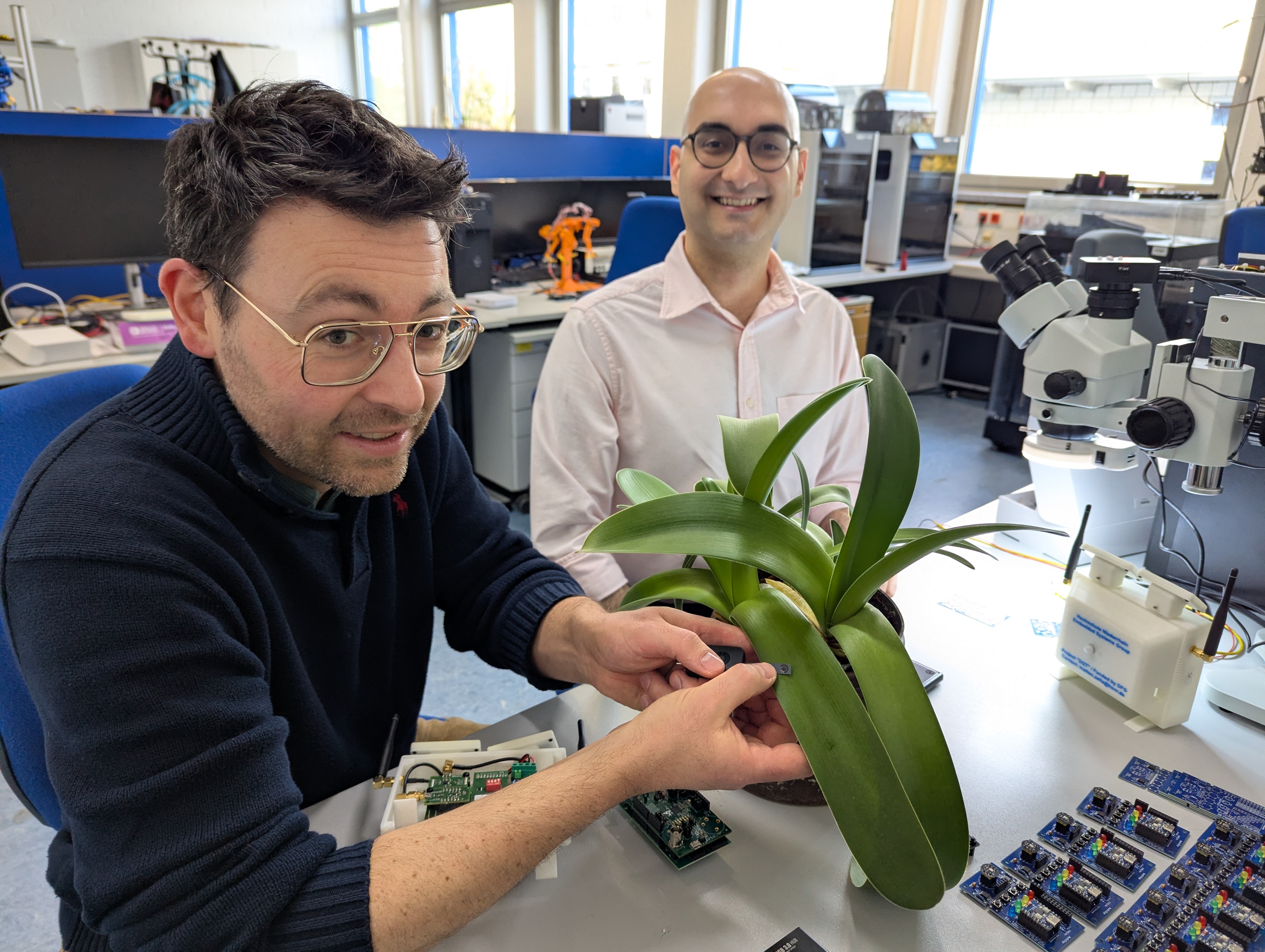
Unlike conventional monitoring tools, which often provide delayed or indirect measurements, the sensor to be developed in the research project will deliver direct insights into the plant’s health, stress levels or nutrient status – before any visible symptoms even appear. In the agricultural sector, this can help to optimise cultivation and make plant production more sustainable overall. In this way, LEAF provides an important impetus for smart farming amongst its industry partners.
HSNR is strengthening activities at the interface between digitalisation, sustainable agriculture and intelligently networked systems
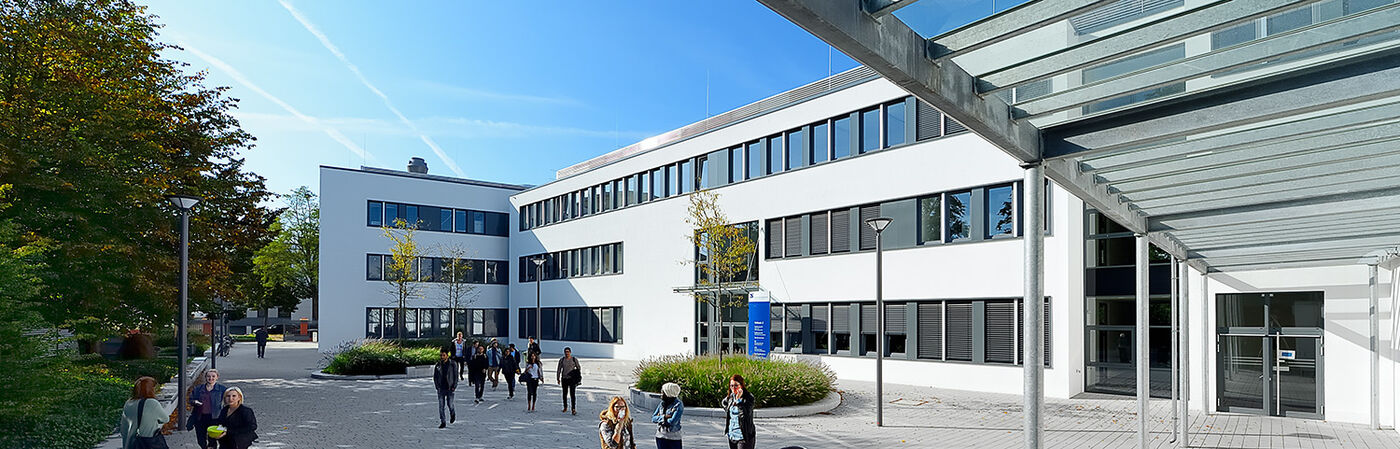
HSNR is primarily contributing its expertise in the areas of the Internet of Things, wireless sensor networks, system integration and projects with a practical orientation to LEAF. Each consortium partner is contributing individual technological components, which are being integrated into an overall sensor system and tested under real-world conditions. “Through this German-Dutch project, the HSNR is strengthening its activities at the interface between digitalisation, sustainable agriculture and intelligent networked systems,” says Dr Matteo Zella. The professor of Technical Computer Science in the Faculty of Engineering and Computer Science is leading the LEAF project at the Hochschule Niederrhein, in which students are also involved in the laboratory.
Around 70 per cent of the total costs of almost 4 million euros are being funded, including by the European Regional Development Fund (ERDF) and the Ministry for Economic Affairs, Industry, Climate Protection and Energy (MWIKE) of North Rhine-Westphalia. As one of the project partners, the Hochschule Niederrhein (HSNR) is contributing around 215,000 euros of its own funds.
In addition to the HSNR, the consortium includes Maastricht University as project coordinator, as well as several partners from industry. This cross-border collaboration makes it possible to pool expertise across the entire technological value chain – spanning the fields of sensor development, communication technologies, cloud infrastructures and user interfaces, as well as know-how in horticulture and agricultural cultivation.