


How can sustainable textiles be standardised on the European market and, in particular, how can short-lived products be taken off the market? A new study conducted by the Öko-Institut, The Hochschule Niederrhein and Hof University of Applied Sciences on behalf of the Federal Environment Agency shows how performance and information requirements for textiles can be formulated that could form part of the new EU Ecodesign Regulation for sustainable products in the future.
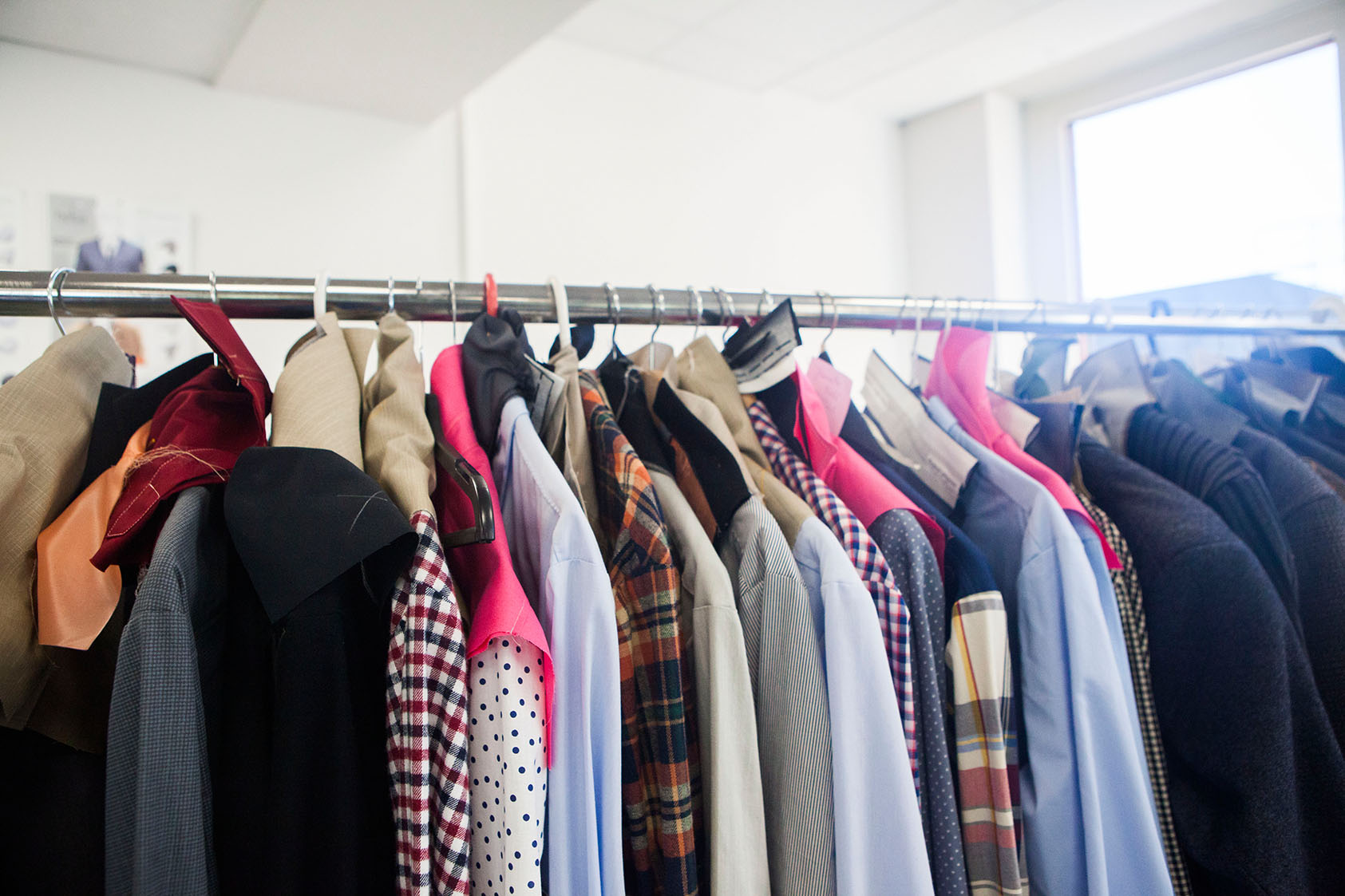
The study focuses on key product aspects such as durability, reparability, recyclability and recycled content as well as the presence of substances of concern. As example products, the research team analysed T-shirts, jeans and functional jackets - three products with high market significance and different requirements.
"Our proposals show how sustainability requirements can be implemented in practical applications," says Katja Moch, an expert in sustainable textiles at the Oeko-Institut. "The aim is to make sustainable textiles the standard and gradually remove short-lived mass-produced goods from the market."
Durability at the centre: how long clothing should last
The study shows: Durability is the most important criterion for the environmental sustainability of clothing. Specific and measurable requirements were defined for the product examples analysed in order to be able to evaluate them. In the case of T-shirts, for example, shape retention after washing and drying, the resistance of the material and colour fastness all play a role.
For jeans, in addition to dimensional changes during washing - i.e. shrinkage or wear - the tensile strength and stretchability of the fabric, its resistance to abrasion and its colour fastness to light and rubbing are particularly important. These and other aspects can be determined using existing test methods.
"Durability can be assessed well as long as it is based on textile-specific properties. However, if usage and care behaviour are included, the assessment becomes more complex," says Prof. Dr Maike Rabe, Professor of Textile Finishing and Ecology at Hochschule Niederrhein. "Our analysis shows how important it is to differentiate between product and fibre types."
Repairing instead of throwing away
Repairability was also analysed. The researchers recommend minimum requirements - such as the availability of spare parts like zips or buttons, repair instructions and cooperation with repair services. For more complex products such as functional jackets, product-specific requirements in the form of voluntary design guidelines would also be useful.
Recyclability and recycled content: proposals for clear specifications
To make textiles easier to recycle in future, the study recommends, among other things, limiting material blends - for example, to a maximum of two fibre types per surface and a reduced use of elastane of five to ten percent. For T-shirts and jeans, the authors also suggest proportions of fibres from fibre-to-fibre recycling in new products, for example ten percent for cotton or three percent for polyester. These figures are based on market availability and not just on technical feasibility.
The study also identifies the political framework conditions that need to be clarified for a mandatory recycled fibre content in textiles, such as traceability.
Presence of substances of concern
The study recommends the disclosure of information on certain chemical substances, in particular on substances of very high concern (SVHC), but also on so-called effect chemicals that remain on the textile. This requires knowledge of the identity, quantity, properties and function of the chemicals used throughout the entire product life cycle - from design to the end product.
Professor Anett Matthäi from Hof University of Applied Sciences emphasises: "This combination of information makes it possible to influence product quality, durability and recyclability in technical product development. Simply passing on information about hazardous substances would not be conducive to sustainable products."
Background to the study
The study contributes proposals for the implementation of the new EU Ecodesign Regulation 2024/1781 on how to enable binding applications for the sustainability of products, including textiles, in the future. The aim is to develop an EU delegated act for textiles. The results will be incorporated into the comments on the European preliminary study by the EU Commission's Joint Research Centre (JRC) in the EU's further legislative process.