

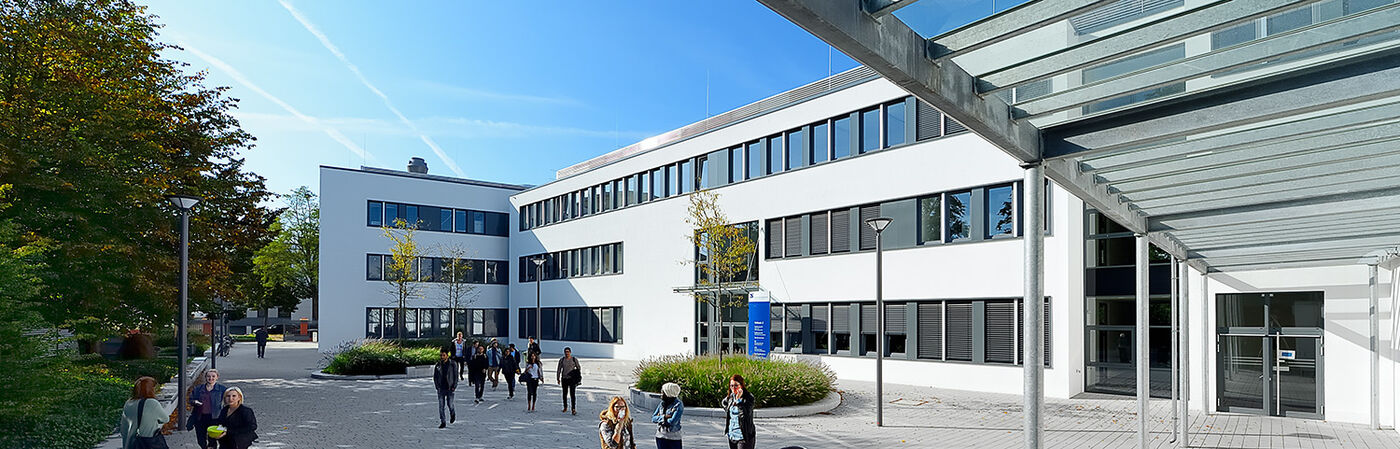
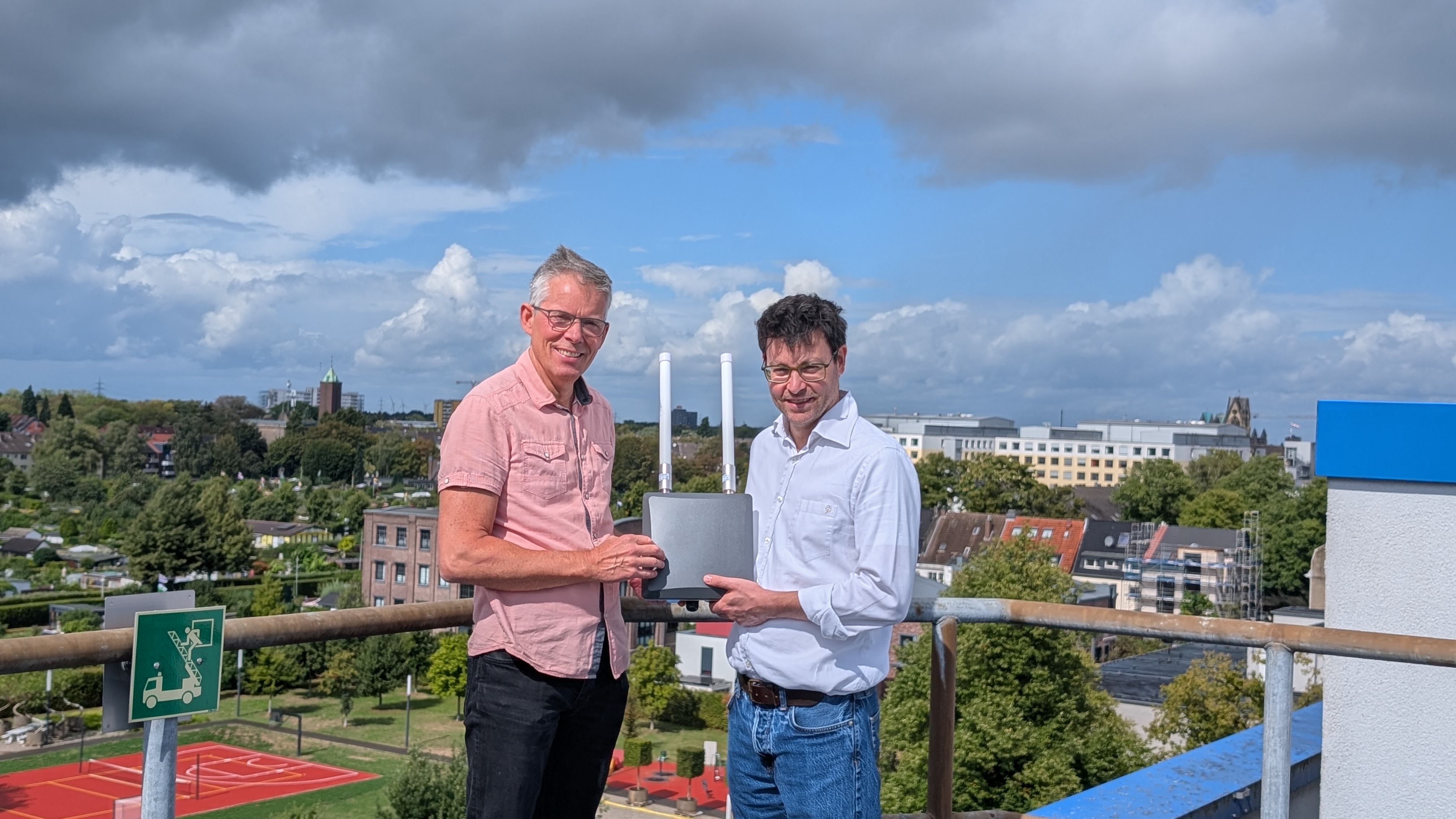
As part of its sustainability strategy, the Hochschule Niederrhein (HSNR) aims to systematically analyse and optimise its energy consumption. To this end, it is expanding its internal LoRaWAN network. This wireless technology (Long Range Wide Area Network) enables small amounts of data to be transmitted over long distances whilst consuming very little energy. Networked sensors can thus, for example, monitor room temperatures, electricity consumption, available parking spaces or the soil moisture levels of plants. The data helps to use resources more efficiently and opens up new possibilities for a more sustainable campus and smart urban development.
The HSNR has been working with LoRaWAN for around ten years. Under the leadership of Professor Dr Christoph Degen, the project began; it was taken up simultaneously by Stadtwerke Krefeld (SWK) and expanded into a city-wide LoRaWAN network with numerous gateways. Around four years ago, Rainer Kufferath, who holds a degree in engineering, and Prof. Dr Matteo Zella revisited the topic: together with students, they expanded the university’s internal network as part of their theses and fitted the Krefeld South Campus with sensors.
“What’s particularly exciting is that we’re not only putting the technology to practical use at the university, but can also integrate it into our teaching education. Students work with real-world data and develop solutions to specific challenges. In this way, we combine technical innovation with sustainable practice,” says Rainer Kufferath, a graduate engineer from the faculty of Engineering and Computer Science.
Around 50 wireless sensors in five buildings are now recording various measurement values. These include room and heating temperatures, movement, door contacts, humidity, illuminance and electricity consumption. The data makes energy consumption more transparent and helps to identify potential savings. In this way, the project supports the sustainability goals of the Hochschule Niederrhein and complements the university’s recommendations for energy saving.
Facilities management also benefits from the data collected. The measurements make it possible to assess the success of measures already implemented and to identify further potential for savings. Various user groups are already able to deploy their own sensors and access the data via individual dashboards. Furthermore, a location- and area-specific analysis of electricity consumption is planned.
Another advantage of the technology is its low maintenance requirements: the sensors’ batteries can last for up to ten years. Solar-powered devices can also be used. This makes LoRaWAN particularly suitable for applications with numerous networked measurement points, for example in building management, agriculture or the ‘smart city’ sector.
The city of Krefeld is also already using this technology in many areas. Stadtwerke Krefeld uses LoRaWAN, for example, to monitor the fill levels of waste containers or groundwater levels. One common area of application is car park management: existing parking signs, which were intended to indicate available spaces, have been out of service for several years. In the future, they are to be modernised with displays and LoRaWAN sensors so that they can once again show up-to-date information on car park availability.
Whilst SWK’s city-wide network already enables widespread use, the range of the university’s internal network has so far been limited to the respective campus areas. The HSNR is therefore planning to install further gateways at its three sites. The aim is to expand the independent use of the technology without foregoing the benefits of collaboration with the municipal utilities.