

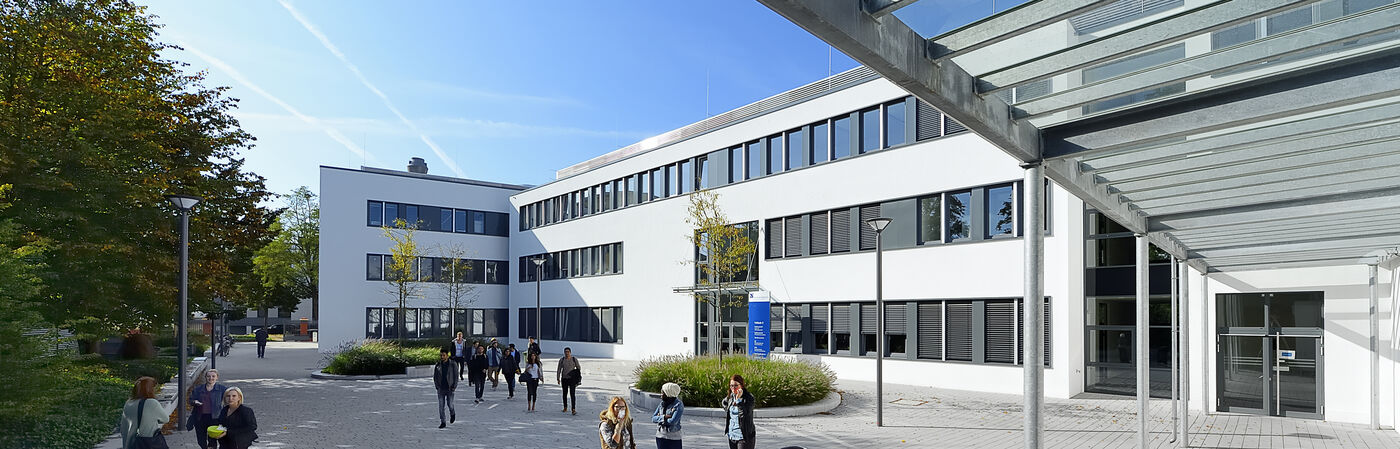
From sustainable interior design and functional workwear and sportswear to socially relevant communication campaigns: The presentation of the projects in the 5th semester at the Faculty of Textile and Clothing Technology at Hochschule Niederrhein (HSNR) impressively demonstrated how practical, interdisciplinary and innovative students work on real issues from industry, society and design.
A total of eleven interdisciplinary teams from various degree programmes developed products and concepts in close cooperation with lecturers and external partners from business, education and civil society. The project presentation has been one of the faculties' most popular events for years.
"The 5th semester projects are a central component of our study concept. Here, students learn to solve complex tasks in a team, take responsibility and implement their ideas in a practical way - from the initial analysis to the marketable prototype," explains Professor Mathias Beer, Vice-Dean of the Faculty of Textile and Clothing Technology.
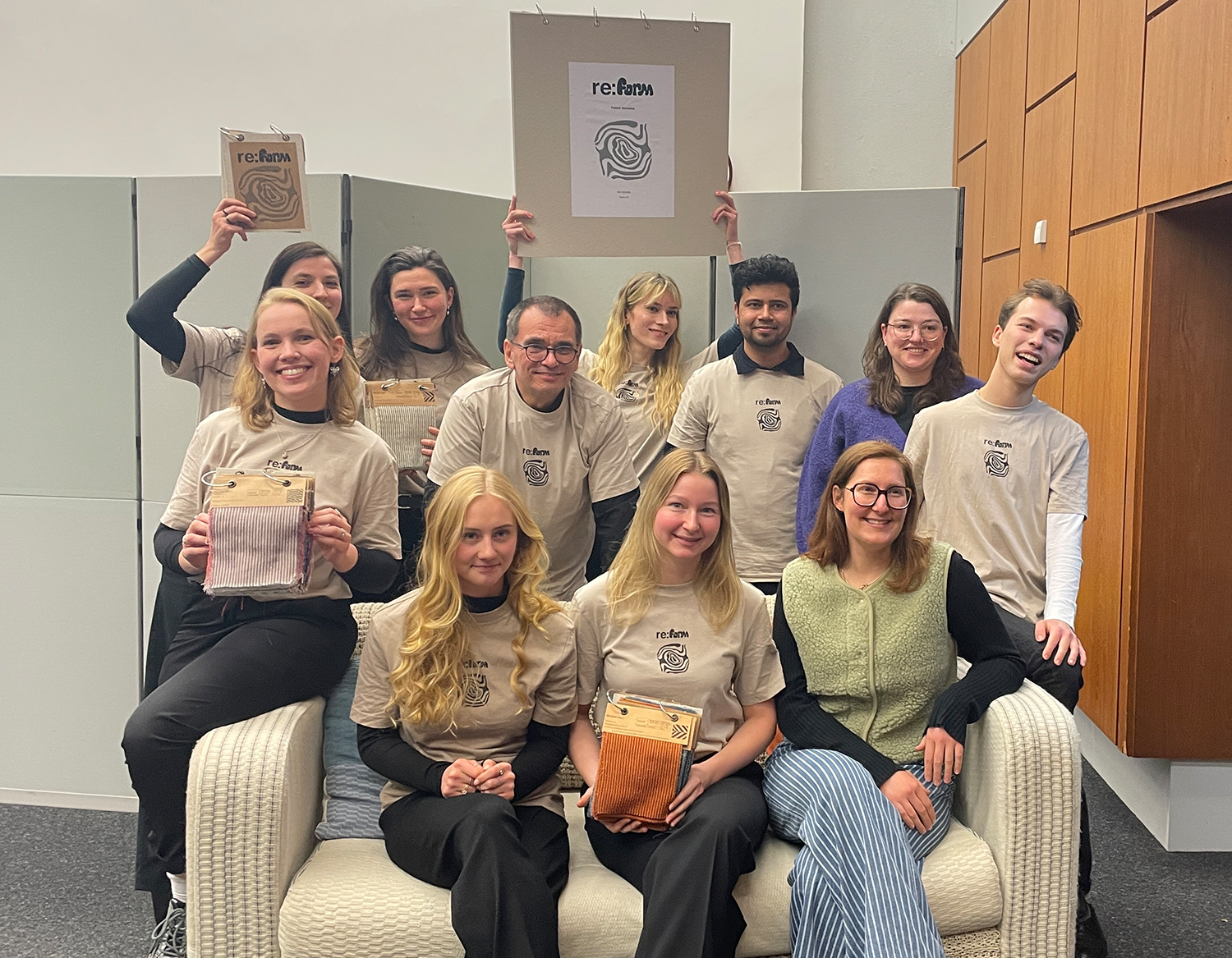
1st place: re:form - Sustainable interior design made from hemp and wool
First place went to the re:form project, which was created as part of the [Re]value project. The team developed an independent interior design brand that translates regional hemp and wool fibres into contemporary, sustainable home products. Along the entire value chain - from material development, design and marketing to experimental 3D prototyping - a handmade sample couch, a lamp and several 3D prototypes were created. The project shows how sustainable materials can be used in an aesthetic, functional and marketable way.
Textile solutions for education, sport and the workplace
A textile room concept for all-day schooling was developed by a team in cooperation with the Venn Catholic Primary School and the Muth manufactory. The modular multi-textile system supports learning, play and retreat phases in equal measure and responds to the legal entitlement to all-day care from 2026. The centrepiece is a 150 × 150 cm discovery curtain with modular themed areas and a custom-fit table cover.
The "On-Court, Off-Court" project, in which students designed a lifestyle padel brand including a clothing line, was sporty and collaborative. The collection includes high-quality tops and bottoms that can be worn both on the court and in everyday life.
The focus was also on functional workwear: an innovative workwear line for the electrical trade was created in collaboration with Sonepar Germany. The centrepiece is an ergonomically cut work jacket with durable materials and practical details such as modular pockets, detachable sleeves and reflective elements. The concept is complemented by an embroidered hoodie.
Nine students also developed new employee clothing for EDEKA Mühlenbein. The modular clothing can be adapted to different work areas. Ergonomic cuts, easy-care materials and well thought-out storage solutions - including fixed pockets and a pocket belt system - make everyday working life easier.
Social responsibility and sustainability
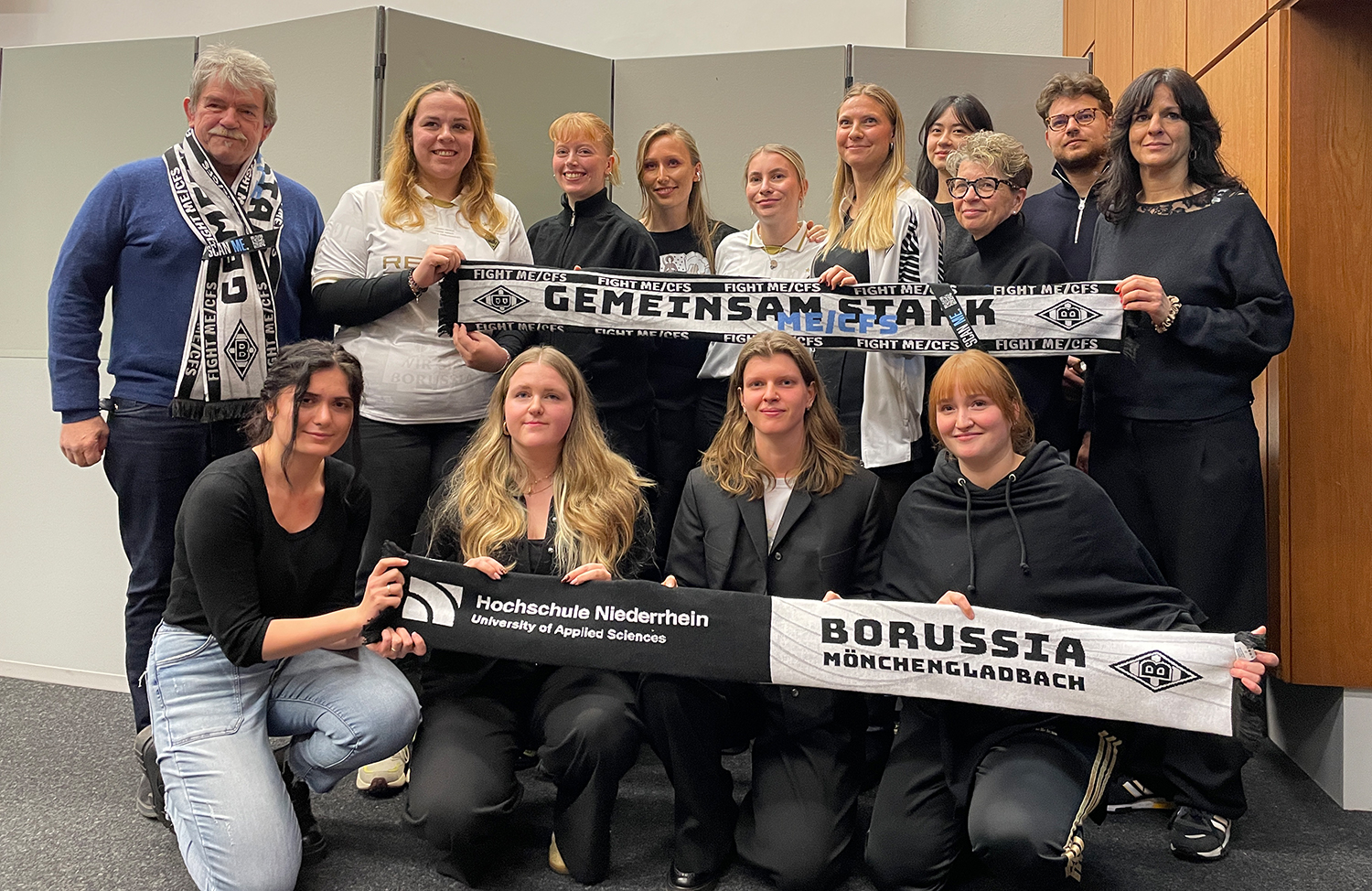
In cooperation with Borussia Mönchengladbach and the textile company Riking, ten students developed a fan scarf that draws attention to the disease ME/CFS. The focus is on the severe, chronic neuroimmunological multisystem disease. The innovative scarf with an integrated air filter insert leads via QR code to the website of the non-profit organisation Empty Stands, which offers information, exchange opportunities for those affected and a donation link. Further campaigns are planned in the stadium and in fan pubs.
A project team in collaboration with the non-profit organisation FEMNET took a communicative approach. A ten-part TikTok campaign was developed on feminism in the clothing industry, sustainability and the long-term consequences of fast fashion. The aim is to sensitise young people in particular to conscious textile consumption via social media.
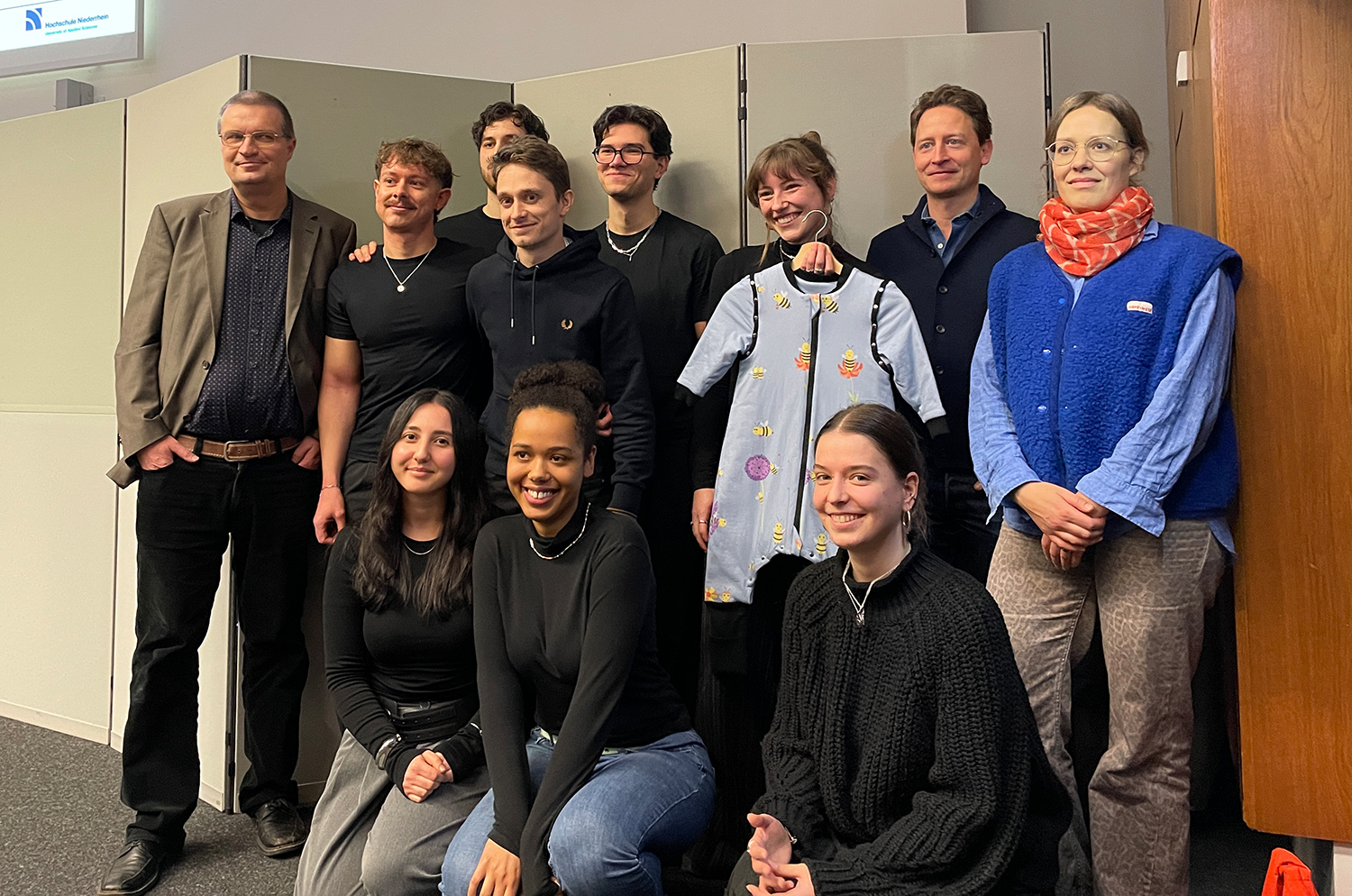
A project in cooperation with Schlummersack GmbH showed how sustainable production and functionality can be combined. The students developed a sustainable children's sleeping bag prototype - from material selection to digital pattern construction and realisation. The product was complemented by a sustainable packaging concept and a closed-loop model for the sleeping bags.
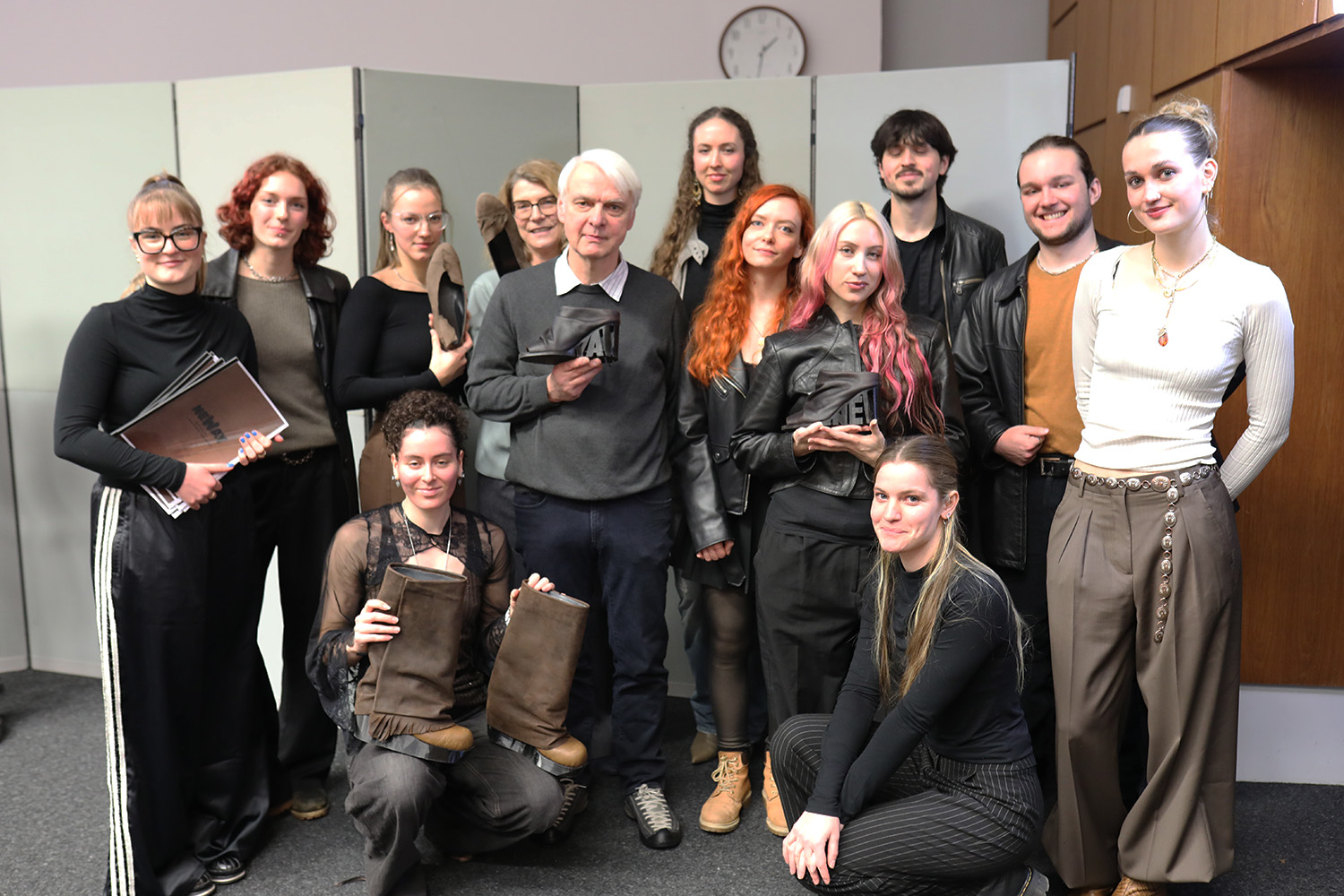
Using high-quality, unused leather from Lederfabrik Josef Heinen GmbH & Co KG, eleven students created three sustainable shoe models: a heeled shoe, a boot and a ballerina. The collection was created as part of a fictitious start-up, manufactured in the skilled trades sector and completed with matching soles using 3D printing. The students were supported by master orthopaedic shoemaker Urban Oymanns.
Technology and innovation
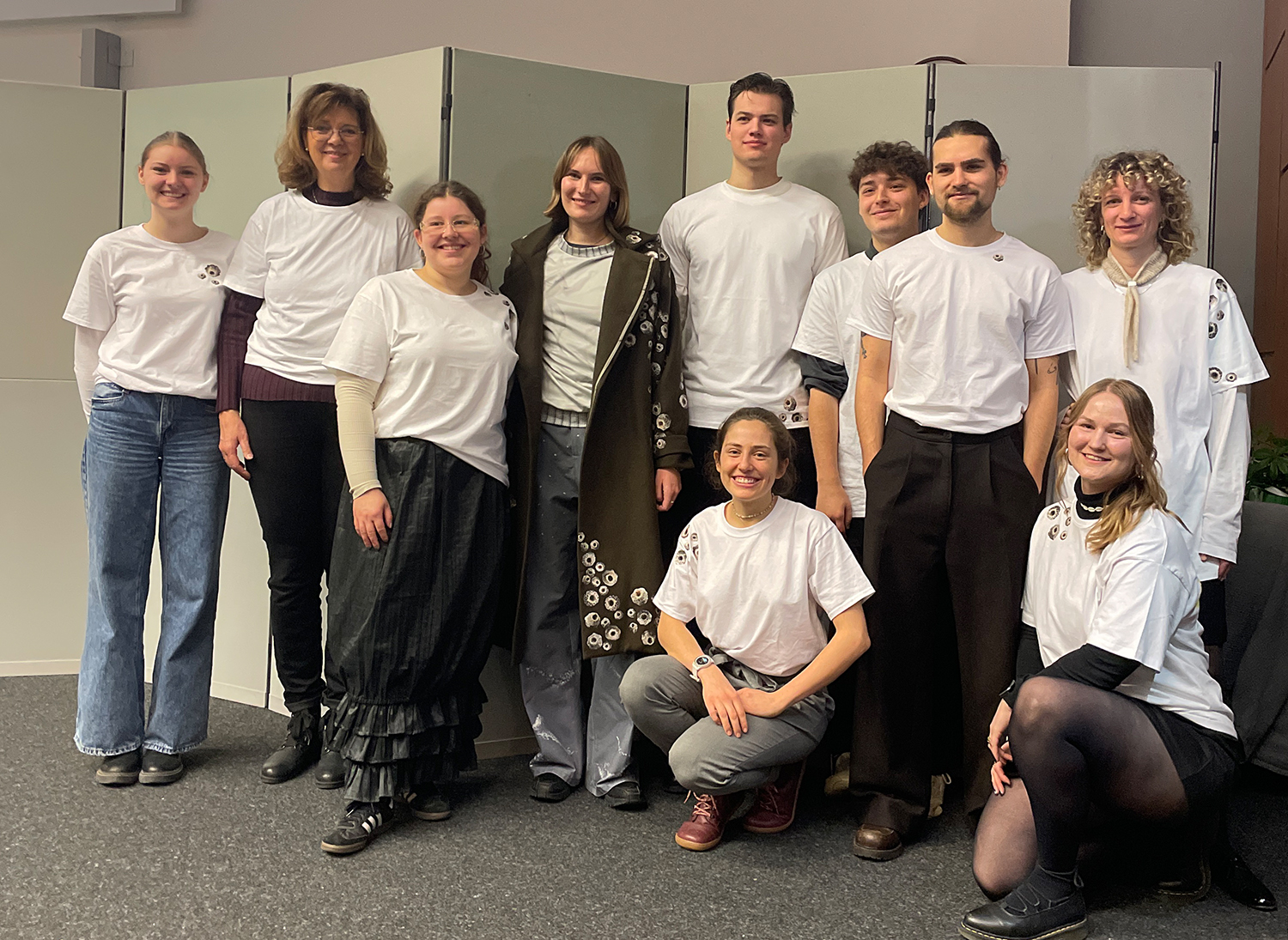
With functional design in mind, eight students worked with Epson Deutschland GmbH to develop a three-piece outfit for trips to the seaside during the transitional period. The aim was to test the diversity of digital textile printing technologies. Experiments at the Epson Solutions Centre in Meerbusch resulted in textile surfaces with new visual effects and optical illusions.
Technical innovation was also demonstrated in the cooperation with rope manufacturer Gleistein GmbH. The students developed four luminous rope prototypes for use in shipping and other safety-relevant areas. Various technical approaches were used, including integrated LEDs, polymer optical fibres, electroluminescent wires and inductive LED modules.