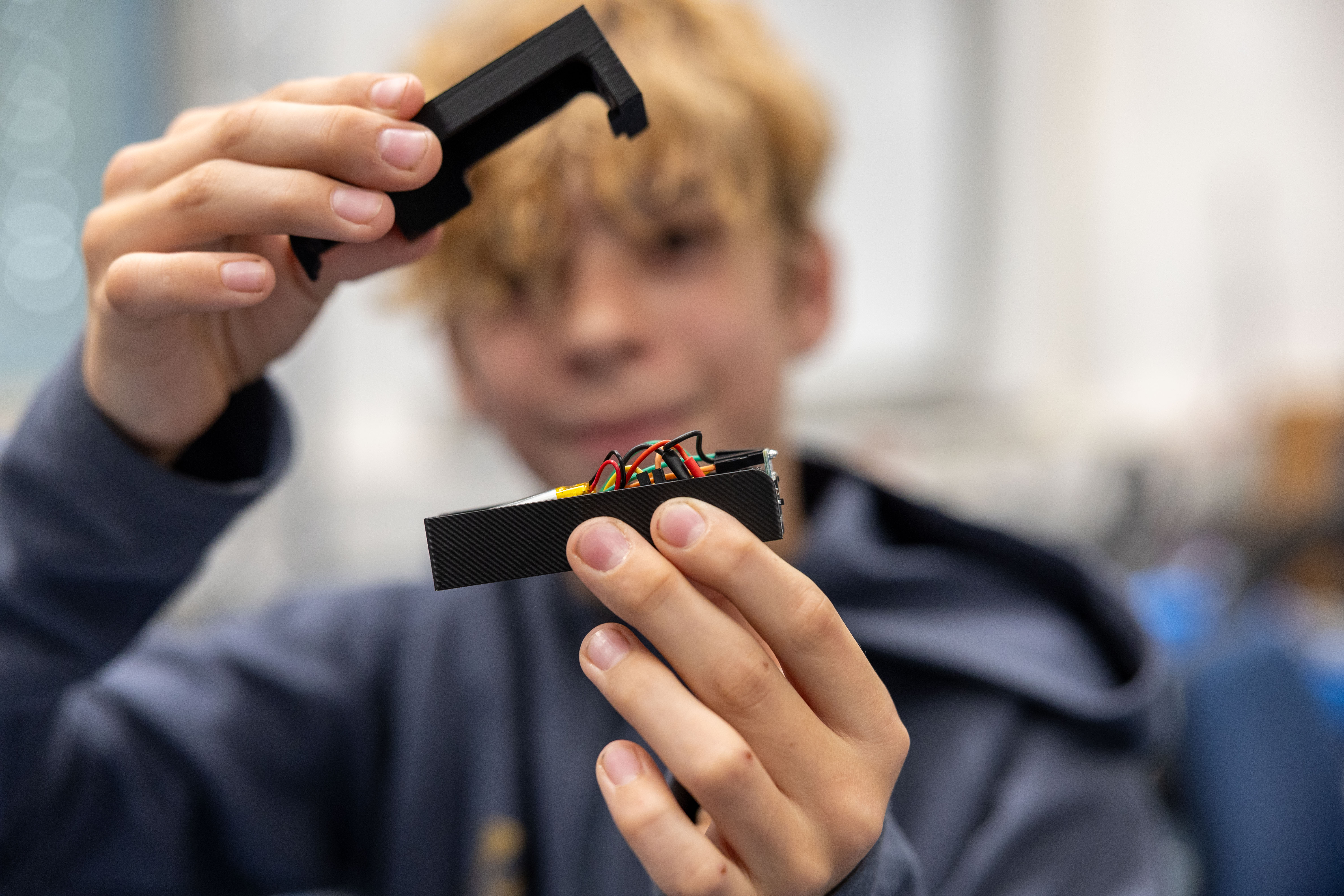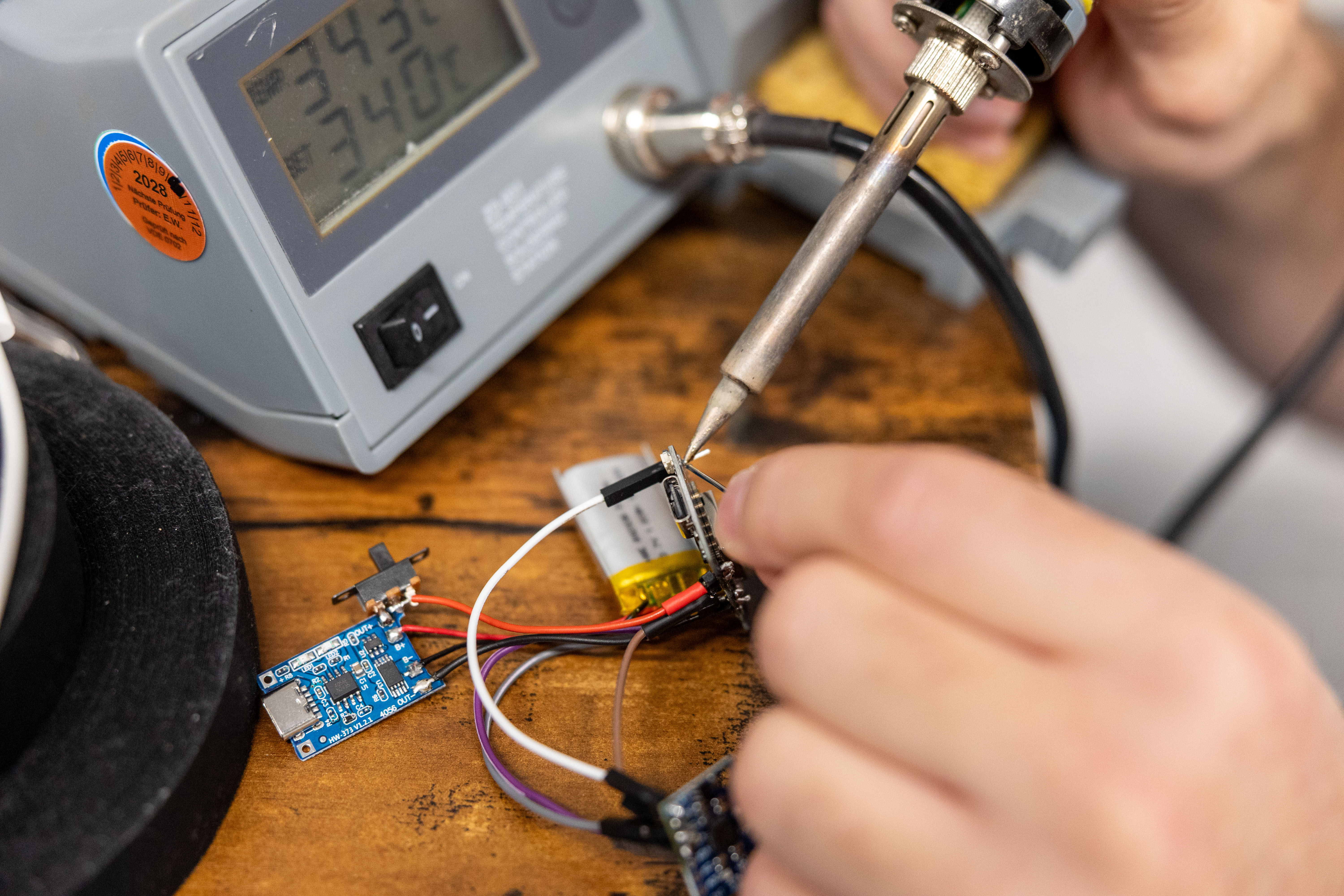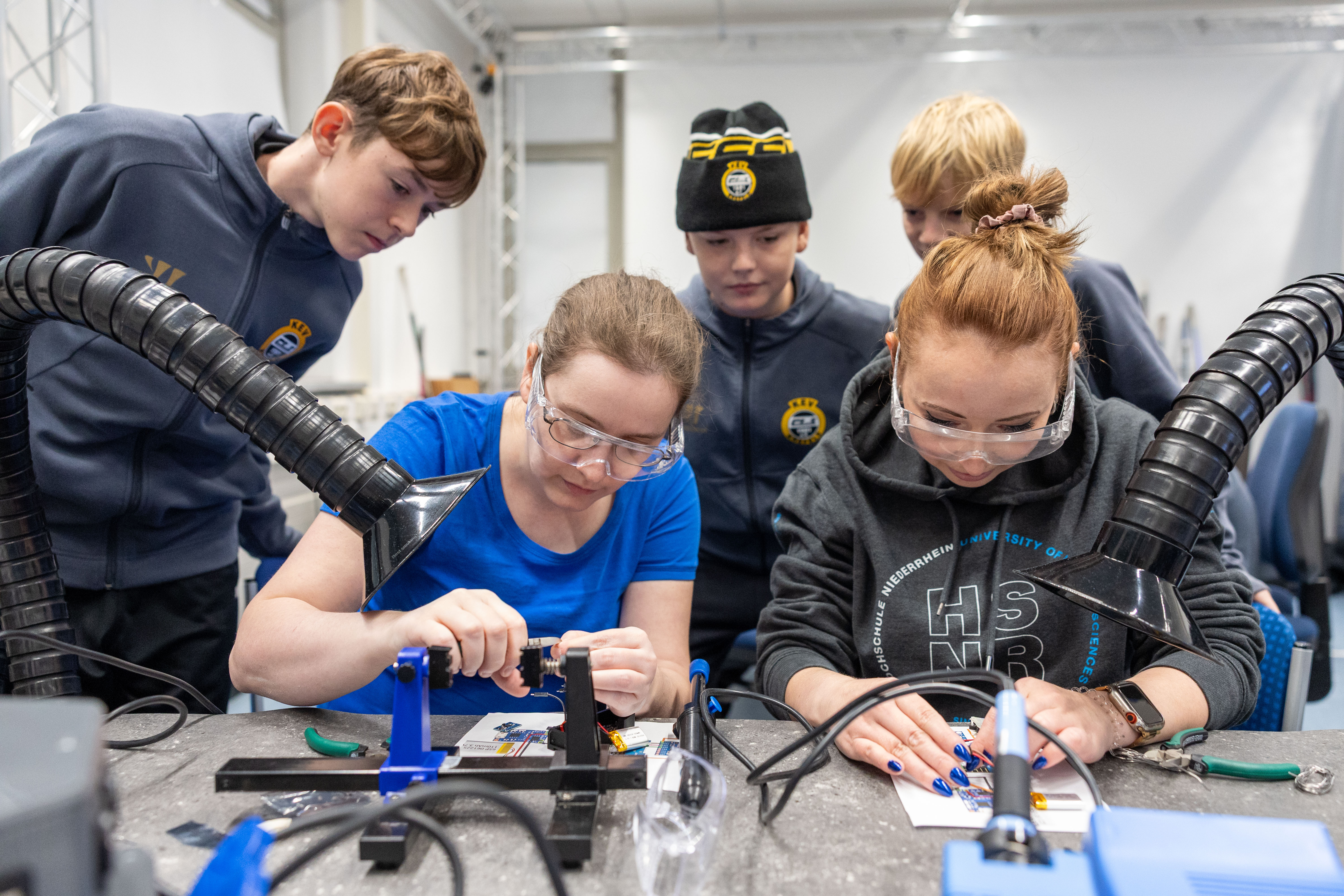


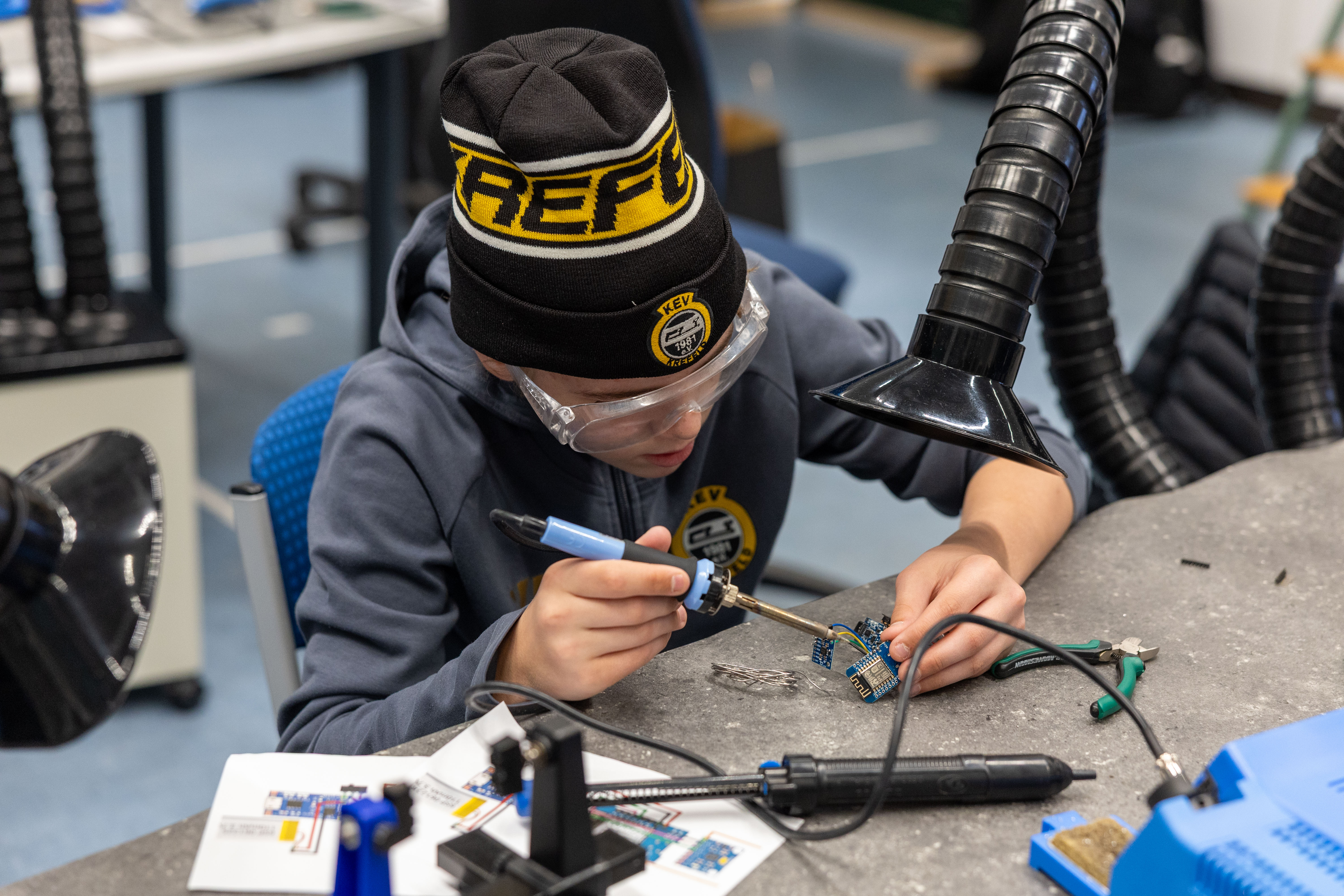
Off the ice, onto the circuit board: the U15 squad of Krefelder Eislauf-Verein 1981 e.V. (KEV 81) – the junior ice hockey team of the Krefeld Penguins – have now taken on the role of tinkerers at a very special workshop at the Hochschule Niederrhein (HSNR): At the Krefeld South Campus, the young people soldered and wired a smart acceleration sensor all by themselves. Attached to their own ice hockey sticks and paired with their smartphones, the young players were able to digitally measure and analyse their personal shot acceleration.
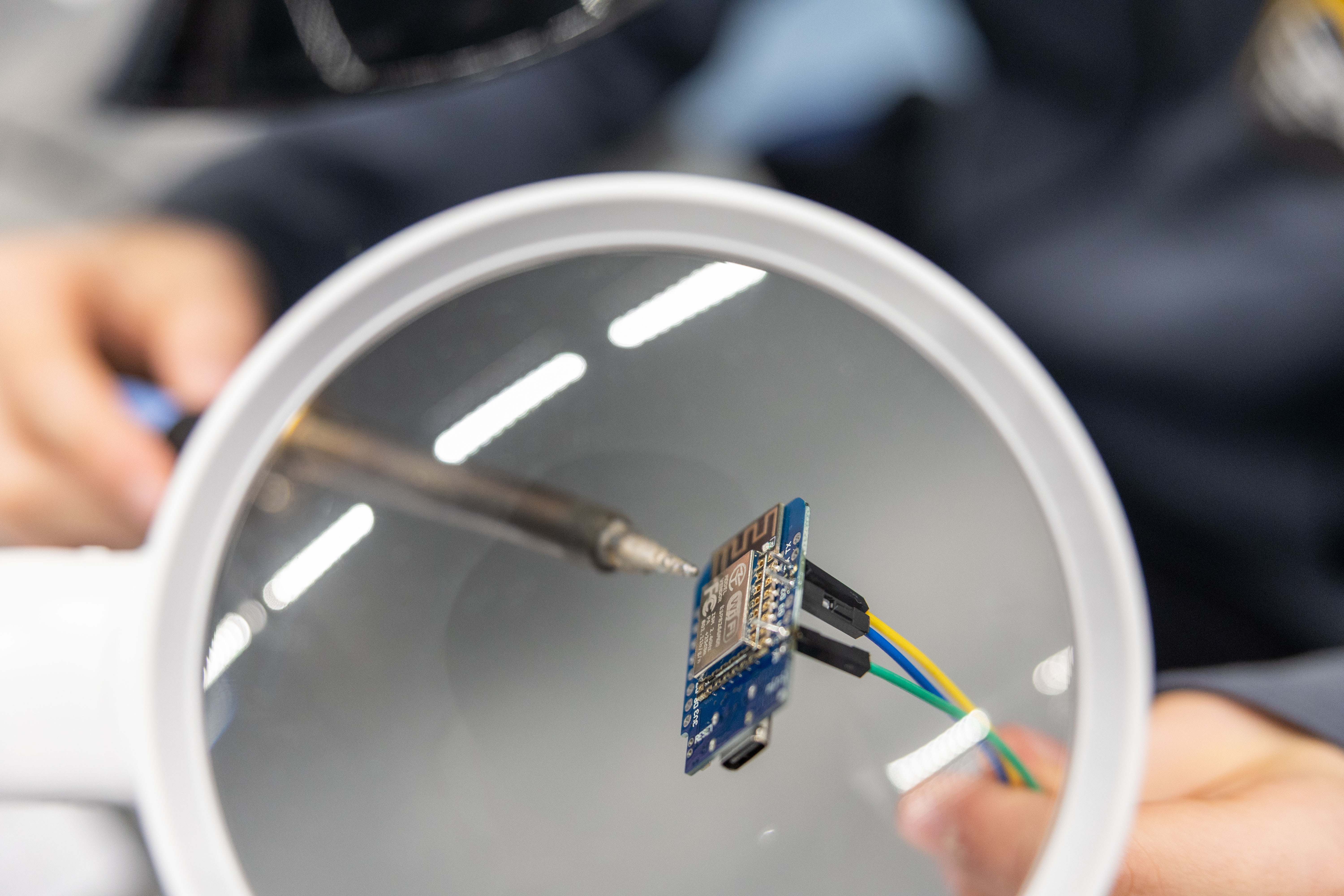
Under the motto ‘STEM meets Sport’, the workshop organised by the Mönchengladbach Junior University combined manual dexterity, electronics and digital measurement technology with the young people’s passion for ice hockey. Divided into two groups, the young people worked their way through various stations, learning how individual electronic components come together to form a functioning measurement system. At the heart of the system was a small microcontroller that records the stick’s acceleration in three spatial directions and makes the movement patterns digitally measurable.
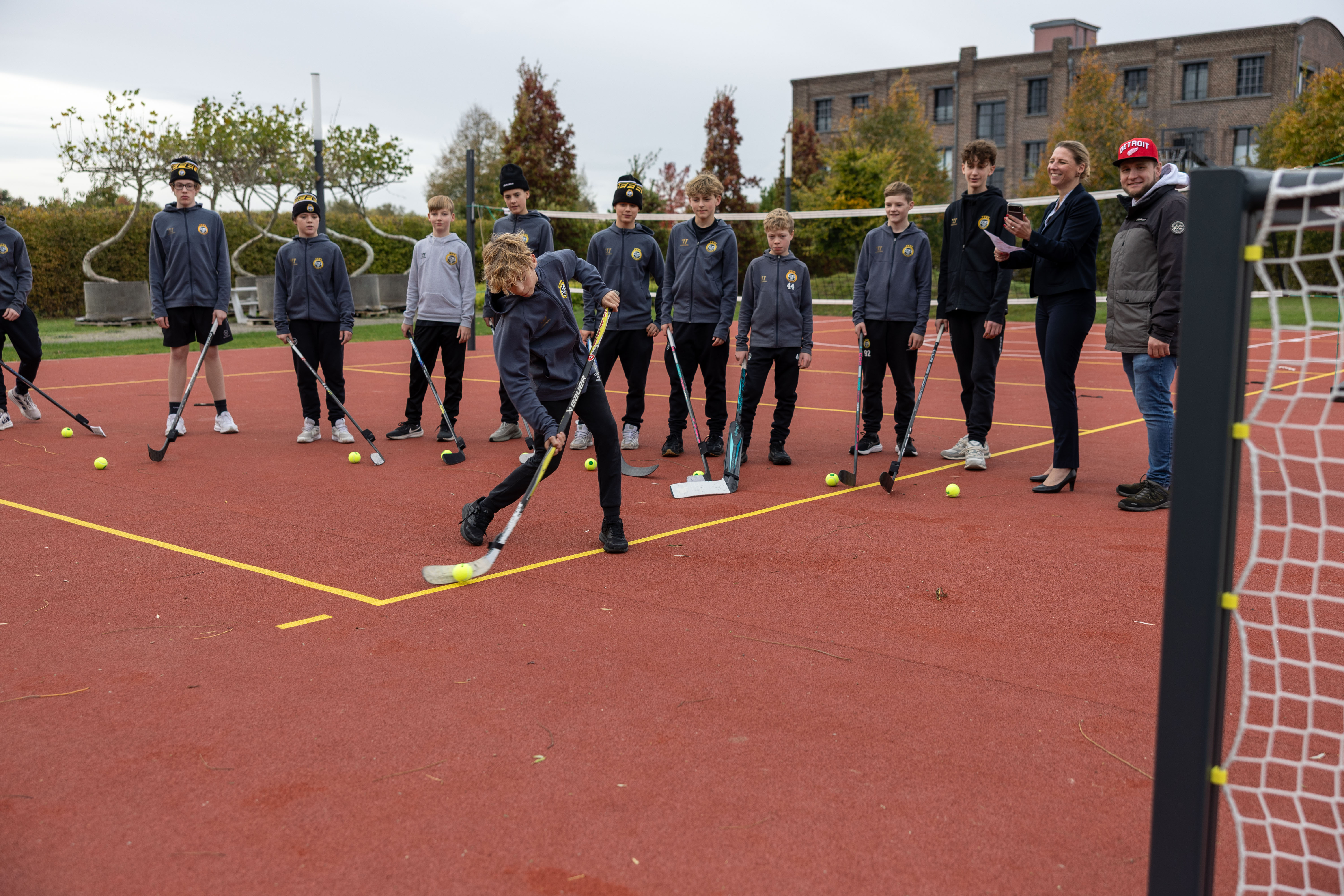
Young ice hockey players measure swing speed using their self-built sensor
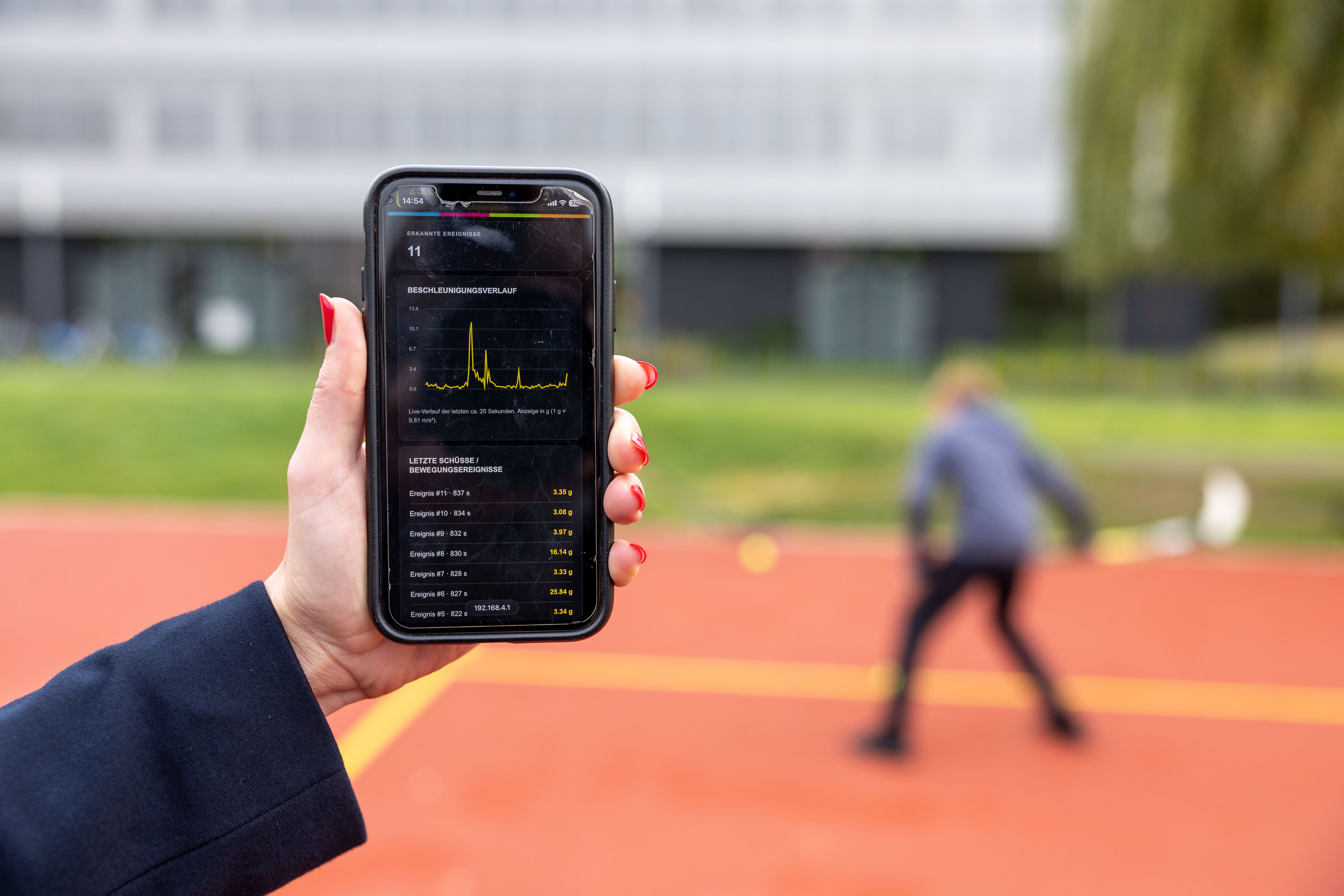
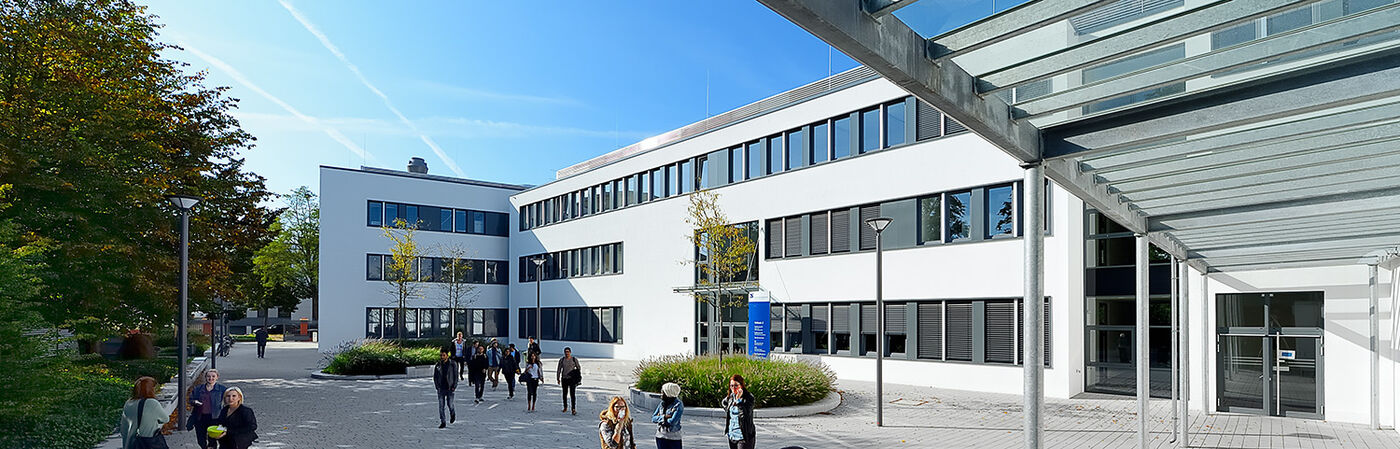
Things got particularly exciting during the practical test that followed: the sensors they had built themselves were attached to the ice hockey sticks they had brought with them and tested on a course set up on the HSNR’s outdoor grounds. Using their own Wi-Fi network, they connected their smartphones to the measurement system and accessed the recorded data via a web browser – without the need for any additional app.
“The young people were absolutely thrilled to see how technology, digitalisation and ice hockey can be combined in the practical application,” says Maurice Majewski, course leader and an ice hockey goalkeeper himself. The practical project demonstrates how technologies in various STEM fields can be applied in competitive sport.
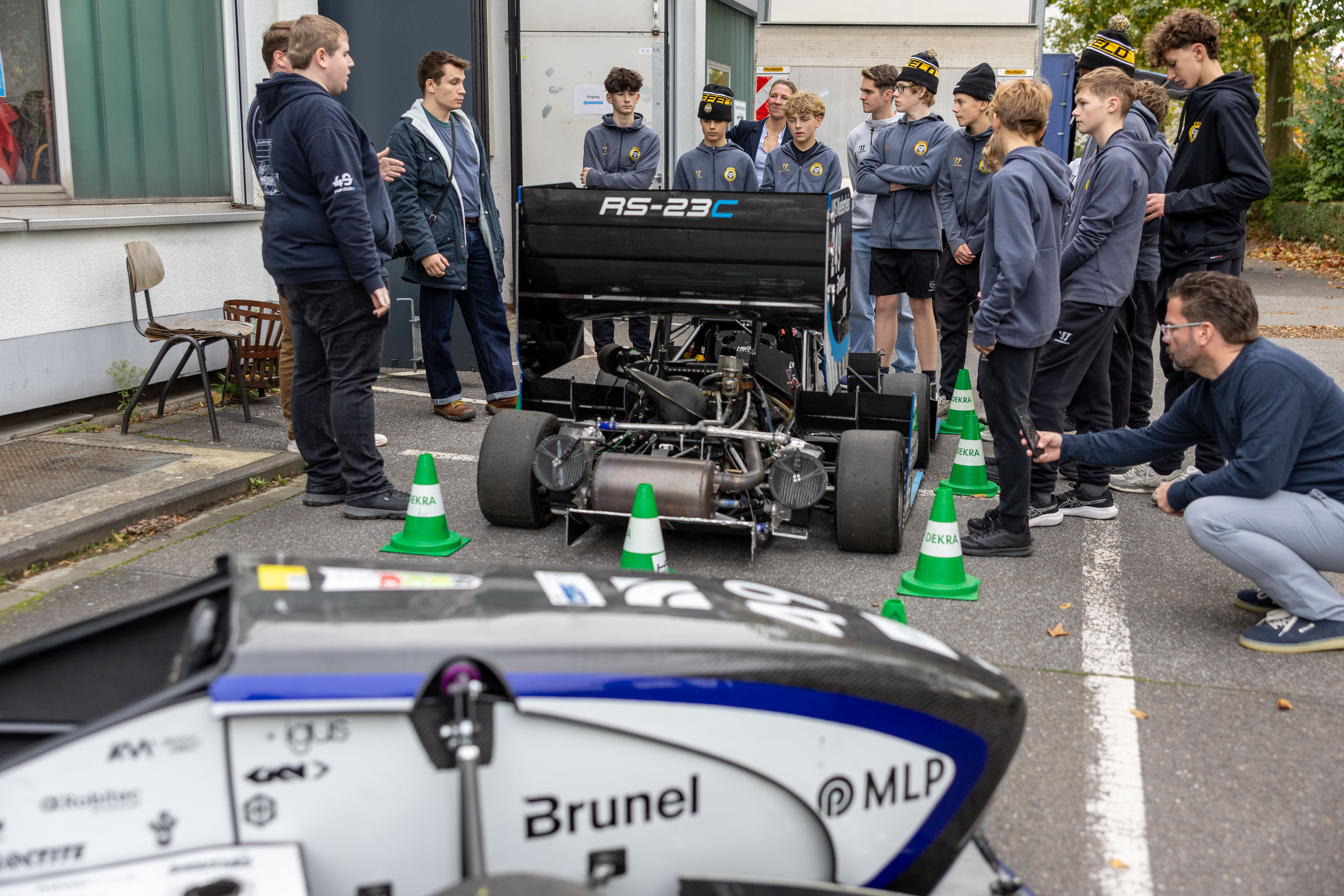
The group were also amazed during the subsequent visit to the HSNR racing team, where they were introduced to, amongst other things, the current Formula Student racing car, the RS-26e. Here, the young people gained further exciting insights into the practical application of engineering and modern vehicle technology.
The workshop was organised by the Junior University of Mönchengladbach – of which HSNR is a co-shareholder – in cooperation with the zdi Community Mönchengladbach and funded through the zdi-BSO-MINT support programme.