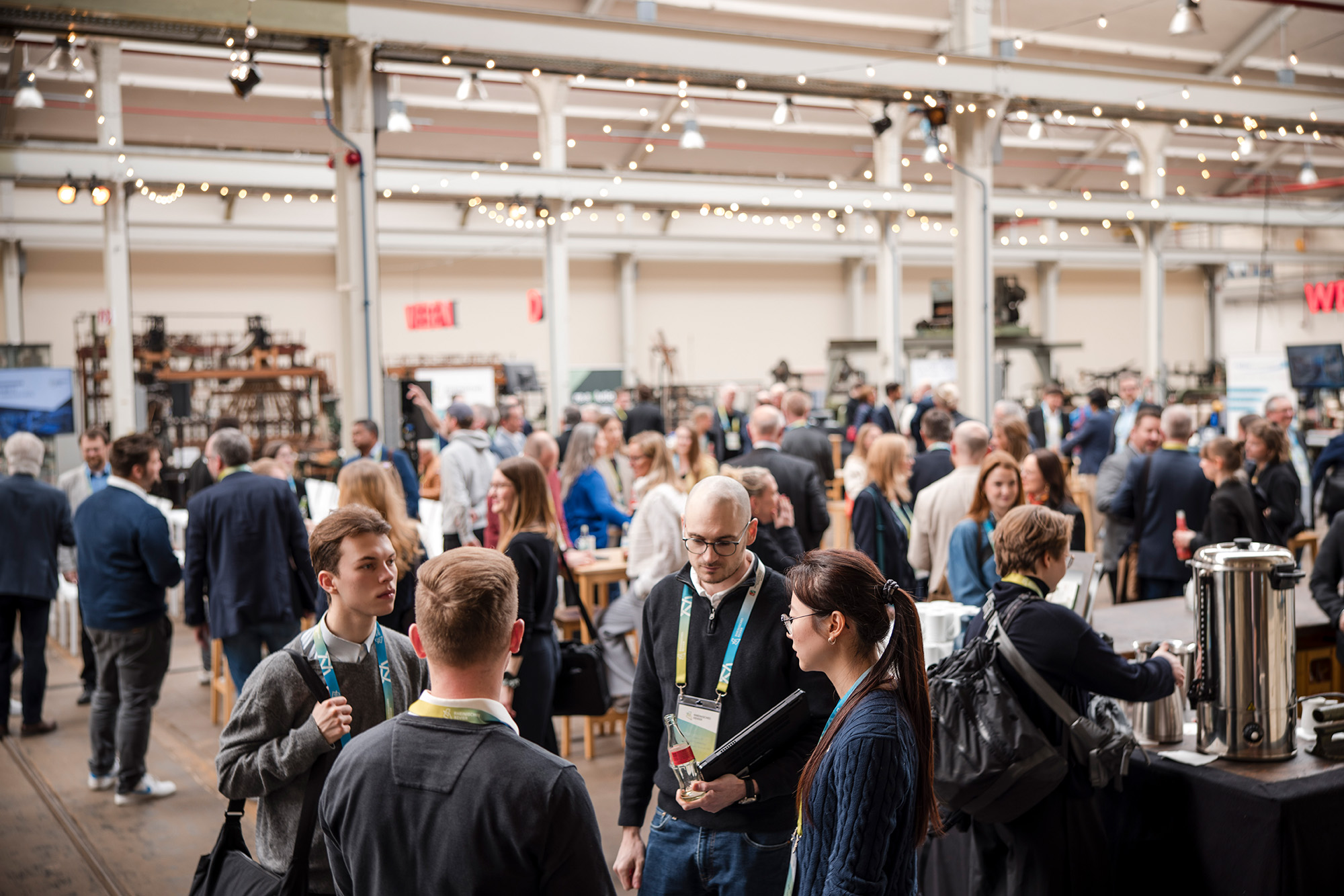


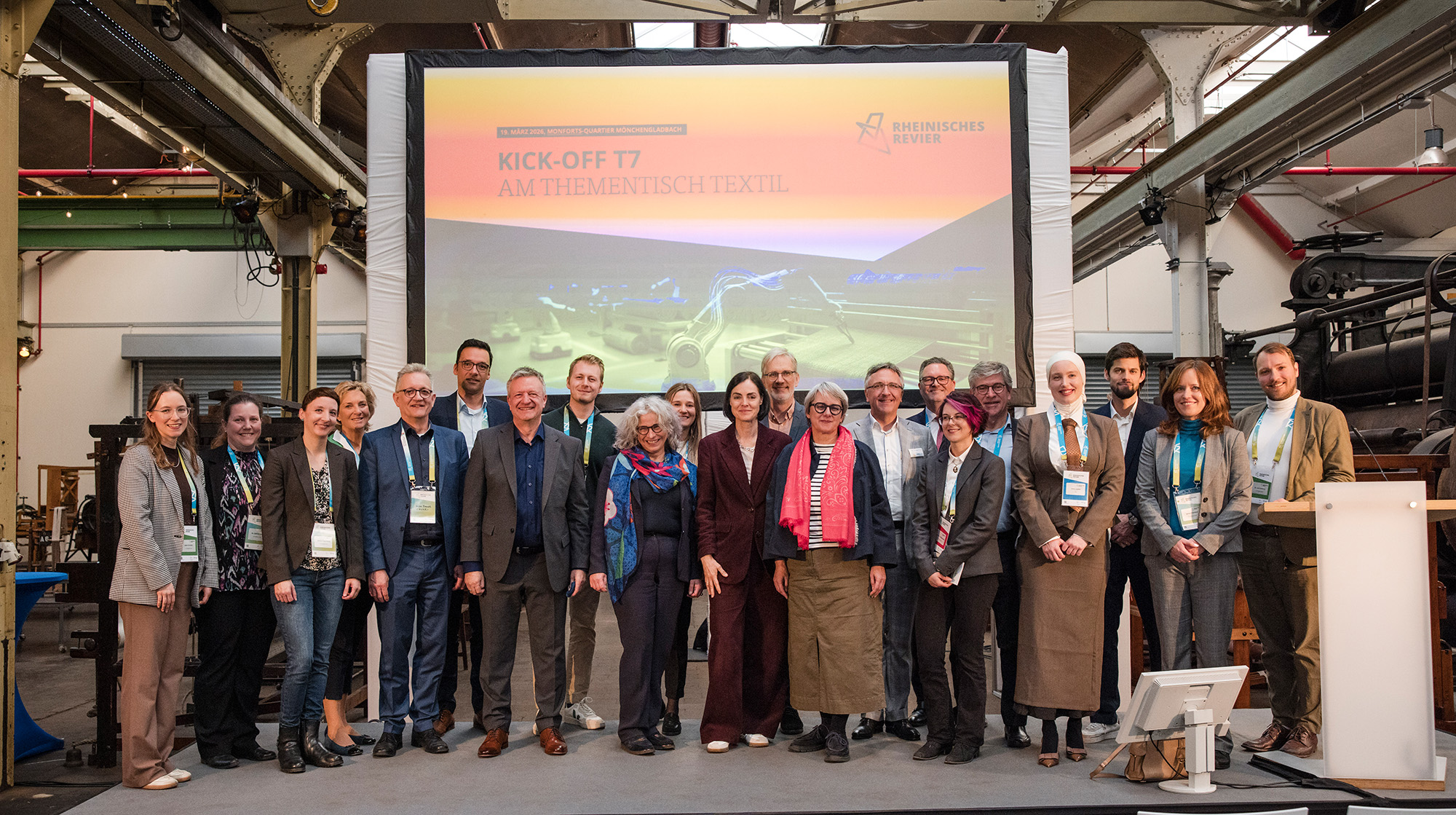
The official kick-off event for Textile Factory 7.0 (T7) in the Monforts neighbourhood in Mönchengladbach marked the start of an important transformation project for the German textile and clothing industry. Representatives from industry, research, politics and the regional economy came together at the "Thementisch Textil", an event format organised by the Zukunftsagentur Rheinisches Revier, to jointly lay the foundations for CO₂-neutral, circular and economically viable textile production in Germany.
The textile and fashion industry is facing major challenges worldwide: It accounts for around ten per cent of global CO₂ emissions. At the same time, companies in Germany are under considerable competitive pressure. Textile Factory 7.0 addresses precisely this interface and connects research facilities, industry and regional players in order to transfer innovative technologies and production processes to industrial application more quickly.
"The T7 project is actively driving the transformation of the Rhenish mining district into a modern industrial location. It combines innovative, sustainable textile production with research, development and the use of AI and robotics. At the same time, it strengthens the region's competitiveness and creates new jobs at all skill levels. In this way, T7 shows that structural change offers concrete opportunities for a sustainable industry," emphasises Silke Krebs, State Secretary in the Ministry of Economic Affairs, Industry, Climate Protection and Energy of the State of North Rhine-Westphalia.
For Felix Heinrichs, Lord Mayor of Mönchengladbach, one thing is clear: "When you think of textiles, you can't ignore Mönchengladbach! Textile production is part of our city's industrial history and DNA. But it also has the potential to play a key role in the future of Mönchengladbach as a business location. Textile Factory 7.0 brings industry and science together for innovation and research. In this way, it creates the foundation course for sustainable and economically viable textile production - and thus for future-proof jobs in Mönchengladbach. Today's launch of the T7 project marks a major milestone in Mönchengladbach's structural change."
The kick-off was aimed in particular at companies along the entire textile value chain. In several keynote speeches, participants were given insights into current developments and possible applications for future forms of production. Brother Internationale Industriemaschinen GmbH and Hch. Kettelhack GmbH & Co. KG showed how on-demand production can be integrated into microfactory concepts, thus enabling flexible, demand-orientated manufacturing processes.
In addition, 3E Smart Solutions presented what intelligent production for smart textiles could look like in the future. The industry cluster Cluster Industrielle Biotechnologie e. V. (CLIB) presented approaches on how biotechnological processes - such as the use of microorganisms - can be used in textile production in the future in order to use resources more efficiently and close cycles.
Four core modules are at the centre of Textile Factory 7.0: On-Demand Manufacturing, MicroFactory Engineering, Digital Textiles and Biosphere. These topics also formed the foundation course for four workshops in which the participants discussed the industry's requirements for future production solutions with those responsible for the modules. The aim was to identify specific needs and incorporate these directly into further project planning.
The T7 real-world laboratory approach is intended to test and optimise new technologies along the entire textile value chain. These include robotics, digital process chains and biotechnological processes that can contribute to the practical application of a functioning circular economy.
Professor Dr Susanne Meyer, President of The Hochschule Niederrhein: "Textile Factory 7.0 is an example of what applied research has to achieve today: it brings together science, industry and society to develop concrete solutions for the major challenges of our time. The Hochschule Niederrhein is contributing its textile expertise to this future-oriented project, from digital production processes and sustainable materials to circular value creation models. In this way, we are not only contributing to the transformation of the textile industry, but also strengthening the innovative power and future viability of the entire region."
At the same time, the project is making an important contribution to structural change in the Rhenish mining area. Under the motto "From coal to AI", new prospects for industrial value creation and skilled jobs are being created in the region. Textile Factory 7.0 is one of 19 anchor projects in the Rhenish mining area. From the state's point of view, the projects are central to the successful, rapid and visible implementation of structural change.
Textile Factory 7.0 is a joint project of the Research Institute for Textile and Clothing (FTB) at The Hochschule Niederrhein (HSNR), the Institute for Textile Technology (ITA) at RWTH Aachen University, the Association of the Northwest German Textile and Clothing Industry, the Association of the Rhineland Textile and Clothing Industry, the Textile Academy NRW and WFMG - Wirtschaftsförderung Mönchengladbach.
In a second development phase, an industrial park of the future is to be created in addition to Textile Factory 7.0. Here, the textile and clothing industry will develop and produce under zero-emission conditions and with CO₂-neutral processes. The industrial park will provide space for innovative production facilities, company branches in the textile industry and sustainable textile start-ups. This will create a modern industrial site that combines research, development and industrial production.
The Textile Factory 7.0 project is sponsored by the Federal Ministry for Economic Affairs and Energy (BMWE) via the "STARK" funding guideline for strengthening transformation dynamics and new departures in coal-mining areas and at coal-fired power plant sites, by the state of North Rhine-Westphalia within the remit of the Ministry of Economic Affairs, Industry, Climate Protection and Energy (MWIKE) in accordance with the framework guideline for implementing the North Rhine-Westphalia Coal Regions Investment Act (InvKG) and by the Federal Ministry of Research, Technology and Space (BMFTR).