

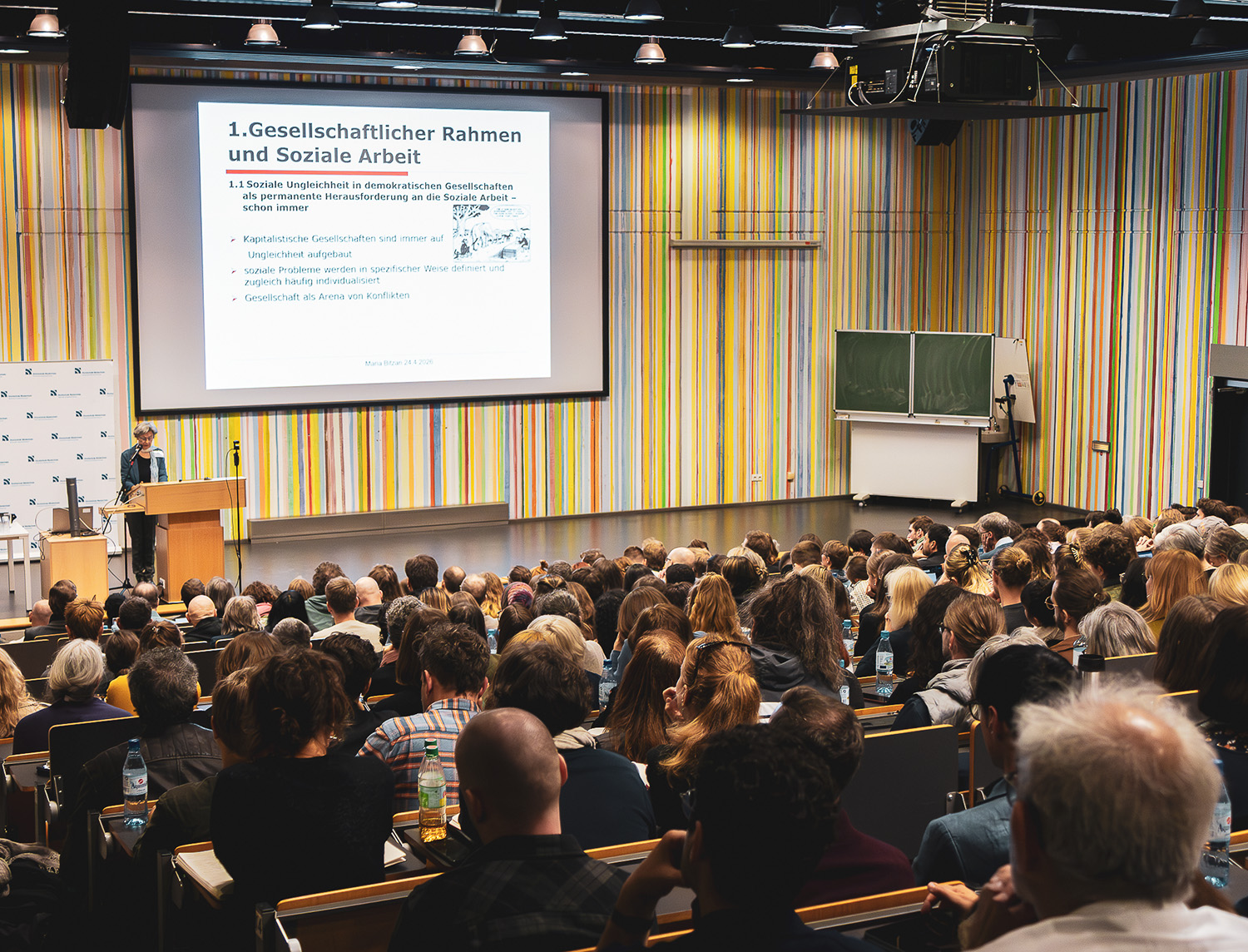
The Hochschule Niederrhein hosted the annual conference of the German Society for Social Work (DGSA) on 24 and 25 April 2026 under the title "Authoritarian Shifts in Social Work. Anti-democratic developments and interventions in social work contexts", around 650 participants from academia and practice discussed current challenges for democracy and social work. The academic programme comprised over 70 panels, keynotes, poster exhibitions and various discussion and exchange formats.
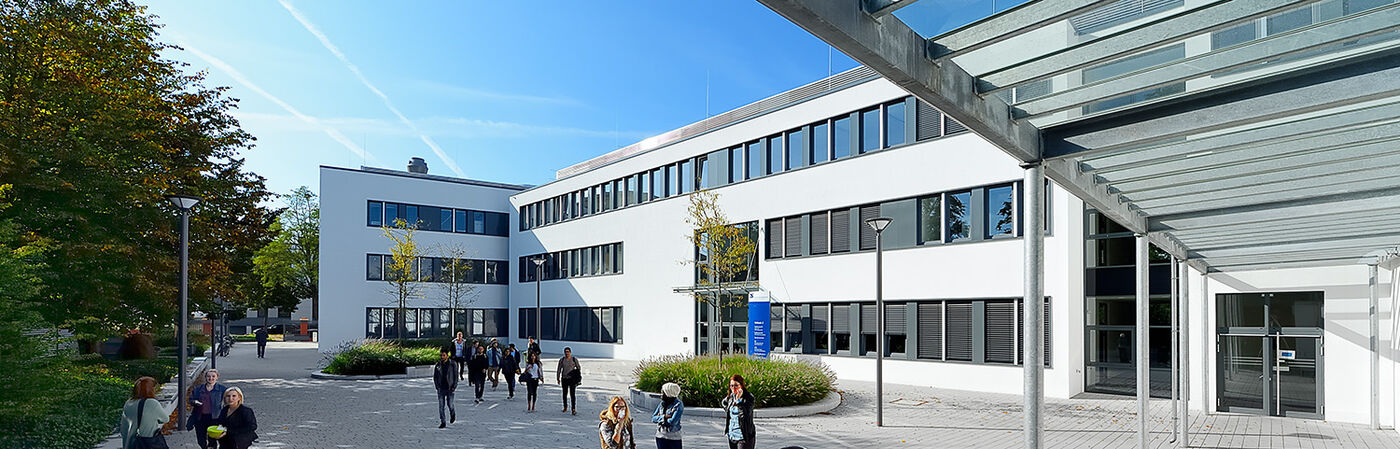
The conference at the university's Mönchengladbach location was opened by welcoming addresses from Karl-Josef Laumann, Minister of Labour, Health and Social Affairs of the State of North Rhine-Westphalia, the Mayor of Mönchengladbach Felix Heinrichs, the President of The Hochschule Niederrhein Prof. Dr Susanne Meyer and the Dean of the Faculty of Applied Social Sciences Prof. Dr Anne-Friederike Hübener. The contributions emphasised the importance of social work for social cohesion, regional responsibility and the role of the university as a place of academic and social exchange.
One of the four keynote speeches was given by Prof. Dr Beate Küpper, professor of social work in group and conflict situations at The Hochschule Niederrhein and deputy director of the SO.CON institute. Under the title "The tense centre - between hostility towards democracy and commitment to democracy", she examined current social tensions and their significance for social work.
The Hochschule Niederrhein was also strongly represented with numerous academic contributions: Prof. Dr Beate Küpper and Alina Jugenheimer, for example, addressed anti-Semitism in the context of schools and challenges for social work. Tina Leber focused on resistant young people in the context of right-wing extremism, while Christine Manthei, together with Prof. Dr Ann Marie Krewer, Saskia Griffig and Julia Schatzschneider, presented findings on democracy work in municipalities in North Rhine-Westphalia. Further contributions by Prof. Dr Sven Steinacker on the historical classification of social work under National Socialism and by Prof. Dr Michael Noack and Melanie Oeben on participation and trust rounded off the academic programme.
The conference was accompanied by a preliminary conference for doctoral candidates with a view to the right to award doctorates in the field of social work. Two doctoral prizes from the Barbara Budrich Foundation were also awarded during the conference. An evening event with around 350 participants also provided space for informal dialogue and networking. During the course of the conference, committee decisions were also made, including the discharge of the Executive Board and the farewell to the long-standing office manager.
The successful organisation of the conference was the result of a successful application by the Faculty of Applied Social Sciences as part of a DGSA call. On the university side, a team led by Professor Anne-Friederike Hübener and Mirco Wessolly, together with Dr Hannah Wachter, Jil Klother, Barbara Lenders and Serena Berghaus, were responsible for the on-site organisation. The realisation was supported by student assistants, media technology, IT and Jonathan Hörst.
"The Hochschule Niederrhein is very positive about the event overall, which strengthened academic discourse as well as the exchange between practice, politics and academia in the field of social work," says Dean of Faculty Professor Dr Anne-Friederike Hübener.