

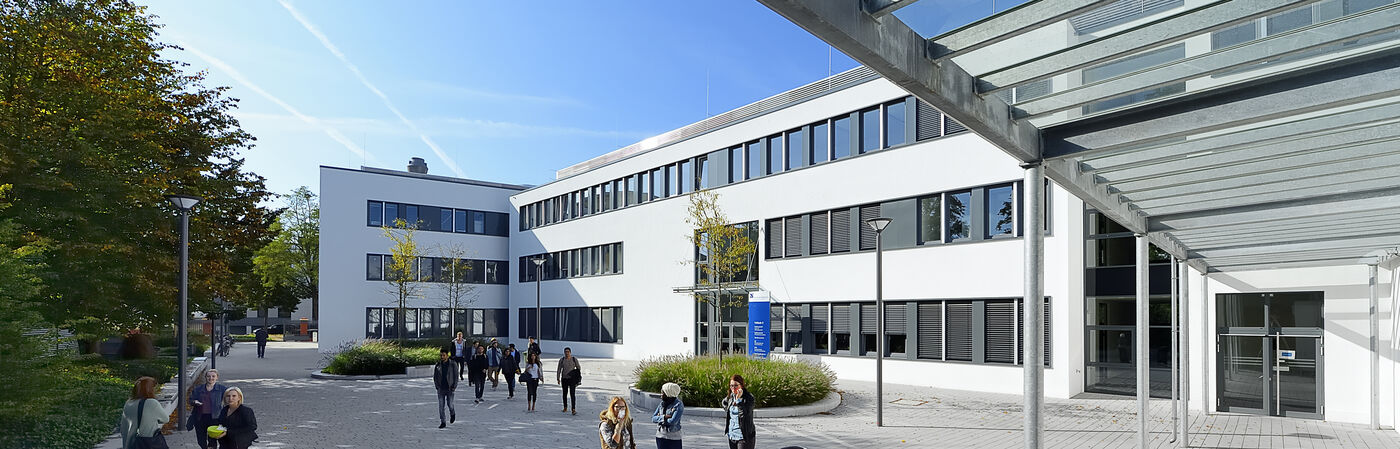
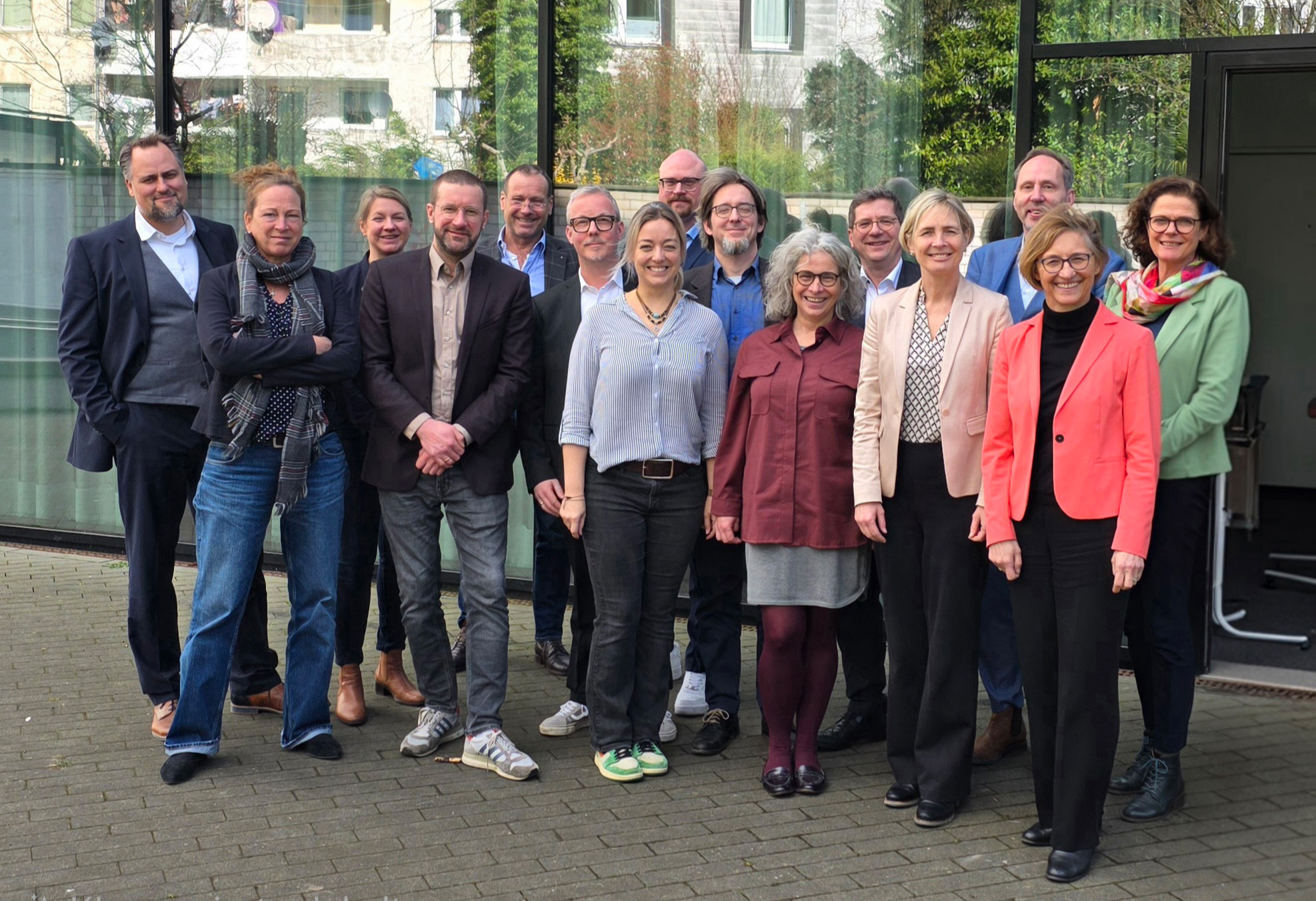
The Transferallianz Rheinisches Revier (TARR) sponsors' meeting took place at The Hochschule Niederrhein (HSNR) in Mönchengladbach. Representatives of the university management of the participating universities, the respective Vice Presidents for Research and Transfer and the heads of the transfer centres used the meeting to discuss the strategic development of the university alliance. The sponsors' meeting positions TARR as a transformation organiser, quality community and partner for business and politics in the Rhenish mining region.
Five universities of applied sciences work closely together in the Transferallianz Rheinisches Revier: Hochschule Niederrhein, FH Aachen, TH Köln, Hochschule Bonn-Rhein-Sieg and Katholische Hochschule Nordrhein-Westfalen. Together, they are pursuing the goal of actively shaping structural change in the Rhenish mining area through scientific transfer, innovation and cooperation with business and society. They also rely on their good co-operation with the chambers of industry and commerce in the Rhenish mining district and the Rhenish mining district future agency.
The participating universities reaffirmed their shared understanding of themselves as a competence network and transformation driver for structural change in the Rhenish mining area. They see TARR as a platform that makes the individual expertise profiles of the participating universities visible and networks them with each other and with stakeholders in the region in the interests of the Rhenish mining district transformation region.
Each partner university contributes its own specialist strengths and experience - from technological development, digitalisation, healthcare and sustainable production processes to economic and social transformation issues. The alliance brings together these different areas of expertise in a targeted manner in order to provide companies, local authorities and other partners from politics and society with quick and easy access to the entire range of services offered by the participating universities.
This creates particular added value for small and medium-sized enterprises (SMEs) in the Rhineland region. The transfer alliance gives them low-threshold access to innovation expertise, research infrastructures and cooperation opportunities. At the same time, the alliance positions itself as a central contact for politicians and regional players when it comes to scientifically sound contributions to structural change.
The university leaders emphasised the importance of scientific expertise in actively shaping transformation. "Together, the TARR universities have an enormous range of expertise for innovation and transformation in the Rhenish mining area. We want to harness this potential in the interests of the transformation region of the Rhenish mining area," emphasised Professor Susanne Meyer, President of the HSNR.
In the TARR network, the participating universities are strategic partners for innovation, economic development and social transformation. They thus make an important contribution to the sustainable development of the region.