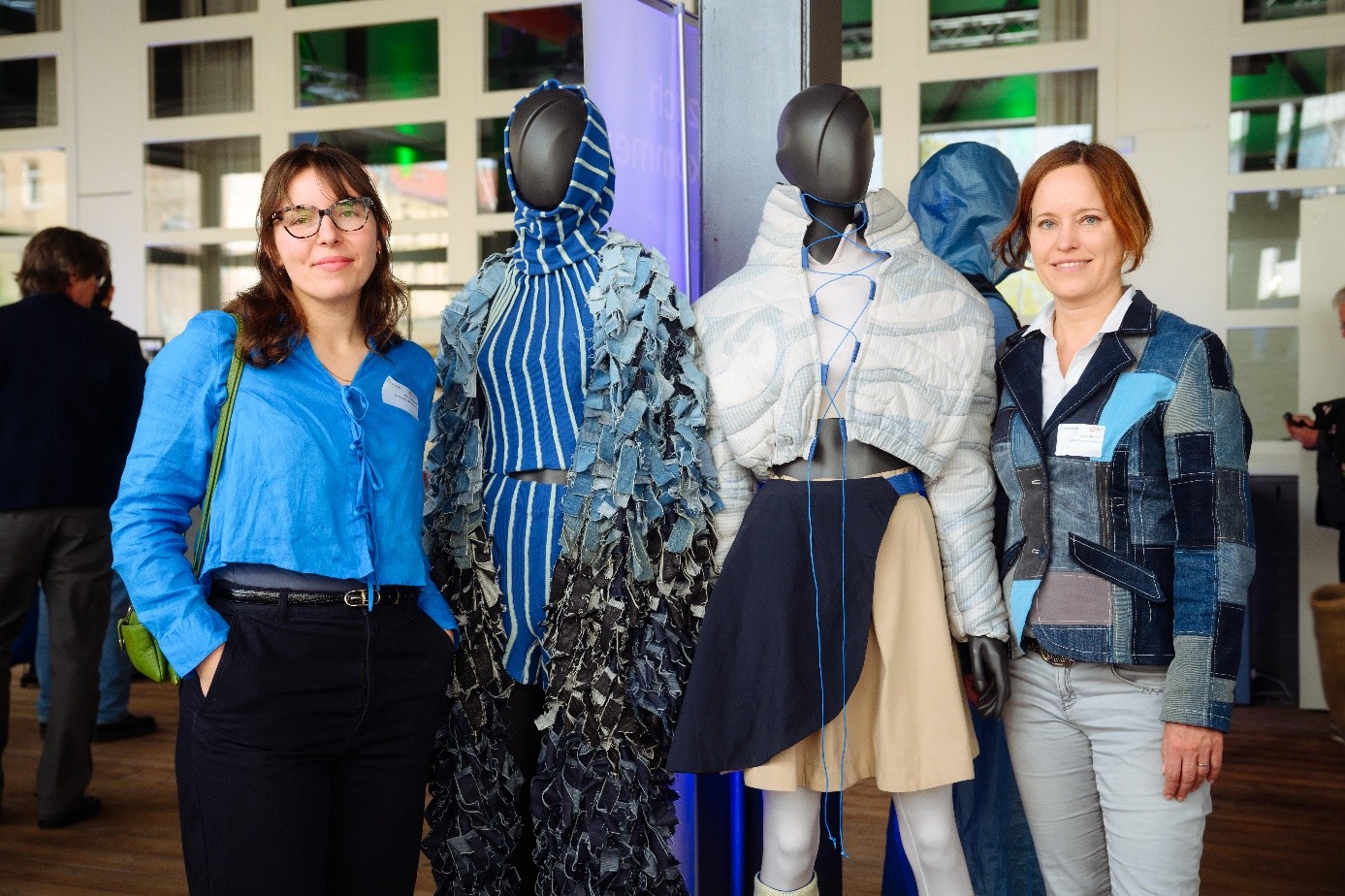


The Faculty of Textile and Clothing Technology at Niederrein University of Applied Sciences (HSNR) presented innovative research projects on hemp as a sustainable raw material at the 3rd Stakeholder Dialogue on Extended Producer Responsibility for Textiles in Berlin.
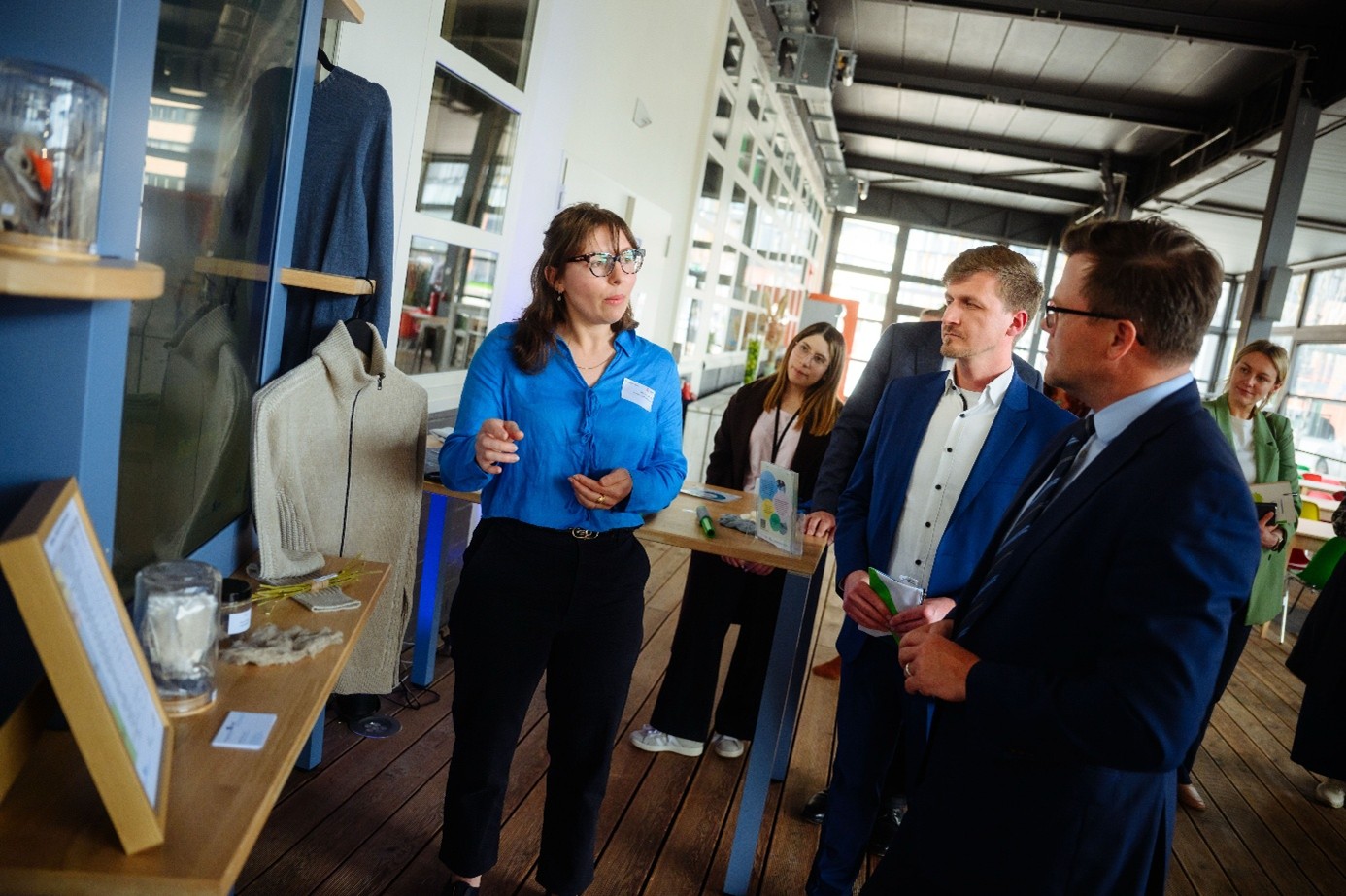
The Research Institute for Textile and Clothing (FTB) presented the "Hempknit" and "ReHemp" projects at the "Marketplace of the Textile Circular Economy". The presentation was complemented by students' sustainability-related work, which had previously been presented at Neo.Fashion in Berlin.
The one-day conference brought together more than 150 representatives from business, associations and politics. The focus was on the key issues paper on extended producer responsibility in the textile sector and the question of how a future textile law can enable a circular economy in a practical orientation, efficiently and with as little bureaucracy as possible. During the event, the FTB staff also met Federal Environment Minister Carsten Schneider and took the opportunity to discuss the importance of innovative materials and circular approaches for a sustainable transformation of the textile industry.
The Faculty of Textile and Clothing Technology has state-of-the-art laboratories and covers the entire textile value chain from fibre development to the finished product. A particular focus is on hemp as a sustainable, regionally cultivated alternative to cotton.
In the "Hemp Knit" project, sponsored by the European Regional Development Fund (ERDF), the FTB developed a sustainable and recyclable functional cardigan made from 70 per cent hemp and 30 per cent LyoHemp (regenerated fibres made from hemp fibres). The product is manufactured entirely locally in the region around Mönchengladbach, from the fibre to the 3D seamless knit. Thanks to the innovative zero-waste process from Bache Innovative, there is no production waste. An intelligent body mapping design with functional zones for ventilation, padding and tight-fitting areas combines comfort, functionality and sustainability. The jacket was already designed to conserve resources, be mono-material and versatile during the design process and offers great potential for applications in sportswear and workwear.
The "ReHemp" project, sponsored by the Industrielle Gemeinschaftsforschung (IGF), builds on this development and pursues the goal of transferring hemp fibres into a closed textile cycle. The focus is on recycling the hemp / LyoHhemp jacket developed in the previous project. In future, Lyohemp will increasingly be made from hemp waste instead of primary fibres. The material combines the robustness of hemp with the wearing comfort of Lyocell and remains of high quality even after being recycled several times.
Together with the Thüringisches Institut für Textil- und Kunststoff-Forschung Rudolstadt e.V. (TITK) and numerous partners from the German textile industry, the FTB is developing a waste classification system for fibres, yarns and pre- and post-consumer materials as a foundation course for efficient recycling processes. The waste is collected, sorted and shredded and then chemically recycled into new lyocell fibres. At the same time, the research team is investigating ageing and multiple recycling processes. The aim is to achieve at least three recycling cycles. The first fibres from waste materials are already being produced and further processed.