


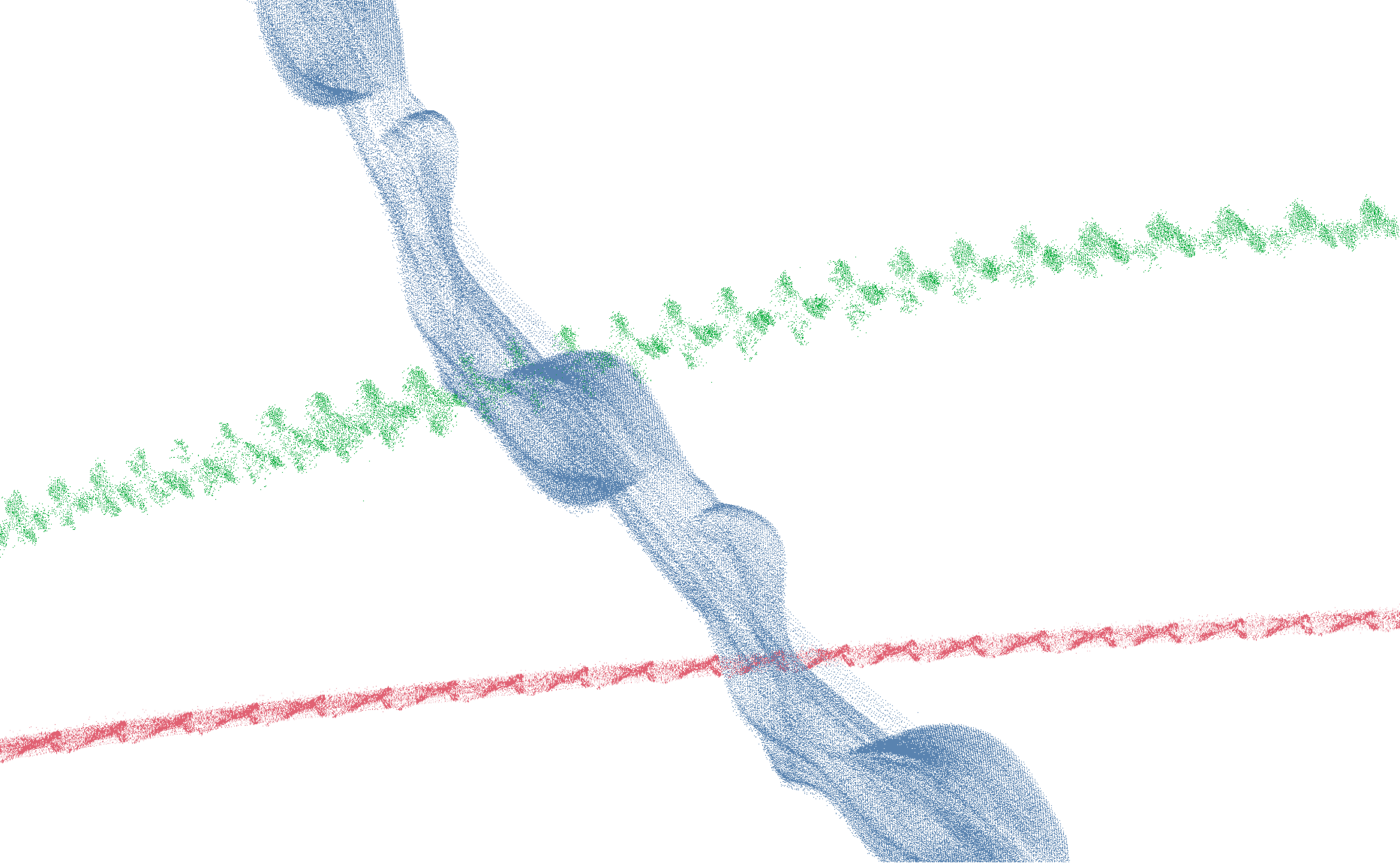
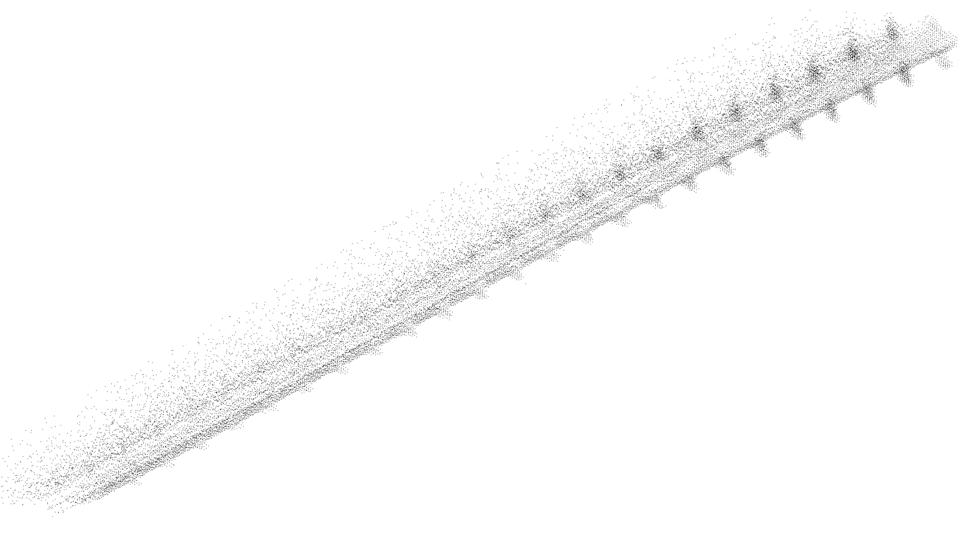
The BeeVision project aims to drive forward the development of a tool that uses event cameras, also known as Dynamic Vision Sensors (DVS), to monitor the presence and behaviour of pollinators. The key to this lies in the unique operating principle of the event camera. Rather than capturing full images at a fixed frame rate like a standard camera, the event camera records changes in brightness independently and asynchronously for each pixel. This results in footage with high temporal resolution whilst maintaining a low data throughput. These characteristics make it significantly easier to detect flying insects compared with standard video recordings, as these are fast-moving, small objects.
A comprehensive monitoring system must be able to distinguish insect flight paths from background movements – such as plants swaying in the wind – in the event camera’s footage, differentiate between the insects themselves, and classify the individual flight paths into genera or species groups depending on the research question being investigated. To meet these requirements, both traditional algorithms and AI methods are being investigated.