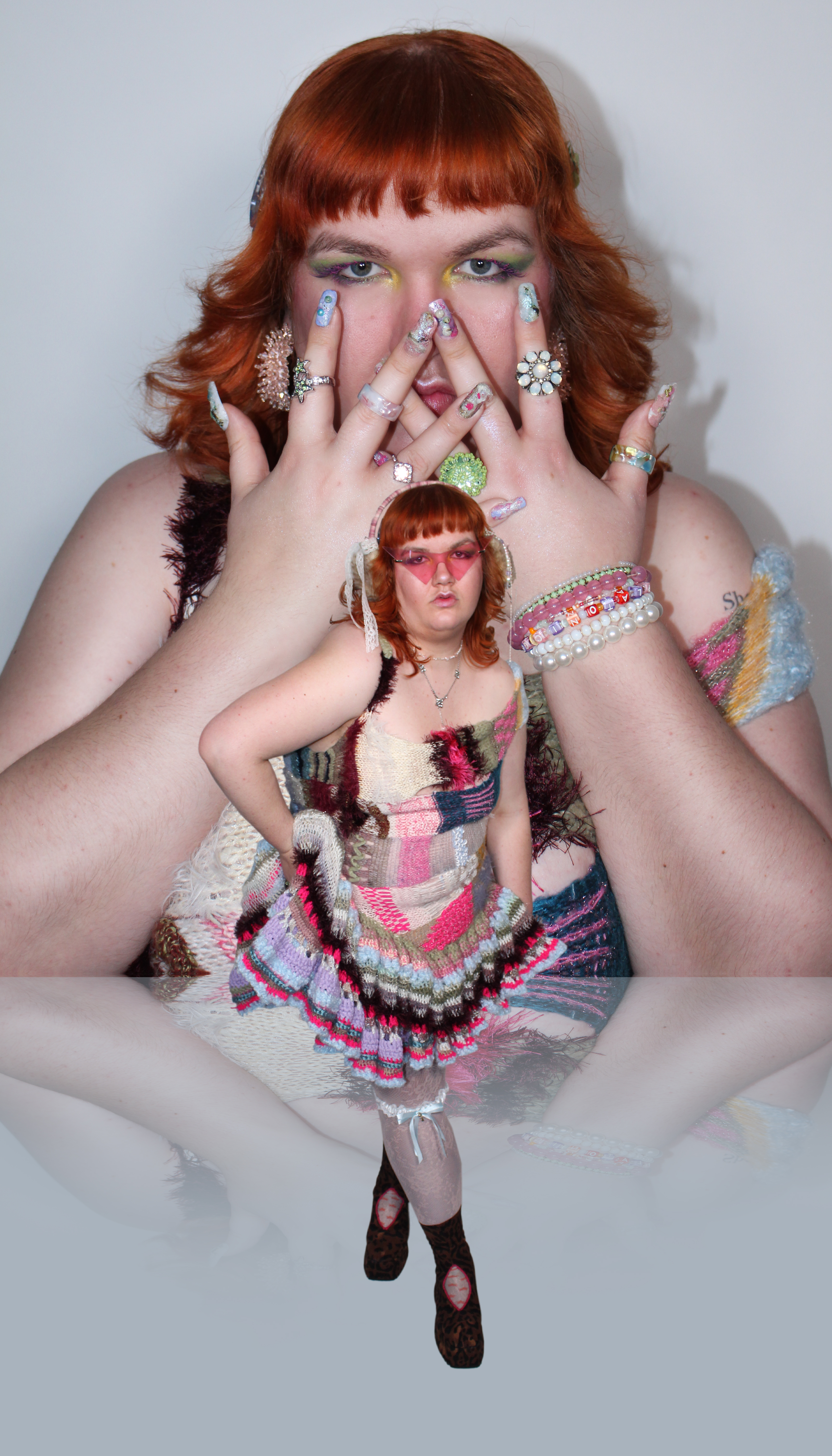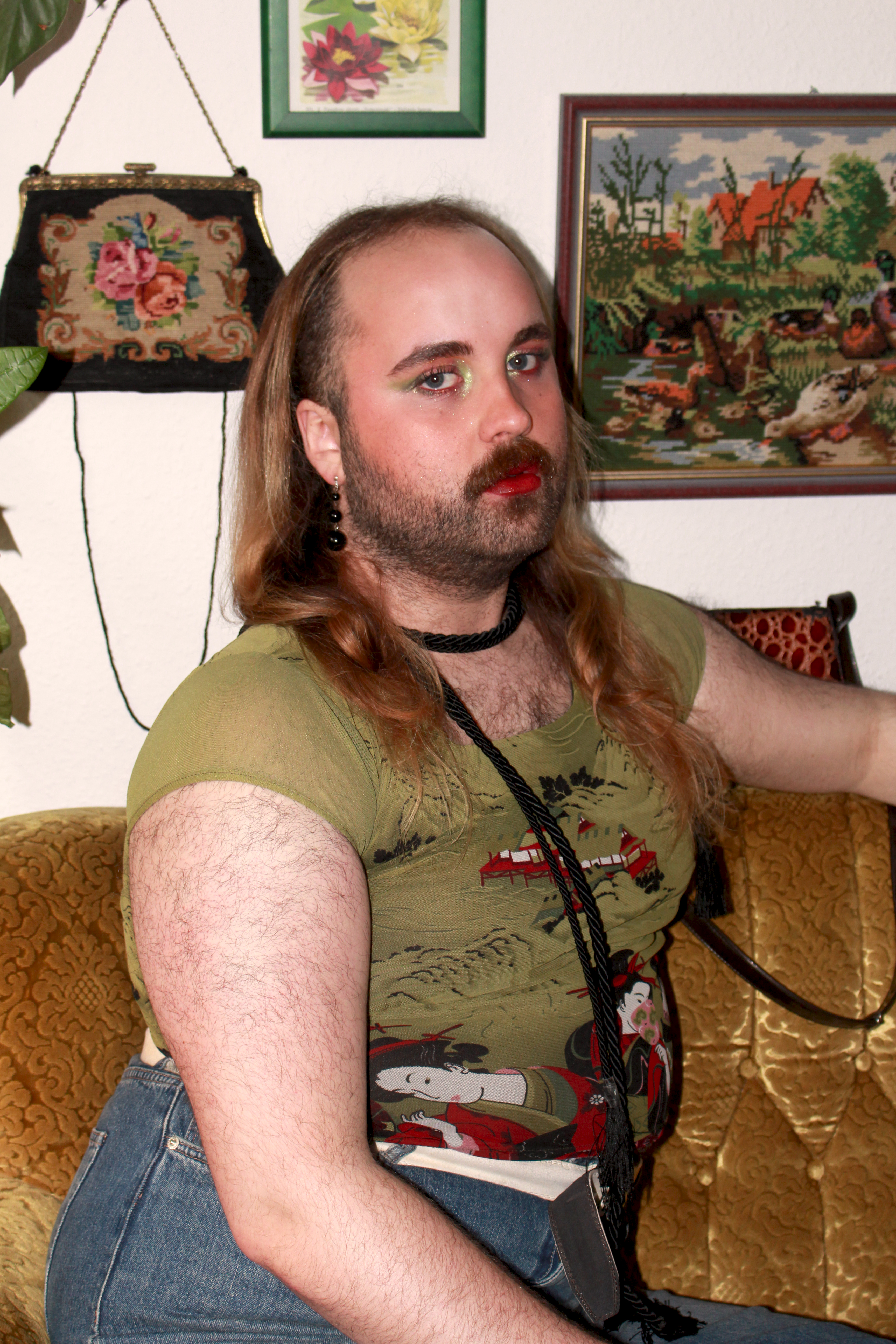




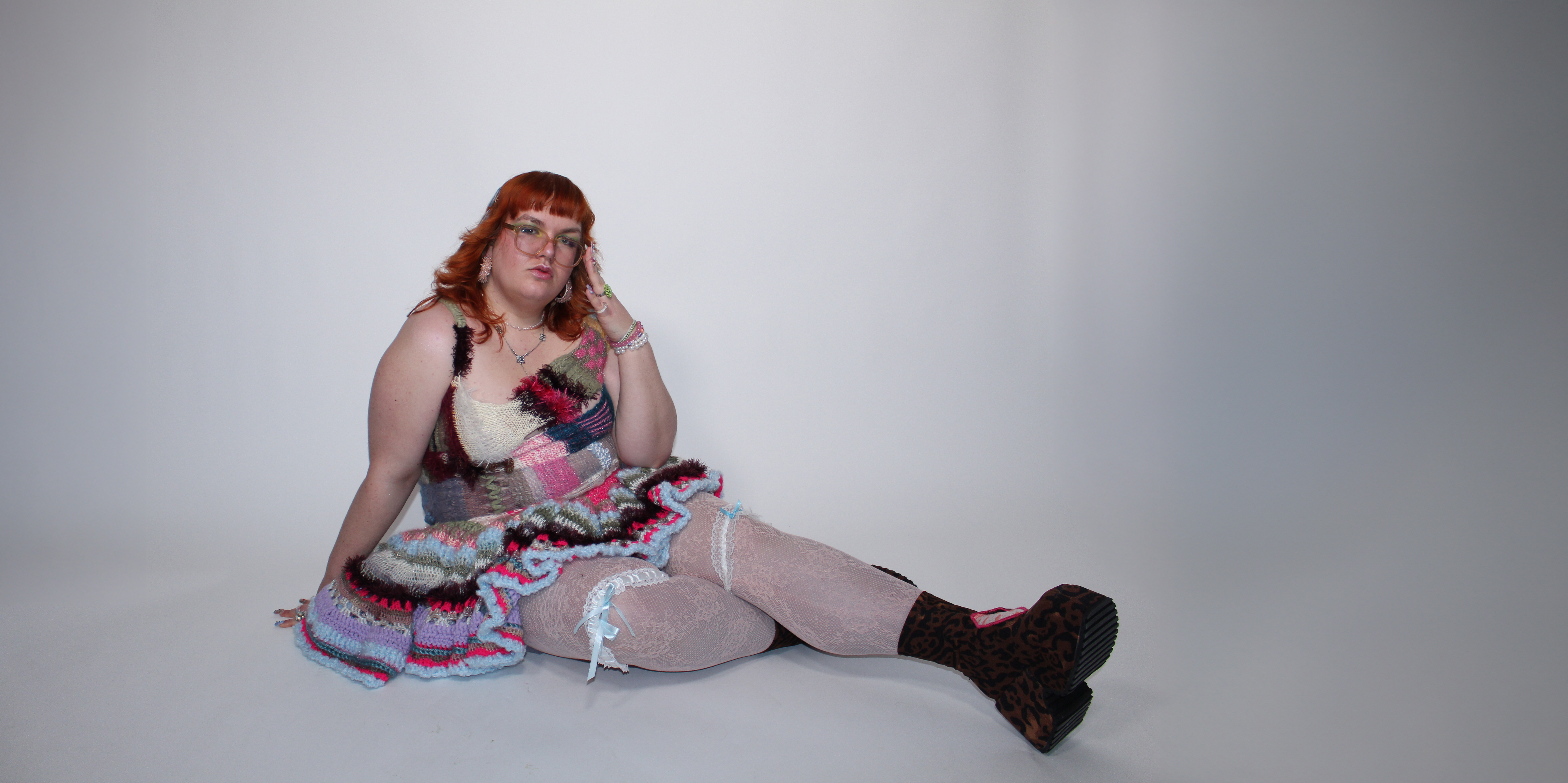
POST-SEXY FASHION
by Leon Laaser
Introduction
Fashion is one of the strongest visual languages of our society. It influences which bodies are perceived as desirable, appropriate or "too much". Clothing is never neutral, but embedded in power structures, historical norms and cultural expectations. Female bodies in particular are constantly judged: too sexy, not sexy enough, too conspicuous or too reserved. Fashion thus becomes an instrument of control with which such judgements are reproduced and reinforced.
My surname is Leon Laaser(He/It) and I am studying design engineering fashion. In my student assignment, I investigated the Male Gaze and developed a design concept that uses fashion as a means of self-determination, inclusion and critical reflection of social norms. I also made a dress that embodies this design concept.
Male Gaze & Objectification Theory
The term Male Gaze was coined by film theorist Laura Mulvey(She/You) and describes a structure of seeing in which the male gaze is considered the norm. In films, advertising and fashion, women are not primarily portrayed as acting subjects, but as aestheticised and sexualised bodies that are to be viewed, evaluated and desired.
For example, this gaze is reflected in the fragmentation of female characters in films:
It shows legs, breasts, lips - but rarely a person.
Objectification theory shows that this representation does not remain superficial. When female bodies constantly appear as objects, this perspective is internalised. Many women begin to perceive themselves from an observing external perspective:
What do I look like?
How do I appear?
Am I too much or too little?
This leads to self-monitoring. Your own body becomes a project that needs to be controlled, corrected and optimised. This permanent observation demands mental resources - it influences concentration, self-esteem, security and the ability to feel comfortable in one's own body.
The male gaze is therefore not only a media phenomenon, but also an instrument of social power:
It shapes how bodies are allowed to move, dress and exist.
Female Gaze
The female gaze is not a simple role reversal. It does not mean that men now become objects. Rather, it is about a shift in perspective.
Joey Soloway(They/Them) describes the Female Gaze as a political tool that creates empathy for women's perspectives. Instead of exhibiting bodies, experiences are shared. Instead of observing from a distance, the audience is invited to empathise with a character.
The Female Gaze can function on these three levels, for example:
1. Feeling Seen:
We feel what a character feels.
2. Show how it feels to be seen:
We experience what it feels like to be seen.
3. Returning the Gaze:
The gaze is thrown back
- the person being viewed is viewed themselves.
This creates a space in which visibility does not automatically mean objectification. The person remains the subject, even at the moment of being looked at.
Applied to fashion, this means that clothing can be more than just a surface. It can open up spaces of experience, narrate identity and make power relations visible - not through adaptation, but through conscious staging.
Post-sexy fashion
Post-sexy fashion does not see itself as a direct contrast to male gaze, but as an independent design concept.
The focus is on women's self-staging, i.e. the conscious decision of how a person wants to present herself and communicate her body.
The task of designers is to become aware of beauty and femininity norms and to critically scrutinise them. This can be done through the design itself, the staging or the marketing of the products. The aim is to make customers aware of existing social expectations and make alternatives visible.
Post-sexy fashion can be "sexy" - whereby the feeling of "being sexy" is defined solely by the wearer.
The concept is not so much a fixed style, but a mindset based on the awareness and willingness to break away from social norms. This makes it more accessible to all wearers, regardless of age, financial means, origin, dress size, etc.
This detachment also makes post-sexy fashion a political tool that protests against normative social standards and sees free self-expression as the foundation for a better future.