KAMU – Competence Centre
for Applied Mycology and Environmental Studies

Hochschule Niederrhein. Your way.

Competence centre for Appl. Mycology & Environmental Studies

“Mushroom research shaping the future”

Fungi and their mycelium are among the most exciting biological resources of our time. In the Lower Rhine region – an area with a long tradition of mushroom cultivation – KAMU brings together scientific expertise in mycology, biotechnology and sustainable material cycles. We are researching fungal fruiting bodies and mycelium as the key to innovation in food, feed and pharmaceuticals for a circular economy – networked, interdisciplinary and with a strong practical orientation.


KAMU’s areas of focus:

Edible mushrooms | Medicinal mushrooms | Mycelium | Enzymes | Biotechnology | Sustainability | Circular economy

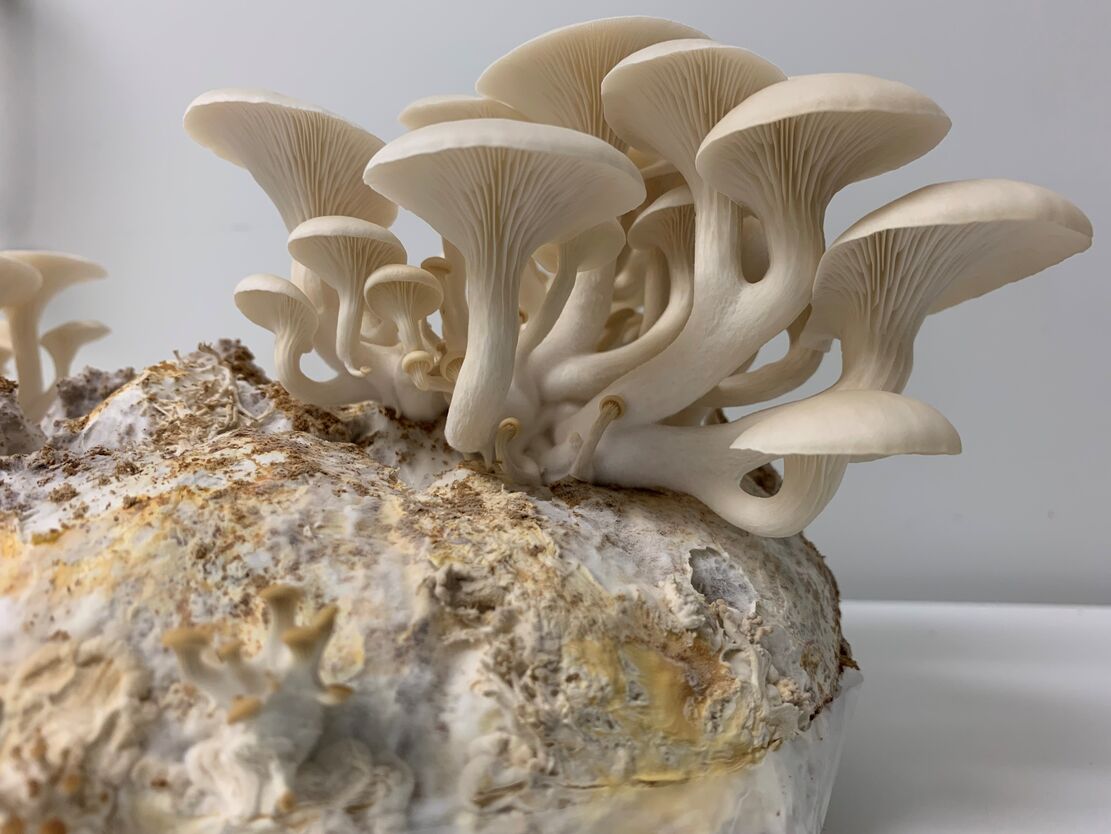
Oyster mushroom

Mission & Vision

KAMU regards fungi as a central focus and a key technology for sustainable innovation. The vision of our competence centre is to combine scientific findings from mycology, biotechnology and environmental research in such a way as to create new solutions for Nutrition and Health and environmental value creation.


“An interface between science, technology and regional development”

What gives us a distinction

  • Interdisciplinary expertise:

    Mycology, biotechnology, nutrition and food science, life-cycle assessment (LCA), product development and innovation

  • Innovative research in the field of mycology:

    Edible mushrooms, medicinal mushrooms, mycelium-based cultivation methods, enzymes

  • Sustainability:

    LCA, environmental assessment, utilisation of waste materials, circular economy

  • Networking expertise:

    Regional companies in the food industry and companies in the mushroom cultivation sector

Core research areas

  • Mycology of Edible Mushroom, Medicinal Mushroom and Noble Moulds

  • Biotechnology:

    (submerged) fermentation, enzyme production, upstream and downstream processing, analytics

  • Innovative product development

  • Sustainability & Circular Economy:

    Life-cycle assessment (LCA), novel uses for regional waste materials


“We bring together skills and expertise to create a place where fungal research and industry partners can develop innovations.”

History & Development

Mushroom research in the Lower Rhine region has a long tradition. At the same time, the subject is becoming more important than ever: the industry faces economic and environmental challenges, whilst demand for a wide variety of edible mushrooms, functional ingredients and biotechnological alternatives is growing steadily. The importance of fungi for sustainable material cycles is also coming increasingly into focus.

In order to harness this potential in a targeted manner and further develop it scientifically, the KAMU was established as a flexible, interdisciplinary organisation.


Key milestones along this path were:

  • 2011: Collaboration between the Society for Applied Mycology and Environmental Studies mbH (GAMU mbH, formerly the Research Centre of the Rhineland Chamber of Agriculture) and the Department of Food Technology at the Hochschule Niederrhein

  • 2013: The Interreg project FooDS (Euregio Rhine-Meuse North)

  • 2016: Establishment of the competence centre for applied mycology at the Department of Oecotrophology, Hochschule Niederrhein, with funding from the Ministry of Culture and Science of the State of North Rhine-Westphalia (FH-Struktur 2016)

  • Since 2021: active research with industry and academic partners on sustainable regional waste cycles within the BMFTR-funded WIR! Alliance INGRAIN

  • Establishment of a strong network comprising colleges, universities, companies and associations

Scientific Director

Food biotechnology and product development

Team of Professors

Biotechnology Member ILOC Institute
Mathematics/Statistics and applied IT

Physics and Technical Facility Management

Academic staff

Melina Lindek, M.Sc.
Research Associate; Food Biotechnology Division, INGRAIN project, KAMU
Martin Wäscher, M.Sc.
"BasiCALT" project Faculty 01 – Chemistry / Department of Biotechnology Faculty of Food and Nutrition Sciences KAMU – Competence Centre for Applied Mycology and Environmental Studies ILOC – Institute for Coatings and Surface Chemistry (ILOC)
Mette Kollmer, M.Sc.
Research Assistant; Food Biotechnology in the INGRAIN project, KAMU
Sophie Schürmann, M.Sc.
Research Assistant; Life Cycle Assessment Unit, GAVeKids project

Furthermore, Bachelor’s, Master’s and PhD students are actively involved in research.


Cooperation

We see ourselves as a bridge between research and industry – as a source of scientific inspiration and a catalyst – and facilitate exchange, knowledge transfer and innovation processes.


KAMU as a cooperation partner for:

  • commercial edible mushroom growers

  • Food companies

  • Biotechnology companies

  • Companies involved in the recycling of agricultural and food waste

contact

Do you have a research question relating to fungi or sustainable material cycles?


We look forward to discussing this with you and would be happy to explore individual opportunities for collaboration.


→ Please contact us at: kamu(at)hs-niederrhein.de

INGRAIN Alliance for Agriculture, Textiles and Fooods

…from waste to recyclable material to nutrient


As part of the INGRAIN Alliance, the aim is to establish a bio-based circular economy in the INGRAIN region (Heinsberg district). The aim is to support structural change in the region by linking previously untapped biomass potential from the agricultural, textile and food sectors and by developing new approaches to value creation.

The alliance is funded under the ‘WIR! – Change through Innovation in the Region’  funding scheme with a total of €13.600.358.

As a partner in the consortium, KAMU contributes its mycological and biotechnological expertise to the alliance’s key research and development projects.

INGRAIN projects involving KAMU

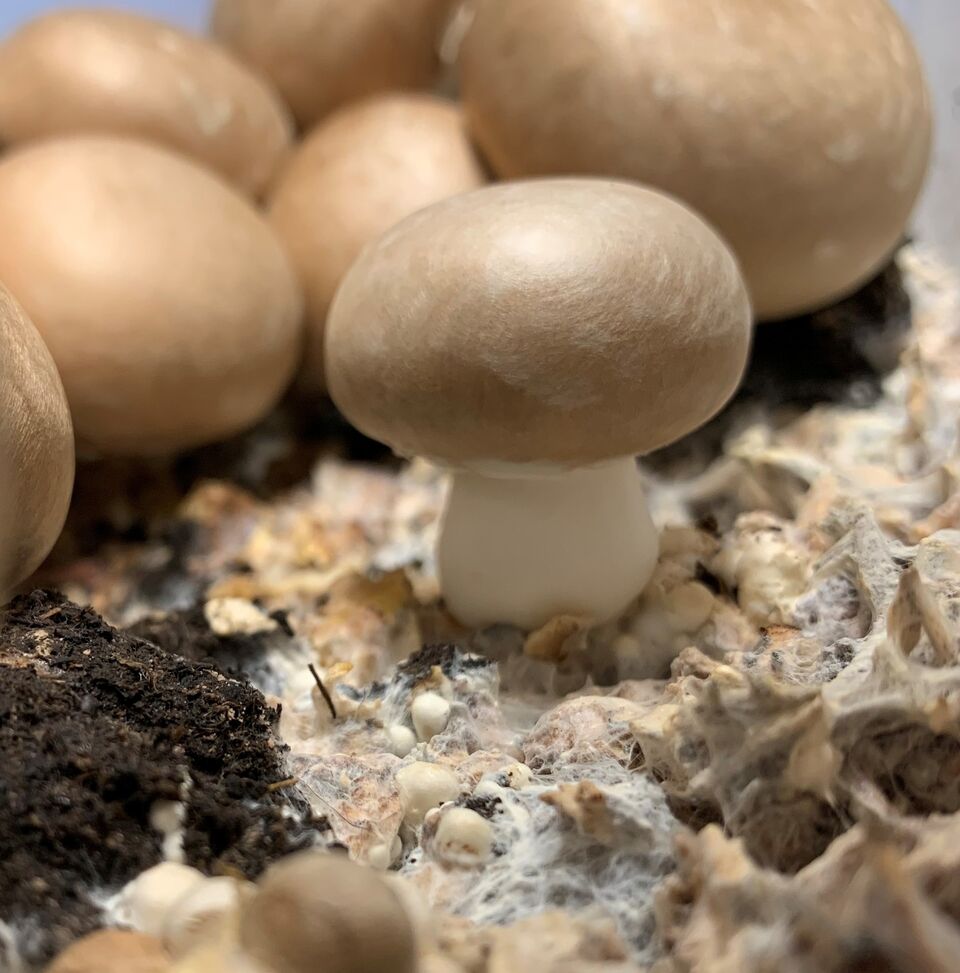
Champignon_TechEnt
TechEnt

TechEnt develops peat-free, bio-based growing media from regional cellulose-rich waste materials for tomato and mushroom cultivation. Through analysis, substrate design, demonstrator development and cultivation trials, a sustainable, food-safe substrate system is being created as an alternative to conventional peat products.


Duration: (09/2022 – 08/2025)

Funding: BMFTR

Partners involved: ITA RWTH Aachen University, Hochschule Niederrhein (KAMU), Rhine-Waal University of Applied Sciences


core research areas :

  • Characterisation of commercial materials and regional waste materials for substrate development
  • Design and production of a bio-based growth substrate demonstrator
  • Cultivation trials and evaluation of technologically relevant parameters for substrate adaptation
  • Assessment of the food safety and sustainability of the substrate system
BasiCALT
BasiCALT

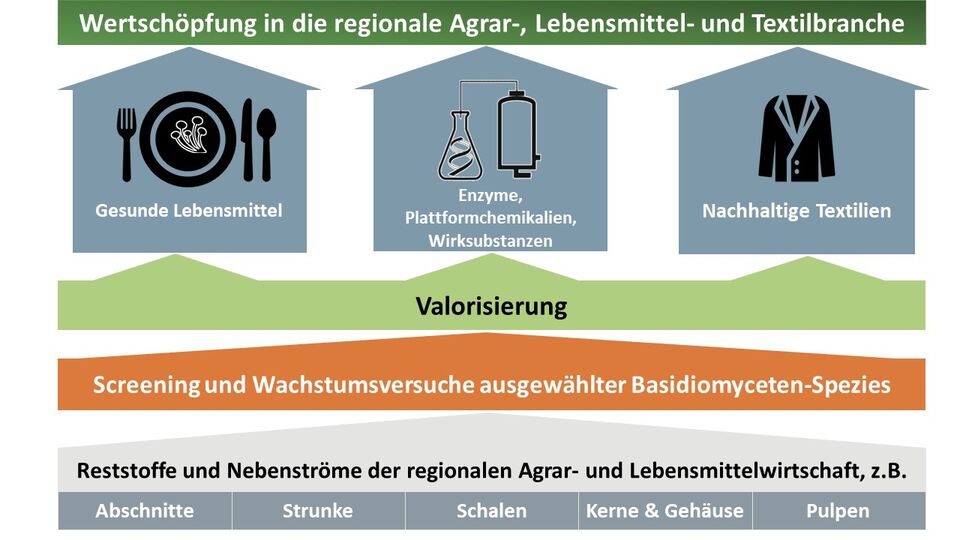
BasiCALT utilises regional waste materials from the agricultural, food and textile sectors by cultivating basidiomycetes, and uses these to develop new applications for food, biotechnological products and sustainable materials such as vegan leather. The project strengthens the bio-based circular economy by closing material cycles and highlighting cross-sector value creation potential.


Duration: (01/2024 – 12/2026)

Funding: BMFTR

Partners involved: Hochschule Niederrhein (KAMU), ITA at RWTH Aachen University


core research areas:

  • Cultivation of edible mushrooms using regional waste materials to produce healthy food

  • Development of biotechnological products, including for the food and pharmaceutical sectors

  • Extraction and processing of mycelium materials for textile applications (e.g. vegan leather)

  • Sustainability analyses to assess regional circular economy potential

BasiFlies
BasiFlies

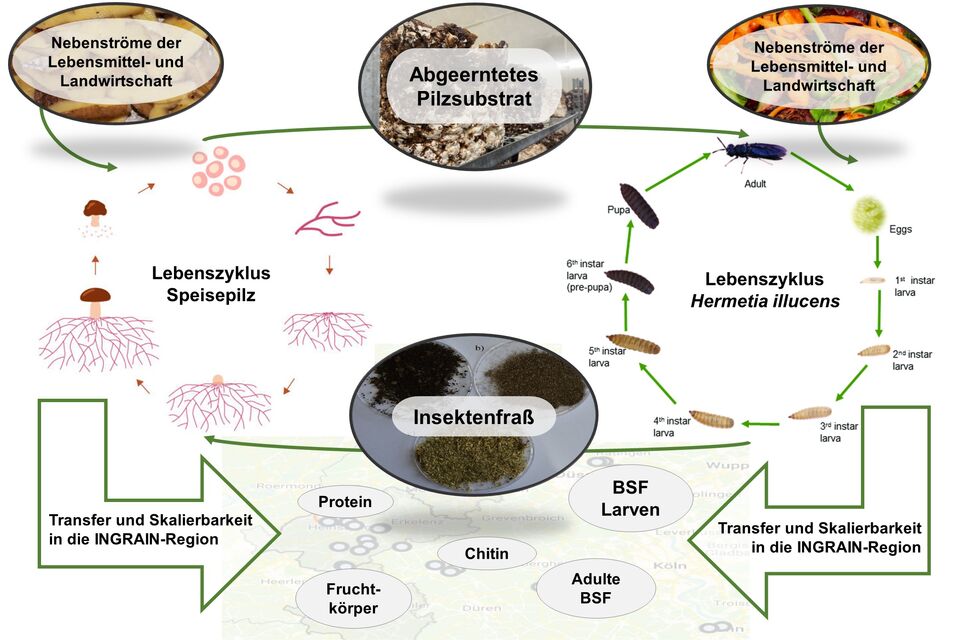
BasiFlies is investigating the mutual use of residual materials from edible mushroom production and the rearing of the black soldier fly in order to develop new bio-based value chains. The project brings together the research strands of BasiCALT and RegioFLiEs, thereby strengthening the development of integrated circular systems within the alliance.


Duration: (02/2026 – 04/2028)

Funding: BMFTR

Participating partners: Hochschule Niederrhein (KAMU), Rhine-Waal University of Applied Sciences


core research areas:

  • Use of fungal substrate residues and insect frass as substrates for the respective other cultivation system

  • Extraction of valuable components (e.g. protein, chitin) from by-products

  • Assessment of technological interfaces between fungal and insect production

  • Development of circular process chains for the regional bioeconomy

BasiFlies II
BasiFlieS II

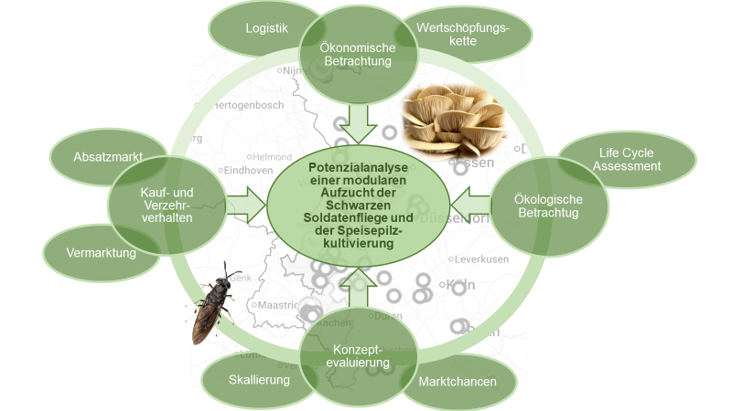
The BasiFlieS II project is investigating the practical implementation of a regional biorefinery concept that combines the use of by-products for the cultivation of edible mushrooms and Hermetia illucens larvae. The aim is to develop an ecologically and economically viable system that contributes to a regionally based circular economy.


Duration: (05/2026 – 12/2028)

Funding: BMFTR

Partners involved: Hochschule Niederrhein (KAMU), Rhine-Waal University of Applied Sciences


core research areas:

  • Analysis and processing of regionally available by-products

  • Ecological assessment of integrated mushroom and insect farming systems

  • Research into consumer acceptance of alternative protein sources

  • Development of marketable products and business models

EDUCIRCLE
EDUCIRCLE

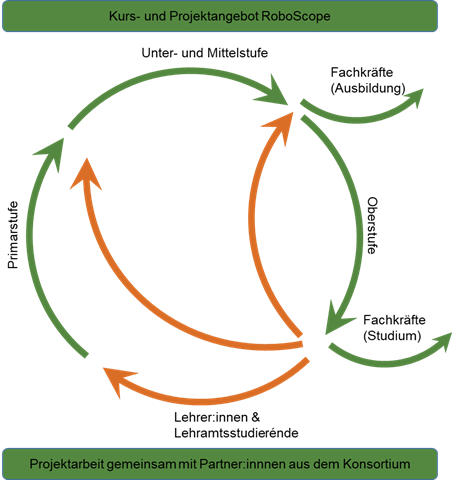
EDUCIRCLE is developing an educational concept that conveys the principles of the circular economy to the next generation of specialists in a way that is both understandable and with a strong practical orientation. By integrating all INGRAIN topics into a single teaching framework, schools in the region and teacher training programmes in the field of technology are systematically involved.


Duration: (01/2026 – 12/2027)

Funding: BMFTR

Partners involved: WZL-IQS and ITA at RWTH Aachen University, Hochschule Niederrhein (KAMU), Rhein-Waal University of Applied Sciences


core research areas:

  • Development of a comprehensive didactic concept for teaching circular value creation
  • Implementation in various teaching education and workshop formats with partner schools in the INGRAIN region
  • Involvement of local stakeholders to facilitate the teaching with a practical orientation for circular economy approaches
  • Integration of the content into teacher training (engineering) at RWTH Aachen University
QualiSek
QualiSek

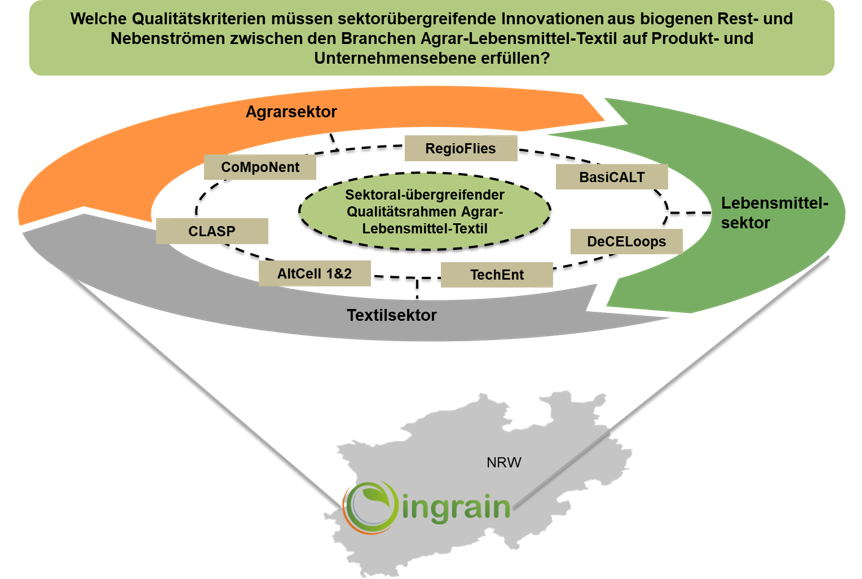
QualiSek is developing a framework model for quality criteria to support companies in the agricultural, food and textile sectors in their transition to a circular economy. By analysing specific case studies from the INGRAIN innovation streams, cases with a strong practical orientation for residual material quality, process reliability and product development are defined in order to enable new circular value chains.


Duration: (06/2026 – 12/2028)

Funding: BMFTR

Participating partners: ITA and WZL-IQS at RWTH Aachen University, Hochschule Niederrhein (KAMU), Rhein-Waal University of Applied Sciences


core research areas:

  • Development of a quality framework for circular product and process chains across the agriculture–food–textiles sector coupling

  • Analysis of case studies from the innovation strands ‘mushrooms’, ‘insects’ and ‘lignocellulose’

  • Definition of quality requirements with a practical orientation for residual and by-product streams as well as operational processes

  • Supporting regional companies in implementing circular economy strategies and developing new business models

Publications

Dissemond, M.H., Franken, C.E., Sari, M. Agaricus bisporus grown on Sustainable Peat Casing Alternatives—A Systematic Review on Quality Characteristics. Foods 2025, 14, 3348. https://doi.org/10.3390/foods14193348.

Sari, M. The birch polypore (Fomitopsis betulina). Bioactive compounds and their therapeutic potential. Journal of Phytotherapy 2025; 46: 69–75. https://doi.org/10.1055/a-2531-5363

Kalitukha, L., Bleha, R., Synytsya, A., Kraska, J., Sari, M. Hydrocolloids from the mushroom Auricularia heimuer: composition and properties. Journal of Fungi, 2023, 9, 681. https://doi.org/10.3390/jof9060681

Dicks, L., Jakobs, L., Sari, M., Hambitzer, R., Ludwig, N., Simon, M.C., Stehle, P., Stoffel-Wagner, B., Helfrich, H.P., Ahlborn, J., Rühl, M., Hartmann, B., Holst, J.J., Ellinger, S. Fortifying a meal with oyster mushroom powder beneficially affects glucagon-like peptide-1, non-esterified free fatty acids and hunger sensation in adults with impaired glucose tolerance – a double-blind randomised controlled crossover trial. European Journal of Nutrition, 2021. https://doi.org/10.1007/s00394-021-02674-1

Kalitukha, L., Sari, M. Chemical Composition and UV Absorption Activity of an Aqueous Alkali Extract from the Fruiting Bodies of the Tinder Conk Mushroom Fomes fomentarius ( Agricomycetes). International Journal of Medicinal Mushrooms, 2021 , 23(4): 23–37.https://doi.org/10.1615/IntJMedMushrooms.2021038160

Dicks, L. & Ellinger, S. Effect of the Intake of Oyster Mushrooms (Pleurotus ostreatus) on Cardiometabolic Parameters – A Systematic Review of Clinical Trials. Nutrients, 2020, 12: 1134. https://doi.org/10.3390/nu12041134

Sari, M., Toepler, K., Roth, C., Teusch, N., Hambitzer, R. The birch bracket medicinal mushroom, Fomitopsis betulina (Agarycomycetes) – a bioactive source of beta-glucan fraction with the ability to block tumour cell migration. International Journal of Medicinal Mushrooms, 2020, 22 (1), 1–13. https://doi.org/10.1615/IntJMedMushrooms.2019033291

Schlösser, I. & Prange, A. Antifungal activity of selected natural preservatives against Aspergillus westerdijkiae and Penicillium verrucosum and the interactions of these preservatives with food components. Journal of Food Protection, 2019, 82 (10), 1751–1760. https://doi.org/10.4315/0362-028X.JFP-19-082

Schlösser, I. & Prange, A. Effects of selected natural preservatives on the mycelial growth and ochratoxin A production of the food-related moulds Aspergillus westerdijkiae and Penicillium verrucosum. Food Additives and Contaminants, 2019, 36 (9), 1411–1418. 10.1080/19440049.2019.1640397

Prange, A., Sari, M., von Ameln, S., Hajdu, C., Hambitzer, R., Ellinger, S., Hormes, J. Characterisation of selenium speciation in selenium-enriched button mushrooms (Agaricus bisporus) and selenised yeasts (dietary supplement) using X-ray absorption near-edge structure (XANES) spectroscopy. Journal of Trace Elements, 2019, 51, 164–168. https://doi.org/10.1016/j.jtemb.2018.10.018

Sari, M., Toepler, K., Nickisch-Hartfiel, A., Teusch, N., Hambitzer, R. Aqueouscold-water extracts of Lentinus edodes (Agaricomycetes) obtained via cross-flow ultrafiltration exhibit apoptosis in tumour cells. International Journal of Medicinal Mushrooms, 2018, 20 (11), 1107–1119. https://doi.org/10.1615/IntJMedMushrooms.2018028980

Lelley, I.J., Sari, M., Hambitzer, R. Cultivatededible mushrooms. ErnährungsUmschau special issue Food 2018, pp. 18–27.

Etter, D., Rupp, A., Prange, A., Drissner, D. Inactivation of mould spores in a model system on raisins by low-energy beam. Food Control, 2018, 92, 357–361.

Von Ameln, S., Dicks, L., Prange, A., Ellinger, S. Dietary supplements made from mushrooms. An overview of health-related aspects with a focus on cardio-metabolic effects and an overview of food law regulations. Nutrition Review-International, 2018, 65 (6), 92–99.

Sari, M., Hambitzer, R. Versatile Mushrooms. A Key Driver for Culinary and Health Innovations. G.I.T. Laboratory Journal. 2017, 1–2: 36–38.

Sari, M., Prange, A., Lelley, J., Hambitzer, R. Screening of β-glucan contents in commercially cultivated and wild mushrooms. Food Chemistry, 2017, 216: 45–51. https://doi.org/10.1016/j.foodchem.2016.08.010

Sari, M., Hambitzer, R., Lelley, J., Toepler, K., Teusch, N., Nickisch-Hartfiel, A. Characterisationof cross-flow ultrafiltration fractions from Grifola frondosa (Agaricomycetes) reveals distinct cytotoxicity in tumour cells. International Journal of Medicinal Mushrooms, 2016, 18 (8): 671–680. https://doi.org/10.1615/IntJMedMushrooms.v18.i8.30

Lelley, J., Sari, M., Hambitzer, R. Cultivatededible fungi. Ernährungs Umschau, 2015, 62: 352–362.

Poster presentations

Georgoulis, A., Wäscher, M., Wagner, M. VEGGIE POWER FOR GREEN CHEM? Turning NRW’s vegetable waste into green catalysts: Biotechnological production of laccases by Pleurotus ostreatus and Flammulina velutipes in submerged culture using agricultural by-products. 23 March 2026. VAAM Annual Conference 2026, Berlin.

Wäscher, M., Gillette, J., Schmitz, C., Wagner, M. Machine-learning-based design of experiments for fermentation with Pleurotus ostreatus. 23 March 2026. VAAM Annual Conference 2026, Berlin.

Sari, M., Lindek, M. Potential of fungal mycelium for the development of an enriched plant-based burger patty. 15 August 2024.12th International Mycological Congress, Maastricht.

Dissemond, M., Sari, M. Development of a Sustainable Bio-Based Substitute for Peat from Agricultural Residue Streams for Agaricus bisporus Cultivation. 12 August 2024.12th International Mycological Congress, Maastricht.

Lindek, M., Kox, K.A., Sari, M. Edible mushroom myceliumas a component of innovative foods: the example of a plant-based burger patty. 60th DGE Congress, Bonn, 15 March 2023, Proceedings of the German Nutrition Society, p. 62.

Sari, M., Kox, K.A., Löw, J., Schoob, J., Hambitzer, R. Screening of light effects on mushroom mycelia. ISMS Congress 2021, virtual, 14–17 September 2021.

Sari, M., Hüsgen, S., Löw, J. Fomitopsis betulina mycelium as a source of biofunctional compounds. 57th DGE Congress, Jena, 18–20 March 2020, Proceedings of the German Nutrition Society, p. 12–2, p. 103.

Sari, M., Knedlik, R., Hambitzer, R. Potential of sensorially active substances in low-molecular-weight mushroom extract. GDL Congress, Bremerhaven, 11–13 October 2018, GDL Abstract Book, p. 90.

Prange, A., Sari, M., von Ameln, S., Ellinger, S., Hambitzer, R., Bovenkamp-Langlois, G.L., Hormes, J. Chemical speciation of selenium in selenised yeasts (dietary supplements), food-contaminating moulds and button mushrooms (Agaricus bisporus). 70th Annual Meeting of the German Society for Hygiene and Microbiology (DGHM), Bochum, 19–21 February 2018, DGHM Abstract Book 308/LMP.

Hasselbusch, J., Sari, M., Hambitzer, R. Isolation of a novel hydrocolloid from Lentinula edodes. 55th DGE Congress, Hohenheim, 7–9 March 2018, Proceedings of the German Nutrition Society, P9-3, p. 79.

Schlösser, I., Prange, A. Antifungal activity of selected natural preservatives against the foodborne moulds Penicillium verrucosum and Aspergillus westerdijkiae under different pH and aw values. 70th Annual Meeting of the German Society for Hygiene and Microbiology (DGHM), Bochum, 19–21 February 2018, DGHM Abstract Volume 309/LMP.

Sari, M.; Roth, C.; Hambitzer, R.Piptoporus betulinus – a new promising source of beta-glucans? IMMC9 Congress, Palermo, 24–27 September 2017, Abstract Volume, EP_41, p. 176.

Etter, D., Rupp, A., Prange, A., Loessner, M., Schuppler, M., Drissner, D. Inactivation of spore-forming microorganisms using E-beam technology. 137th Symposium of the Food Microbiology Section of the VAAM/DGHM, Landshut, 3–5 April 2017, Abstract Book, P23, p. 65.

Schlösser I, Prange A. Antifungal activity of Origanum vulgare, carvacrol, thymol, eugenol and trans-cinnamaldehyde and their combinations against Aspergillus westerdijkiae and Penicillium verrucosum. 25th ICFMH Conference Food Micro, Dublin, 19–22 July 2016.

Sari, M., Hambitzer, R., Lelley, J. Screening study of β-glucans in commercial and wild mushroom species. 19th ISMS Congress, Amsterdam, 29 May–2 June 2017.

Sari, M., Hambitzer, R. Influenceof maturity stages and post-harvest treatments on the beta-glucan content of Lentinula edodes. 52nd DGE Congress, Halle (Saale), 11–13 March 2015, Proceedings of the German Nutrition Society, P 10-1, p. 82.

Sari, M. Influenceof ripening stages and storage time on beta-glucan content in shiitake mushrooms. 3rd Kiel Food Science Symposium, Kiel, 20–21 May 2014, Abstract Book, P8, p. 3 36.

Completed PhD´s

Dr. rer.nat. Schlösser, I. (2020)
Antifungal Effect of Selected Natural Preservatives on Food-Relevant and Mycotoxin-Producing Moulds

Dr. rer.medic. Von Ameln, S. (2019)
A Comparative Legal Analysis of Dietary Supplements under German, Swiss and US Law and Classification of the Practical Examples ‘Medicinal and Edible Mushrooms’ and ‘Selenium-Enriched Mushrooms’

Dr. rer.medic. Sari, M. (2017)
Biofunctional constituents (beta-glucans) in medicinal and edible mushrooms

Master’s theses

20. Georgoulis, A. (02/2026) 

Biotechnologicalvalorisation of regional agricultural residues: Comparative studies on laccase production using Pleurotus ostreatus and Flammulina velutipes in submerged culture

19. Kollmer, M. (01/2026)

The influence of by-products as substrate components on the nutritional composition and consumer acceptance of Pleurotus ostreatus

18. Sorge, J. (08/2025)

Potential of Pleurotus ostreatus mycelium for the development of innovative and healthy food products, using a minced meat alternative as an example

17. Behrendt, K. (03/2025)

The influence of agro-industrial by-products on the biological efficiency and beta-glucan content of Pleurotus ostreatus

16. Langen, L. (08/2024)

Potential of edible mushroom mycelia: influence of defined light wavelengths on biomass and specific glucan contents of submersely cultivated mycelium of Flammulina velutipes

15. Hilles, L. (08/2024)

Potential of biotechnological cultivation of edible mushroom mycelium of Agaricus bisporus

14. Lindek, M (02/2024)

Potential of edible mushroom mycelia for the development of innovative and healthy foods, using the example of a plant-based burger patty

13. Kox, K.A. (02/2022)

Development of a recipe for vegan burger patties based on plant-based and fungal beef substitutes

12. Jansen, K. (08/2021)

Beverage innovations based on medicinal and edible mushrooms, using Agaricus bisporus as a model

11. Löw, J. (08/2021)

Extraction and characterisation of exopolysaccharides in submerged cultures of basidiomycetes

10. Bitting, L. (July 2021)

Standard Operating Procedure for functional ingredients from edible and medicinal mushrooms

9. Atug, H. (08/2018)

Development of submerged mycelial cultures – Fomitopsis betulina as an innovative source of biofunctional compounds

8. Knedlik, R. (July 2018)

Potential of sensorially active substances in low-molecular-weight button mushroom extract

7. Kalisch, L. (02/2018)

Development, analysis and evaluation of quality criteria for mushroom preparations – protection against adulteration

6. Seidler, L. (10/2017)

Microencapsulation of functional compounds from medicinal and edible mushrooms

5. Roth, C. (10/2017)

Piptoporus betulinus as a promising source of beta-glucans – significance of growth stage, size and solubility

4. Schoemackers, S. (08/2017)

Effect of the volatile phase of selected natural inhibitory substances in vitro and in situ on food-relevant moulds

3. Fuchs, F. (01/2017)

Study on a gel-forming hydrocolloid from shiitake (Lentinula edodes) – isolation, characterisation, applications

2. Zimmermann, B. (04/2016)

Investigations into beta-glucan content in wild mushrooms

1. Rabe, J. (02/2016)

Minimum inhibitory concentrations of eugenol, oregano oil and cinnamaldehyde against selected moulds

Bachelor’s theses

20. Gilette, J. (03/2026)
Machine learning-based optimisation of bioprocess parameters for the submerged cultivation of Pleurotus ostreatus in a stirred-tank bioreactor

19. Fürste, M. (12/2025)
Co-fermentation with filamentous fungi for the valorisation of by-products from the agricultural and food industries: a narrative review to identify applications, challenges and research gaps

18. Halm, C. (09/2025)
Towards Sustainable Protein: Culinary and Industrial Development of Pleurotus ostreatus-Based Meat Alternatives

17. Jung, S. (08/2025)
Influence of agro-industrial by-products on mycelial growth and fruiting of Pleurotus eryngii and Lentinus edodes in modified culture substrates, using Allium cepa as an example

16. Frisch, J. (05/2025)
Development of innovative snack products through solid-state fermentation with Aspergillus oryzae

15. Jansen, A. (08/2024)
Circular use of by-products and waste streams in coffee production – highlighting innovative applications in the food sector

14. Dünker, A. (08/2024)
Beta-glucans from edible mushrooms: examination of the structure-activity relationship and its influence on the human gut microbiota

13. Pätschke, S. (03/2024)
Development and analysis of a sustainable textile-mycelium composite material, and the development and demonstration of application examples

12. Fleischer, S. (02/2024)
Use of residual materials from the regional agricultural and food industry for the cultivation of edible mushrooms to support a sustainable circular economy; development and analysis of a sustainable textile-mycelium composite material; and the development and demonstration of application examples

11. Kollmer, M. (02/24)
Edible mushroom consumption in Germany: A consumer survey and practical trials

10. Özkaya, M. (02/2024)
Development of innovative beverages: Fermentation of vegan milk alternatives using basidiomycete mycelium

9. Feldkamp, M. (08/2023)
Edible and medicinal mushroom mycelium as a novel component in product development

8. Schoob, J. (03/2021)
Screening of basidiomycete species in solid-state culture to investigate growth kinetics and the formation of biofunctional compounds under the influence of specific light waves

7. Losberg, H. (03/2021)
Inactivation of pathogenic bacteria and mould spores using moist and dry heat: process validation using a meat matrix as an example

6. Delbeck, D. (05/2020)
Fungal proteins – practical applications and potential

5. Löw, J. (July 2019)
Effect of defined light sources on growth kinetics and the formation of biofunctional substances in mycelial cultures of basidiomycetes

4. Zink, T. (July 2019)
The potential of Pleurotus ostreatus as a medicinal and edible mushroom

3. Thommes, L. (02/2019)
Methods for the production of flavour-neutral products from medicinal and edible mushrooms containing health-promoting compounds

2. Störing, L. (12/2017)
Investigations into the reduction of enzymatic browning in Agaricus bisporus

1. Kalisch, L. (January 2016)
Enrichment of beta-glucans from macromycetes via ethanol precipitation

Consulting
Accessibility