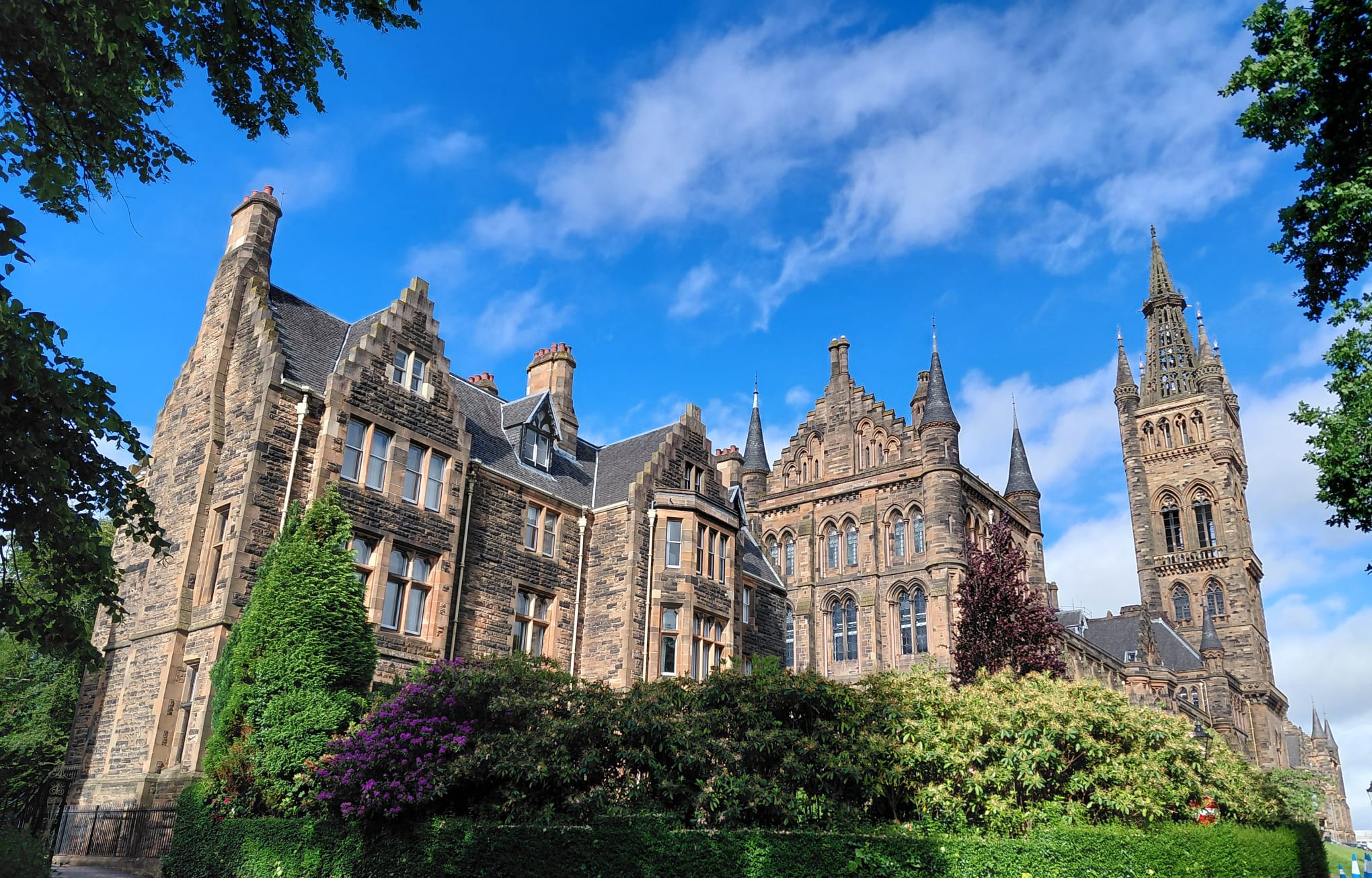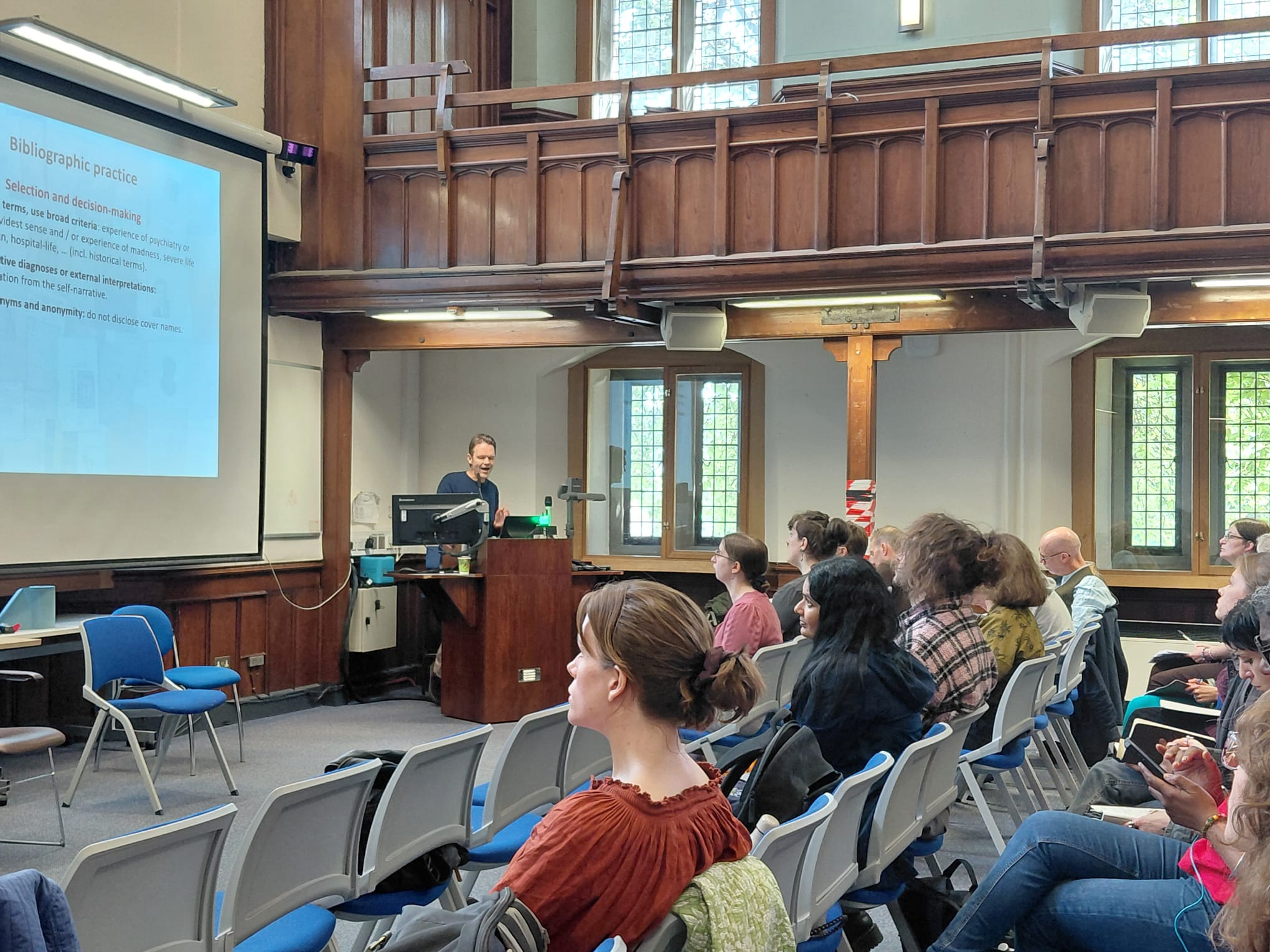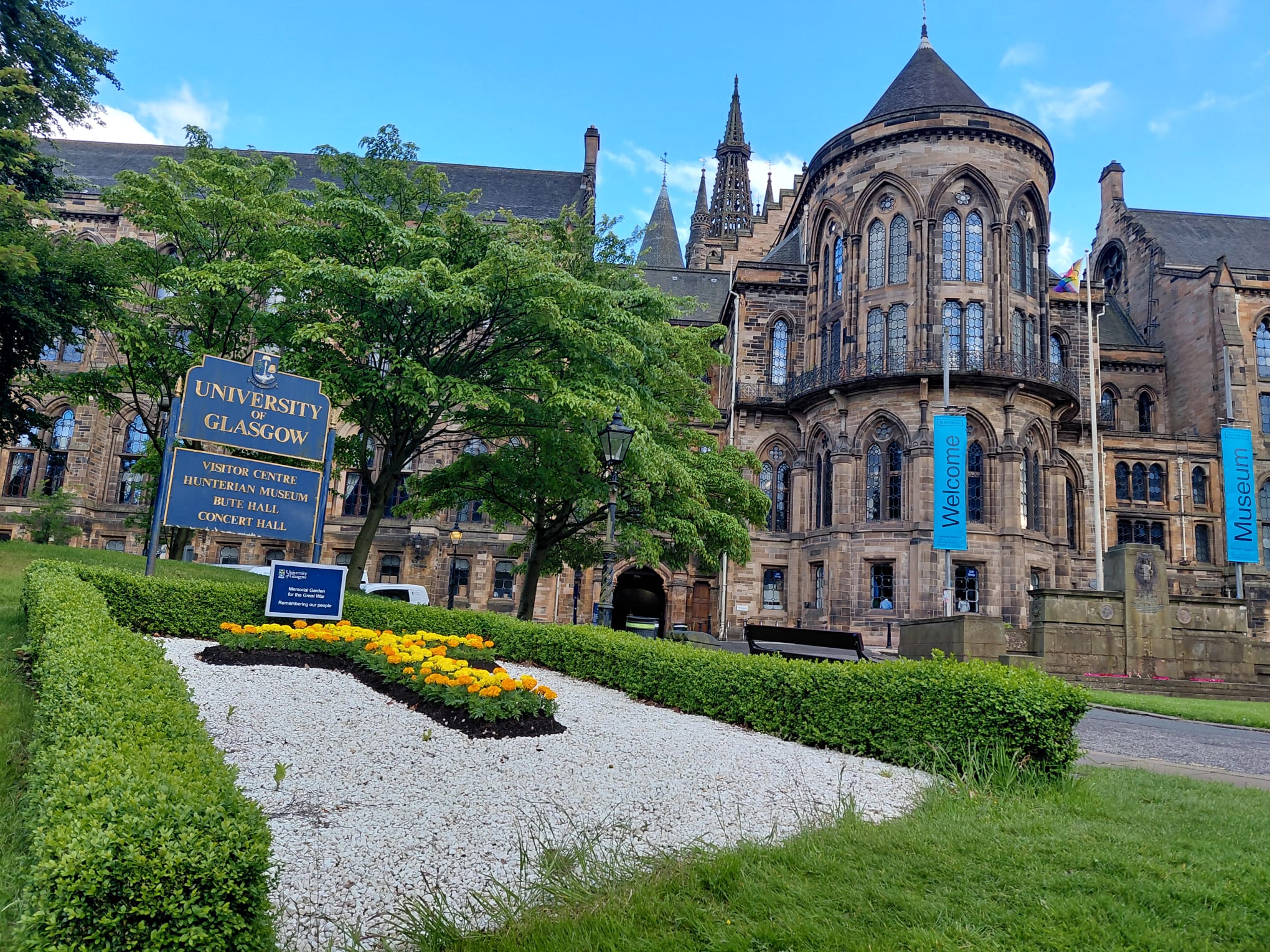


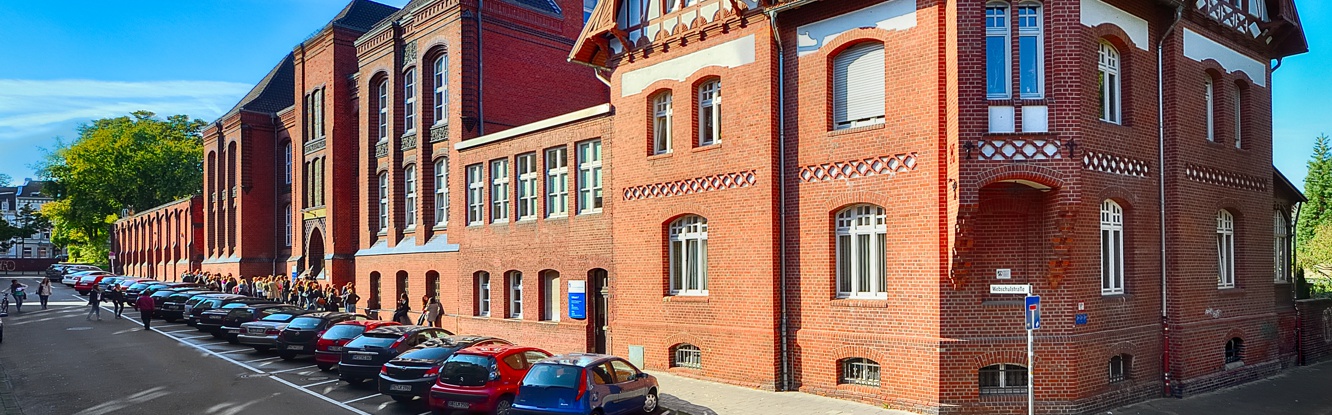


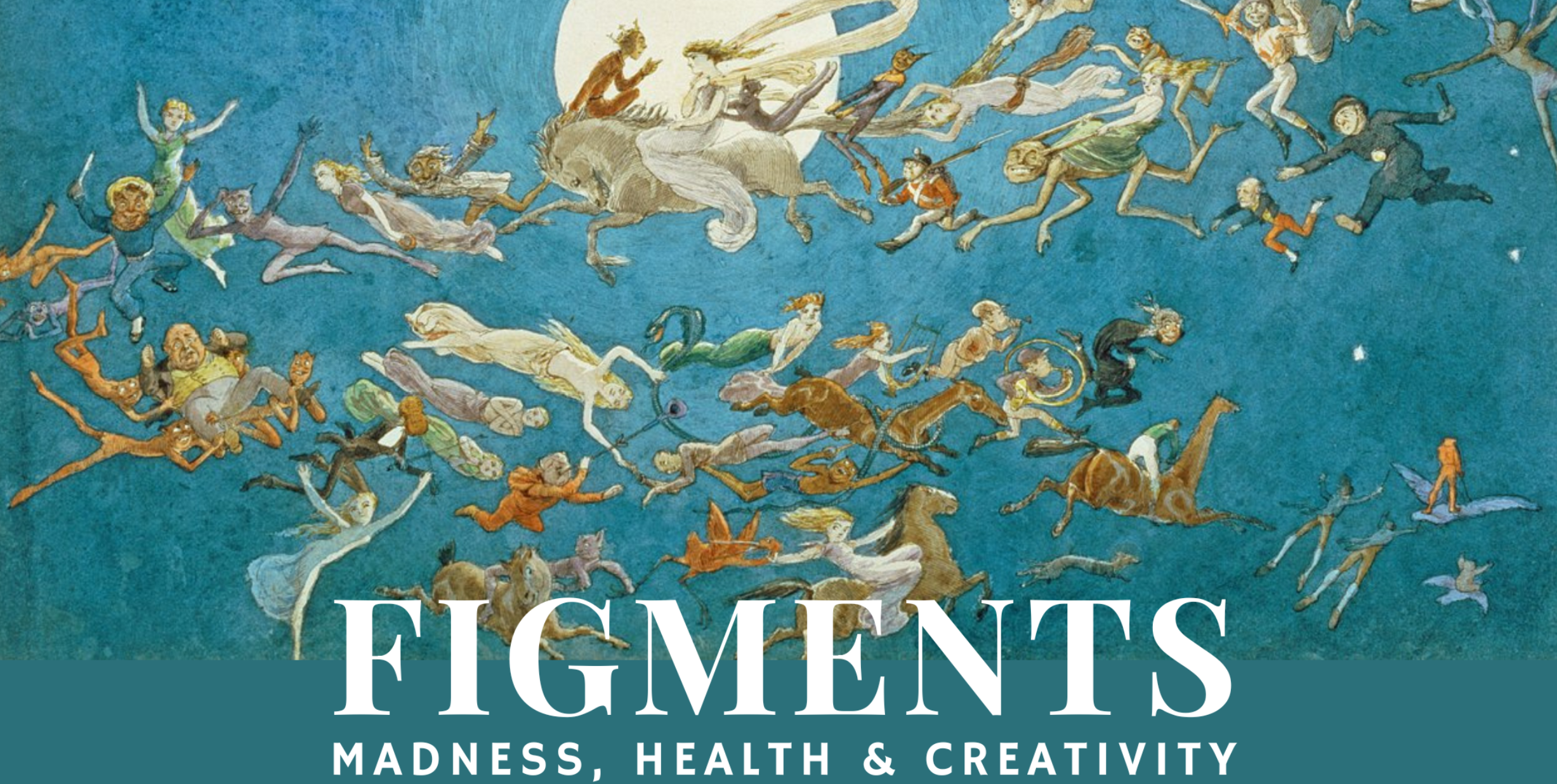
Is it possible to collect the life stories of people experiencing mental health crises without causing them harm? It was with this question in mind that Prof. Dr Burkhart Brückner from the Faculty of Applied Social Sciences at The Hochschule Niederrhein travelled to Scotland. The trip was supported by the faculty, which aims to promote international networking amongst its lecturers. On 15 June 2026, he spoke at the international conference‘Figments: Madness, Health and Creativity’at the University of Glasgow, representing the university’s faculty on a stage that brought together academia, the arts and activism.
His presentation centred on his latest book, *Madness and Hospitalisation: A Bibliography of German-Language First-Person Accounts, 1800–1999* (Psychiatrie Verlag, Cologne, 2025). In it, Brückner compiles over 1,100 personal accounts spanning two centuries: experiences of people with mental health conditions and psychological crises, told in their own words. Such personal accounts are not medical records, he argues. They are literary works and part of a cultural heritage.
His lecture, ‘Bibliographing Madness’, centred on a key question: ‘Would you like your story to be on the list?’ How can such a collection be created without retrospective diagnoses, without stigmatising categories, and without involuntary disclosure? Brückner’s answer lies in clear ethical guidelines: prioritising the authors, protecting pseudonyms and treating each individual text with care.
The fact that Brückner spoke in Glasgow at all stems from a previous collaboration. Dr Mila Daskalova, co-organiser of the conference and a fellow at the School of Critical Studies at the University of Glasgow, translated a biography from the Biographical Archive of Psychiatry into English several years ago. Brückner had founded this archive in 2015: www.biapsy.de. Years later, that translation led to an invitation.
“The conference was extremely inspiring. In particular, the interdisciplinary format – with academic, artistic and activist contributions side by side – provided me with important impetus for my future work.”
— Prof. Dr Burkhart Brückner
For the Faculty of Applied Social Sciences, Brückner sees this as offering more than just international visibility. The encounters in Glasgow provided concrete ideas for teaching education and research: a closer integration of social work and cultural education, for example, or the involvement of those affected in participatory and inclusive care models.
The conference brought together researchers, specialists and activists from the UK, Canada, the USA and Germany. The 27 presentations focused on the role of creativity and art in psychiatric and psychosocial care, the involvement of people with lived experience of mental health issues, and the power of storytelling in understanding mental health crises. The conference was organised by the Medical Humanities Research Centre at the University of Glasgow and the Centre for Mad Culture UK.
It is precisely this link between research, art and practice that the Faculty of Applied Social Sciences aims to strengthen. Conference trips such as the one to Glasgow bring international perspectives directly into studies and teaching education, and demonstrate the crucial role that applied science plays in shaping the professional identity of social work practitioners.