GEMIT
Institute for Business Process Management and IT

Hochschule Niederrhein. Your way.

Institute of Business Process Management and IT (GEMIT)

The Institute of Business Process Management and IT (GEMIT) at the Hochschule Niederrhein in Mönchengladbach focuses on application-oriented research in the fields of process management, logistics, business model innovation and IT.

Keeping a finger on the pulse, the staff address both established and forward-looking topics and support companies in optimising their business processes. GEMIT combines the latest scientific findings with tried-and-tested solutions from practical application.

In doing so, GEMIT focuses on the following (core) research fields:

  • Business processes
  • Behavioural informatics
  • Data analysis
  • Technology development

Our activities include, amongst other things, setting up data pipelines, preparing data for analysis, analysing business processes, integrating new process workflows, developing sustainable business models and change management.

Research at the GEMIT Institute

Scientific research is a central component of our institute’s work. Our aim is to gain sound insights, further develop our methodologies and provide innovative solutions to complex problems. Our research activities are characterised by an interdisciplinary approach, methodological diversity and close collaboration with partners from academia, industry and practice.

Please feel free to find out more about our research activities in this section and gain an insight into the diversity of our work. Our current projects provide information on ongoing research projects and their objectives. The completed projects demonstrate the scientific findings we have been able to develop in the past.

Research areas at the GEMIT Institute

Current research projects

AUFBRUCH

Description

AUFBRUCH is an interdisciplinary doctoral programme that addresses key issues relating to a sustainable bioeconomy in the Rhineland mining region. The aim is to use interdisciplinary research to gain a better understanding of the challenges and potential of bioeconomic transformation processes and, on that basis, to generate long-term impetus for application-oriented solutions.

The cluster pursues three overarching objectives: training highly qualified specialists who can actively help shape the region’s transformation; developing technological innovations that combine environmental and economic sustainability; and fostering entrepreneurial thinking from which viable start-up ideas can emerge.

At the Hochschule Niederrhein, three research groups are working together on AUFBRUCH. Those involved are Prof. Dr Beckmann, who heads Innovation Area 5, Prof. Dr Krehl and Prof. Dr Bergstedt. PhD students and supervisors from various disciplines work closely together to contribute to the bioeconomic transformation from different perspectives.

AUFBRUCH thus sees itself as a structurally effective element in the transformation process of the Rhineland mining region, with the aim of generating scientifically sound yet practically relevant insights for a sustainable economy.

Funding

Federal Ministry of Education and Research

Partners

RWTH Aachen University, Aachen University of Applied Sciences, Dortmund Technical University, CLIB – Industrial Biotechnology Cluster, Heinrich Heine University Düsseldorf, Jülich Research Centre, Cologne University of Applied Sciences

Duration

1 April 2024 – 31 March 2028

Project responsibility and staff

Prof. Dr.-Ing. habil. Holger Beckmann
General Business Administration, specialisation: Purchasing and Logistics in Industrial Engineering and Management
Maximilian Hummel, B.Sc.
Academic staff, GEMIT Institute

Bact-Scan

Description

Microbiological food safety is crucial for protecting consumers, ensuring compliance with legal requirements and maintaining competitiveness in international trade, particularly in view of the Netherlands’ growing agricultural exports, with Germany as its most important partner. However, existing methods for bacterial detection are often time-consuming (e.g. up to 72 hours) or provide only limited meaningful results.

The Bact-Scan project is therefore developing an innovative real-time monitoring tool for the simultaneous detection of multiple bacterial contaminants. The aim is to provide a fast, precise and solution with a strong practical orientation that enables well-informed decisions to be made during the production process. This interdisciplinary project brings together sensor design (Maastricht University), data analysis and software development (ARKONI B.V., Yookr B.V.) and market launch (GEMIT Institute, Brightlands Campus Greenport Venlo B.V.). Validation is being carried out in collaboration with companies in the food industry, including Bauer Funken GmbH & Co., Wijngoed Havelte B.V. and Reestlandhoeve B.V.

Bact-Scan helps to identify risks at an early stage, optimise processes and improve food safety in the long term.


Funding

Interreg VI Germany – Netherlands


Partners

Maastricht University (Vesging Venlo), Arkoni B.V., Brightlands Campus
Greenport Venlo, Heinz Funken GmbH & Co. KG, Wijngoed en zorghoeve de Reestlandhoeve
B.V., Wijngoed Havelte, Yookr B.V.


Project duration

1 January 2026 – 31 December 2028

Business Informatics, esp. Data Engineering Academic Director DigiLab
Prof. Dr. Kathleen Diener
Business Informatics, Digital Innovation
Sinem Celik
Research assistant, Project CareProMine and InnoLoop
Sabine Molls, M.A.
Research Assistant GEMIT Institute
Tim Keienburg, B. Sc.
Wissenschaftliche Hilfskraft, Projekt Bact-Scan
Visit the Bact-Scan website

DigiMach

Description

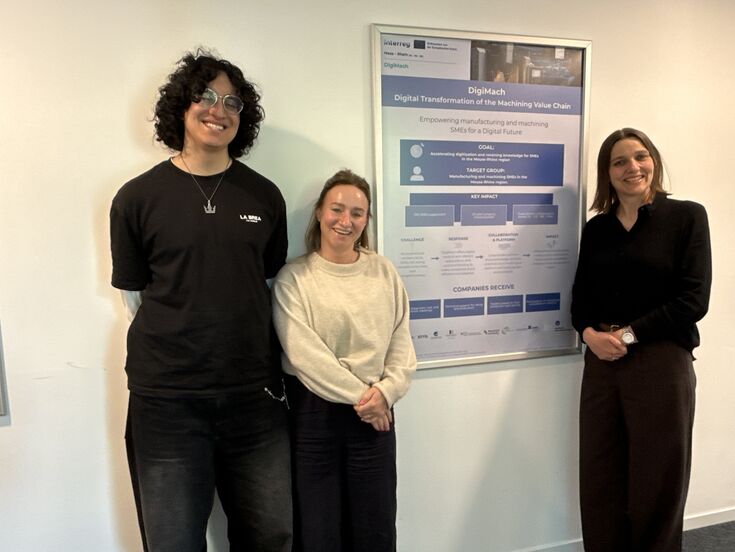
The DigiMach (Digital Machining) project addresses the uneven digitalisation and fragmentation of specialist knowledge within the mechanical engineering sector in the Meuse-Rhine region. With experienced specialists leaving the workforce and skills sets dwindling, regional industries risk losing their competitive edge and crucial know-how. It aims to enhance the digital capabilities of 150 SMEs through accessible tools, targeted training and support. Twenty pilot projects will validate these solutions in real-world environments and boost efficiency for regional manufacturers. DigiMach brings together expertise from Dutch, German, Flemish, Walloon and German-speaking East Belgian partners to tackle common challenges, strengthen competitiveness and counteract the loss of skills through knowledge transfer and training.

DigiMach is funded by the Interreg Euregio Meuse-Rhine programme and has a budget of 3.66 million euros, 50 per cent of which is co-financed by the European Regional Development Fund (ERDF), with support from public and private partners. By integrating AI, IoT and robotics, the project improves data-driven decision-making, reduces costs and promotes sustainable growth within the framework of Specific Objective SO 1.i, with a focus on innovation capacity and technology adoption. DigiMach’s holistic approach includes needs assessments to tailor digital tools and training to the challenges faced by SMEs. A multilingual digital platform supports cross-border knowledge exchange, safeguards expertise and strengthens regional competitiveness.

Funding

Interreg Meuse-Rhine (NL-BE-DE)

Partners

Sirris, the collective centre for the technology industry, Technifutur, Basse-Meuse développement asbl, WFG Ostbelgien VoG, Maastricht University, Centre de Recherches Métallurgiques asbl, ITA Academy GmbH, Campus Heerlen Management & Development BV

Duration

1 September 2025 – 31 August 2028

Prof. Dr. Kathleen Diener
Business Informatics, Digital Innovation
Business Informatics, esp. Data Engineering Academic Director DigiLab
Sabine Molls, M.A.
Research Assistant GEMIT Institute
Slim Laifi, B.Sc.
Graduate Assistant DigiMach Project
Visit the DigiMach website

InnoLoop

Description

The InnoLoop project focuses on cross-regional technology transfer, thereby promoting innovation and digitalisation initiatives in small and medium-sized enterprises (SMEs) as well as the skills development and expertise of employees in the German-Dutch border region. It builds on the activities of the predecessor projects DigiPro, IPro-N and Digitrans, which, between 2017 and 2022, forged links between German and Dutch stakeholders and established a network to support SMEs in the programme area in developing digital innovations.

By building a shared knowledge base, InnoLoop fosters the innovation potential of all stakeholders involved in the transfer process and opens up new opportunities for value creation. The key instrument is a series of German-Dutch model innovation projects focusing on high-tech fields such as industrial robotics, artificial intelligence, the Internet of Things (IoT), additive manufacturing and virtual reality. In addition to technological development, the project partners benefit from intensive expert support during the technology transfer process. Furthermore, InnoLoop is developing a learning, cross-border innovation ecosystem that connects expertise and stakeholders on both sides of the border, synergistically integrates existing regional initiatives, networks and clusters, and brings together all relevant sectors from research through development to industry. A web portal supports this process by providing information with a practical orientation, such as guidelines, tools and partner matching services.

Funding

Interreg VI Germany – Netherlands

Partners

Oost NL, Münster University of Applied Sciences, TCNN, Milliarum, Saxion, MCC, Emsland GmbH

Duration

1 December 2023 – 30 November 2027

Project responsibility and staff

Asst. Prof. Dr. Senem Yazici
GEMIT Institute, Digital Innovation Lead: InnoLoop Business Administration and Economics, specialisation: strategy and corporate management, organisational culture and information management
Business Informatics, esp. Data Engineering Academic Director DigiLab
Jan Langen, M.Sc.
Academic staff, GEMIT Institute
Andrea Nio
Institute Assistance GEMIT
Sinem Celik
Research assistant, Project CareProMine and InnoLoop
Visit the InnoLoop website

KPF Industry_I4.0

Description

The INDUSTR_I4.0 Small Projects Fund provides targeted support to small and medium-sized enterprises (SMEs) in the German-Dutch border region to drive forward the digital transformation in industry and the skilled trades sector. Unlike many programmes, INDUSTR_I4.0 is not aimed at technological pioneers, but at the vast majority of SMEs that have so far benefited little from Industry 4.0 technologies. Despite growing digital opportunities, according to Radboud University, only 15 per cent of entrepreneurs use advanced technologies. Many digital developments remain isolated, with no connection to other solutions – a challenge that causes smaller businesses in particular to fall behind.

With funding of 10 million euros, the aim is to implement around 80 innovation projects and 80 feasibility studies focusing on specific applications of digital technologies – such as AI for optimising products and business processes. The aim is to support up to 200 companies in embarking on their digital transformation. Close cooperation between German and Dutch partners is a prerequisite for this. The project is being carried out as part of the Interreg VI Germany-Netherlands programme and is co-funded by the EU as well as numerous regional ministries and provinces.

Funding

Interreg VI Germany–Netherlands

Partners

Oost-NL, TCNN Technology Network, Emsland GmbH, MCC Cluster e.V., Münster University of Applied Sciences, Saxion University of Applied Sciences, TAFH Münster, BOM

Duration

1 January 2024 – 31 December 2027

Project responsibility and staff

Asst. Prof. Dr. Senem Yazici
GEMIT Institute, Digital Innovation Lead: InnoLoop Business Administration and Economics, specialisation: strategy and corporate management, organisational culture and information management
Jan Langen, M.Sc.
Academic staff, GEMIT Institute
Visit the KPF Industr_I4.0 web

SpoHF

Description

Digitalisation is playing an increasingly important role in the agricultural and food sector. Some farms are already using digital applications to produce more sustainably and to a higher standard, as well as to make work processes more efficient. To specifically promote this transition in the Euregio, the ‘Sustainable Production of Healthy Food (SPoHF)’ project was launched. Unlike many similar initiatives, SPoHF focuses not only on economic efficiency and yield optimisation, but also on environmental aspects and improving product quality in the interests of healthy eating.

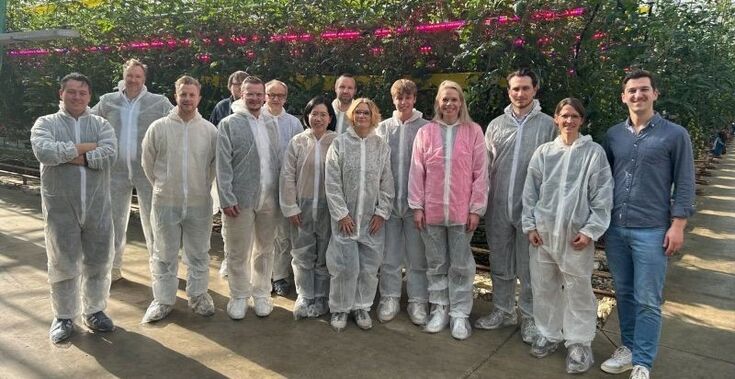
The project concentrates on fruit and vegetable cultivation, both in greenhouses and in the open field. To improve quality in a targeted manner, individual plants are monitored using digital twins, which enables digital monitoring in addition to physical inspection. Based on these twins and through the use of artificial intelligence, it is possible to simulate, automatically suggest and monitor both the current condition of the plant and the potential effects of measures such as irrigation or lighting. In particular, the project is investigating energy-saving measures relating to humidity control, lighting and pest control, as well as the more precise use of weather data. The effectiveness of these measures is verified through laboratory and on-site analyses of product samples. In this way, SPoHF enables the more sustainable and targeted cultivation of healthy agricultural produce.

Funding

Interreg VI Germany – Netherlands

Partners

AppComm, Brightlabs, Compas Agro, Fontys Venlo, ProcEvolution, Vitarom, Yookr

Duration

1 December 2023 – 30 June 2027

Project responsibility and staff

Business informatics, especially software development
Rebecca Maria Ries, Dipl.-Logist.
Research assistant, GEMIT project collaborator
Maximilian Hummel, B.Sc.
Academic staff, GEMIT Institute
Jan Langen, M.Sc.
Academic staff, GEMIT Institute
Andrea Nio
Institute Assistance GEMIT
Visit the SpoHF website

TransBiB

Description

As part of the nationwide TransBiB project – the National Transfer and Acceleration Network for the Industrial Bioeconomy – GEMIT is working on the sub-project ‘Creation of a knowledge repository on scaling, networking and transfer’. The aim is to accelerate the transformation of industry and society in line with the principles of the industrial bioeconomy. To this end, a central, digital knowledge repository is being established to systematically collect, evaluate and make accessible existing expertise on innovative bio-based approaches.

The cross-regional pooling of knowledge, together with close collaboration with relevant initiatives, boards and committees, will create an effective transfer and networking tool. This knowledge repository is intended to serve as the foundation for the coordinated scaling up of bio-based technologies and to promote their rapid transfer into industrial practice. In this way, the project makes an important contribution to nationwide networking and the strengthening of the industrial bioeconomy in Germany.

Funding

Federal Ministry for Economic Affairs and Energy

Partners

Technical University of Munich, BIOPRO, Rosenheim University of Applied Sciences, Rhine-Neckar Metropolitan Region, BioCampus Straubing, CLIB, PHS, Karlsruhe TechnologyRegion, DBFZ, SKZ, RWTH/DWI, Biberach University of Applied Sciences, University of Greifswald, LUH

Duration

1 December 2023 – 30 September 2026

Project responsibility and staff

Prof. Dr.-Ing. habil. Holger Beckmann
General Business Administration, specialisation: Purchasing and Logistics in Industrial Engineering and Management
Thomas Waaden, Dipl.-Wirt.-Ing. (FH), M.Sc.
Academic staff, Project staff GEMIT
Visit the TransBiB website

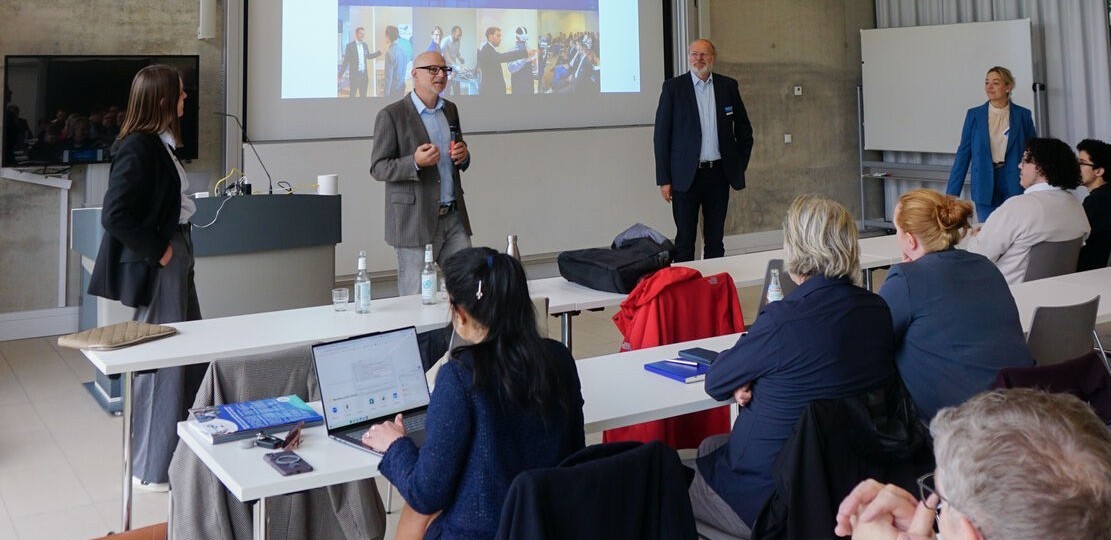
The GEMIT Institute organises the annual ‘Blauhaus Talk’, an interdisciplinary series of events showcasing current projects, research results and practical innovations. As part of the series, alongside specialist talks and panel discussions, workshops are also offered in which participants are actively involved and have the opportunity to try out new approaches and methods first-hand. The Blauhaus Talk is aimed at researchers, students, experts and industry partners, and provides a platform for exchanging ideas, establishing contacts and initiating collaborations.

Furthermore, the Blauhaus Talk provides a space for discussions on current challenges, trends and developments in technology and research. Interactive formats and presentations with a strong practical orientation foster direct dialogue between academia and industry and offer insights into innovative projects that are relevant to both academic and practical contexts.

A look back at the last event – Blauhaus Talk 2025

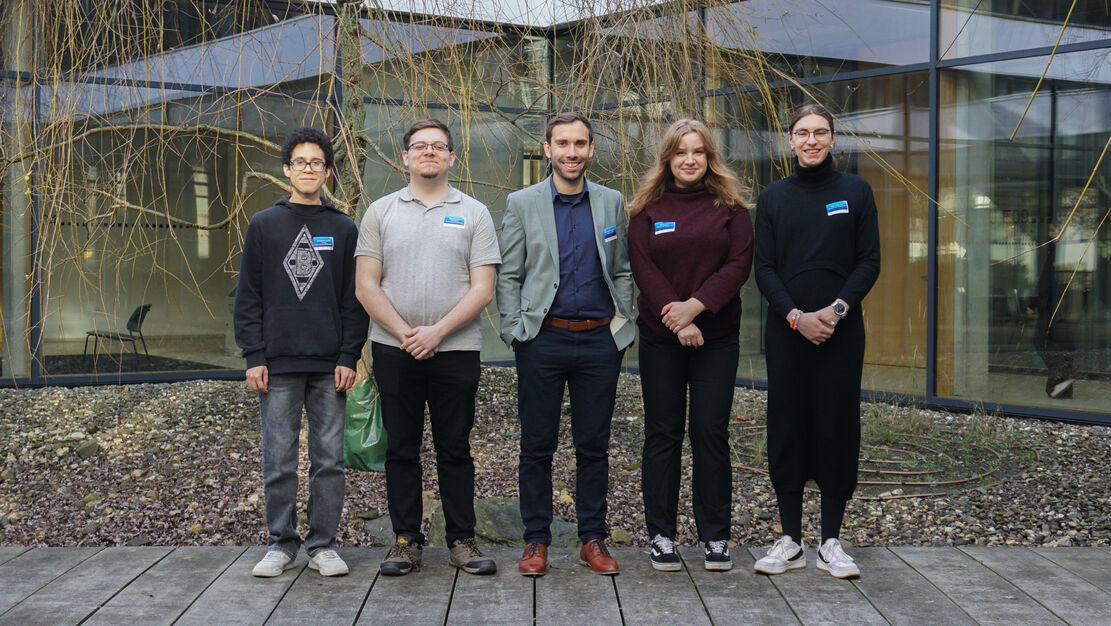
On 11 November 2025, the Blauhaus Talk 2025 took place at the Krefeld campus of the Hochschule Niederrhein. Under the theme ‘Shaping the digital future: process and business innovation through (digital) technologies’, researchers, industry partners and business representatives came together to discuss use cases for digital transformation.

The event featured keynote speeches, workshops and interactive sessions that provided insights into digitalisation, AI and innovative approaches to value creation. Networking sessions also provided opportunities for exchange, forging new contacts and discussing joint project ideas.

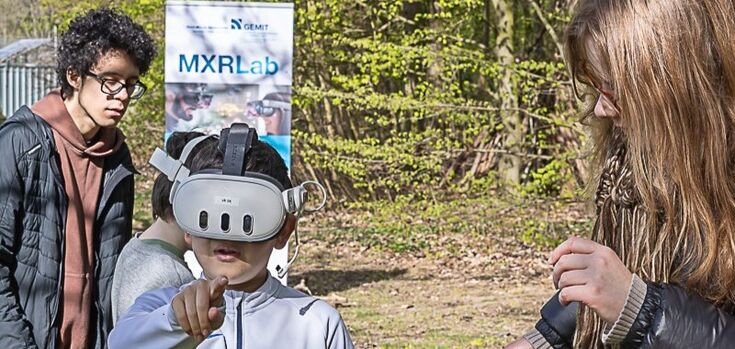
The MXR Lab (Mobile Extended Reality) at the GEMIT Institute of the Hochschule Niederrhein, headed by Dr Lennart Hofeditz, is an interdisciplinary research laboratory for Extended Reality (XR). Here, researchers, students and companies work together to develop virtual worlds using Augmented Reality (AR), Virtual Reality (VR) and Mixed Reality (MR) in order to design innovative applications for education, industry and societal challenges.

Core research areas:

  • Orientation in virtual worlds
  • Interaction with AI assistance systems
  • Gamification & sustainability
  • Social materiality in virtual shopping environments

For students
Students are invited to contribute their own ideas to XR projects. In particular, students of Business Informatics, Computer Science and related faculties can carry out projects, research work or theses with a practical orientation.


For partners and businesses The MXR Lab also collaborates with businesses, public institutions and research partners to develop prototypes, conduct practically oriented studies or test innovative XR applications.

Contact person at MXR Lab

Prof. Dr. Kathleen Diener
Vice President Research & Transfer
Postdoc Tandem Niederrhein

Current projects

WaldXR

Description

The project ‘XR Environmental Education in Mönchengladbach’s City Forest’ investigates how immersive technologies can be used to redesign environmental education for children and young people. The focus is on developing and evaluating a prototype XR discovery trail that enriches real-world forest environments with digital information and interactions. The aim is to promote environmental awareness through direct experience and to convey complex ecological relationships in a clear and engaging way.

As part of a feasibility study, the MXR Lab is working with mags to develop an initial functional demonstrator for mixed-reality applications on mobile headsets. In particular, approaches such as gamification and digital nudging are being integrated to encourage sustainable behaviour. The results will serve as the foundation for potential scaling up.

Funding:

Federal Ministry of the Interior, Building and Community (BMI) as part of the Smart City Mönchengladbach initiative

Partner:

mags AöR

Smart City Mönchengladbach

Duration:

1 June 2025 – 31 May 2026

Postdoc Tandem Niederrhein
Kate Kaufmann
Nicole Maier
Alessandro Carrillo
Mohamed Ahabbal

PLAYGROUND-XR

Description

The “PLAYGROUND-XR” project investigates how extended reality can be used to actively involve children and young people in urban planning processes. The aim is to develop an XR demonstrator for the design of playgrounds.

The demonstrator enables play equipment and landscape features to be positioned and visualised in mixed reality. Workshops and user tests provide insights into its use and acceptance.

Funding:

Federal Ministry of the Interior, Building and Community (BMI)

Partners:

mags AöR

Smart City Mönchengladbach


Duration:

1 February 2026 – 31 July 2026

Postdoc Tandem Niederrhein
Nicole Maier

ShopAI

Description

The “ShopAI” project investigates how immersive technologies and AI agents are transforming virtual shopping environments and what impact this has on consumers’ self-perception and identity. The focus is on how people navigate hybrid realities involving physical, virtual and AI-generated actors, and what so-called ‘reality anchors’ are required to ensure orientation and trust in virtual retail spaces.

To this end, the MXR Lab is developing experimental virtual shopping environments in which AI-based assistants, digital products and immersive interactions are systematically investigated. Building on the concept of sociomateriality, the project analyses how technological artefacts and social interactions interact.

Funding:

Internal project funding from the Hochschule Niederrhein

Partner:

The Hochschule Niederrhein (Faculty of Textile and Clothing Technology)

Associated partners:

AI Village Rheinisches Revier

FYNCH-HATTON

Duration:

1 January 2025 – 30 June 2026

Postdoc Tandem Niederrhein
Eralp Benjamin Akkoyunlu
Kate Kaufmann

Virtue Signalling through AI Influencers

Description

The project investigates how AI-generated influencers are transforming digital communication and marketing strategies in the fashion sector, and what ethical and societal implications this entails. The focus is particularly on ‘virtue signalling’ and consumers’ perceptions of authenticity and trust in AI-driven communication environments.

As part of a German-Australian collaboration, the project combines social media analyses, experimental studies and prototypes of AI influencers. The aim is to develop recommendations for action for businesses and regulators, as well as to generate scientific insights into the perception of AI in digital marketing.

Funding:

DAAD PPP

Partners:

University of Melbourne

The Hochschule Niederrhein (Faculty of Textile and Clothing Technology)

Duration:

2 January 2026 – 31 December 2027

Business Informatics, esp. Data Engineering Academic Director DigiLab
Postdoc Tandem Niederrhein
Sinem Celik
Research assistant, Project CareProMine and InnoLoop

The Human Factors Engineering & Production Management Laboratory at the GEMIT Institute combines psychological research, technological innovation and teaching with a practical focus to create a forward-looking environment for human-technology interaction in production management. The focus is on experimental investigations into human experience and behaviour, as well as the design of intuitive, safe and efficient interfaces for modern work and production systems.

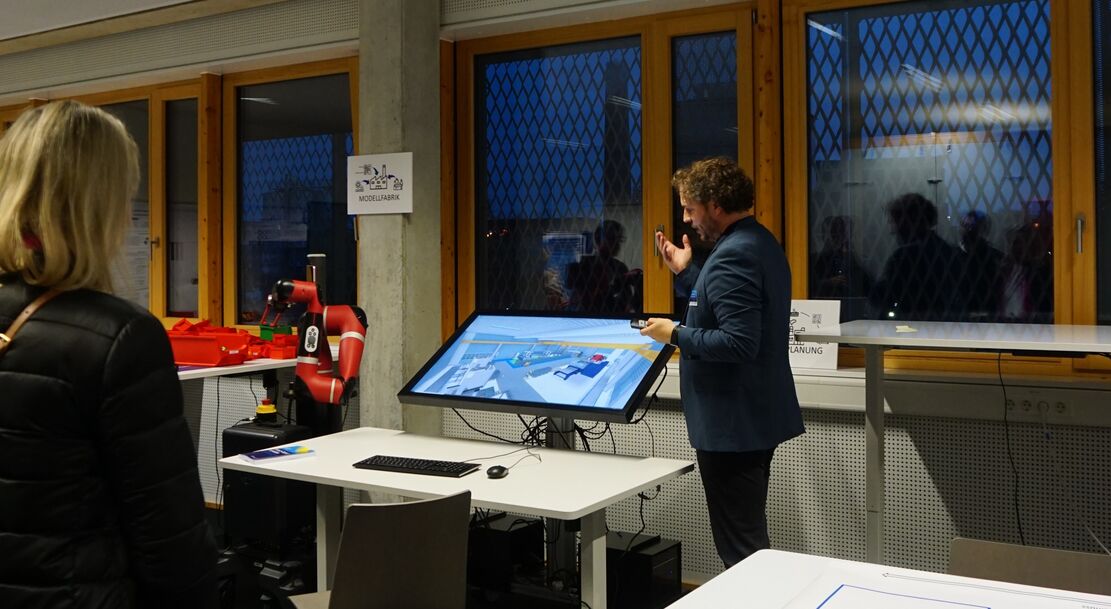
Equipped with humanoid and collaborative robots, eye-tracking systems and versatile simulation and simulation game environments, the HEP LAB opens up a wide range of opportunities for research projects, teaching formats and collaborations with industry. In this way, the laboratory creates a space in which scientific findings are directly incorporated into the design of user-friendly and high-performance technical systems.


For students The HEP LAB is closely integrated into the teaching education for Industrial Engineering and offers early insights into human-technology interaction. In the Bachelor’s programme, the Human-Technology Interaction specialisation can be chosen from the third semester onwards, whilst the Master’s in Production and Logistics offers practical orientation in the form of advanced courses that combine theory with application.


For businesses The HEP LAB cooperates closely with businesses and strengthens the transfer of knowledge between research and practice. Industrial challenges are addressed through joint projects and research – supported by modern laboratory equipment and scientific expertise.

Contact

Prof. Dr.-Ing. Patrick Pötters
Industrial Engineering - Human-Technology Interaction
Sumona Sen, M.Sc.
Laboratory Engineer Robotics

The DigiLab is part of Faculty 08 – Business Administration and Economics at the Hochschule Niederrhein and is the central hub for anyone with a passion for technology. It is available to all members of the university. One of the many opportunities offered by the DigiLab is the creation of prototypes for project work and theses. The open-plan, flexible space is ideally suited to design thinking and fosters creative processes.


By exchanging ideas with other creative minds, new ideas can be developed collaboratively and innovative solutions found. In addition to our internal activities, the DigiLab is also involved in public engagement and therefore offers various workshops for school pupils and teachers. Our aim is to share our fascination with technology and innovation and to explore the world of technology together.


For students

The DigiLab offers students the opportunity to apply theoretical knowledge in practice and bring their own ideas to life. In a real-world environment, they can actively test digital technologies, expand their skills and prepare themselves optimally for the demands of the job market.

Contact

Business Informatics, esp. Data Engineering Academic Director DigiLab

The GEMIT Institute’s publications bring together scientific findings from applied research in the fields of business process management, IT, logistics, business model innovation and data analysis. They are produced as part of our research and project activities and reflect current issues, methodological approaches and developments in these subject areas.

The focus is particularly on topics such as business processes, business models, data analysis and technological development. The publications address these specialisations and demonstrate how scientific methods and solutions with a strong practical orientation are linked.

The spectrum ranges from academic articles and conference papers to publications with a practical emphasis that document specific applications and results arising from collaboration with partners from academia, industry and professional practice.

Publications in the spotlight

Abstract

Intermediaries are an integral part of value creation in open innovation, particularly crowdsourcing. They connect organisations seeking external input or solutions to an innovation-related problem (seekers) with potential solution providers (solvers). To bridge the gap between the innovation problem and external sources of knowledge, intermediaries employ various search strategies and offer complementary services. Drawing on three market surveys conducted amongst open innovation intermediaries over the last decade, this chapter introduces the market for open innovation intermediaries, provides descriptive information about their value chain, outlines the professional services they offer, and comments on the ongoing challenges faced by these essential actors within the wider open innovation ecosystem.

Abstract

Conceptual modelling (CM) is a fundamental activity and discipline in many fields, including information systems, business engineering and the natural sciences. Consequently, a systematic and well-researched approach to CM education is crucial for maintaining and developing CM as both a field of research and a practice. Currently, CM as a discipline and, in particular, educational methods for teaching CM are fragmented. This study presents a bibliometric literature review that filtered over 29,000 documents and identified 1,064 publications associated with 24 (conceptual) modelling subtypes. Supplemented by semi-automatic content analysis, the study produces results that provide a comprehensive overview of the field of CM education: prevalent CM subtypes, research methods and contexts, learning theories in CM education, as well as relevant conceptual, intellectual and social structures. The findings reveal conceptual, theoretical and methodological research gaps, pointing to the potential for cross-CM subtype education. Existing intellectual and social structures that focus on a single CM subtype overlook the potential benefits of considering education in tangential CM subtypes, as evident in the conceptual structure. Future research can build on the identified gaps, opening up fruitful avenues of research to advance the field of CM education.

Abstract

Effective and efficient procurement is a key factor in a company’s success, particularly in an era of declining in-house manufacturing and development capabilities, short product life cycles, and the need for cost efficiency, sustainability and digitalisation. These rapidly changing requirements make it necessary to examine the topics of process orientation, strategy and management in procurement in greater detail. This textbook combines traditional content with today’s requirements. It clarifies key conceptual and methodological principles and their interrelationships, whilst highlighting development trends in procurement. This book provides a foundation for understanding procurement tasks from a process-oriented perspective, as well as methodological approaches to tackling these tasks.

Further publications

2024

Co-pilot or ‘crash pilot’? How can ChatGPT improve the quality of my code?

In: Java Spektrum 5/2024.

Rueffreck, M. & Schekelmann, A. (2024)


From product to platform: How incumbents’ assumptions and choices shape their platform strategy

In: Research Policy, 53(1), 104904.

Van Dyck, M., Lüttgens, D., Diener, K., Piller, F., & Pollok, P. (2024)

Read article >


Successful risk management in procurement: Processes, trends and cultural change for future-proof supply chains

Beckmann, H. & Waaden, T. (2024)


Hofstede Matters

In: Routledge Taylor and Francis Group.

Magala, S. J., Erten, C., Bell, R. M., Claes, M., Yazici, S. & Karabag, A. (2024)

Read the book >


In Memory of Geert Hofstede: A Pioneer in Comparative Cross-Cultural Management Research and Practice

In: Hofstede Matters.

Yazici, S. (2024)

Read book >


Intermediaries and Platforms for Open Innovation

In: The Oxford Handbook of Open Innovation.

Diener, K., Piller, F. & Pollok, P. (2024)

Read article >


2023

Introductory Course in Procurement Management

In: Springer Vieweg Berlin, Heidelberg.

Beckmann, H. (2023)

Read the book >


SmartParks City Hubs – The City and Regional Logistics Network of the Future

In: Towards the New Normal in Mobility.

Beckmann, H., Ries, R. (2023)

Read article >

2022

Robotic Process Automation in the Back Office – Success Factors for the Implementation of Robotic Process Automation (RPA) at Deutsche Leasing AG

In: Business Informatics & Management, 14(5), 340–346.

Pabst, S. & Karla, J. (2022)

Read article >


Digitalisation of management reporting processes – A technology-oriented maturity model for use in SMEs

In: HMD Praxis der Wirtschaftsinformatik, 59(3), 940–960.

Stoffers, P., Karla, J. & Kaufmann, J. (2022)

Read article >


A proof of concept for providing traffic data via AI-based computer vision as a basis for smarter industrial areas

In: Procedia Computer Science, 201, 239–246.

Shams, A., Schekelmann, A. & Mülder, W. (2022)

Read article >


Wearables for Quality Assurance in Manual Assembly: A Qualitative Study

In: Lecture Notes in Networks and Systems (pp. 42–49).

Wagner, K., Ries, R., Beckmann, H., Leyendecker, B. (2022)

Read article >

2021

Wearables for quality assurance in assembly by hand – A qualitative study

In: GQW Conference 2021.

Wagner, P., Pötters, P., Leyendecker, B., Ries, R.-M., Beckmann, H. (2021)


Quo in Requirements Engineering: A Theory and a Global Family of Surveys

In: ACM Transactions on Software Engineering and Methodology, Volume 28, Issue 2.

Wagner, S., Méndez Fernández, D., Felderer, M., Vetrò, A., Kalinowski, M., Wieringa, R. J., Pfahl, D., Conte, T., Christiansson, M.-T., Greer, D., Lassenius, C., Männistö, T., Nayebi, M., Oivo, M., Penzenstadler, B., Prikladnicki, R., Ruhe, G., Schekelmann, A., Sen, S., Spínola, R. O., Tuzcu, A., de la Vara, J. L. & Winkler, D. (2021)

Read article >


Strategic Sustainability through Serious Gaming: A Case Study of STRASUS

In: esearch Publications (Maastricht University), 753–762.

Xie, N. & von Zuydtwyck, R. H. (2021)

Read article >


Sustainable Packaging Logistics: Optimising Transport Cartons Along Global Supply Chains

In: CSR and Logistics: Areas of Tension between Green Logistics and City Logistics.

Waaden, T. (2021)

Read the book >


Knowledge diversity and team creativity: How hobbyists outperform professional designers in creating novel board games

In: Research Policy, 50(8), 104174.

Pollok, P., Amft, A., Diener, K., Lüttgens, D., & Piller, F. T. (2021)

Read article >

2020

Coffee Break Podcast: Experiences with production in teaching education and its use in science communication

In: kommunikation@gesellschaft 21(2).

Karla, J. (2020)

Read article >


Mobile Applications and the Development of the App Economy

In: Handbook of the Digital Economy.

Erlenwein, T., Karla, J. & Maus, D. (2020)

Read the book >

Job vacancy: Research Assistant

As a department of the Hochschule Niederrhein, we are keen to grow steadily and sustainably. We are therefore always looking for people who can enrich our team and support us in our current projects.

We welcome unsolicited applications.

Job vacancies for students

As a student, you have the opportunity to play an active role in research projects as a graduate assistant or student assistant. You will gain an insight into the institute’s general activities and work as part of a project team. The tasks you will undertake include, for example, administrative duties, specialist research, data analysis, company surveys or supporting various consultancy activities. We are always looking for students who can support us with our current projects and welcome unsolicited applications.

Bachelor’s/Master’s theses

We are always delighted to welcome students who wish to write their Bachelor’s or Master’s thesis at our institute in the fields of process management, logistics, business model innovation and IT. The institute’s directors and staff regularly propose topics related to ongoing research projects. Find out more about our current research projects and, if you are interested, please contact us by email at gemit(at)hs-niederrhein.de.

Institute Management

Prof. Dr. Kathleen Diener
Business Informatics, Digital Innovation

Profile

Prof. Dr. Kristina Rosenthal
Wirtschaftsinformatik, insb. Data Engineering Akademische Leitung DigiLab

Mehr über Prof. Dr. Rosenthal

Professors

Business Informatics
Prof. Dr.-Ing. Patrick Pötters
Industrial Engineering - Human-Technology Interaction

More about Prof. Dr. Pötters

Prof. Dr. Sue Rossano-Rivero
Sales and Marketing Internationalization Officer
Business informatics, especially software development

Academic staff

Andrea Nio
Institute Assistance GEMIT

profile

Asst. Prof. Dr. Senem Yazici
GEMIT Institute, Digital Innovation Lead: InnoLoop Business Administration and Economics, specialisation: strategy and corporate management, organisational culture and information management

Profile

Rebecca Maria Ries, Dipl.-Logist.
Research assistant, GEMIT project collaborator

profile

Maximilian Hummel, B.Sc.
Academic staff, GEMIT Institute

profile

Thomas Waaden, Dipl.-Wirt.-Ing. (FH), M.Sc.
Academic staff, Project staff GEMIT

profile

Sabine Molls, M.A.
Research Assistant GEMIT Institute

profile

Jan Langen, M.Sc.
Academic staff, GEMIT Institute

profile

Sinem Celik
Research assistant, Project CareProMine and InnoLoop

profile

Postdoc Tandem Niederrhein
Consulting
Accessibility