Library

Hochschule Niederrhein. Your way.

Welcome to the University Library!

Please enter your search term(s) and click on your campus library.
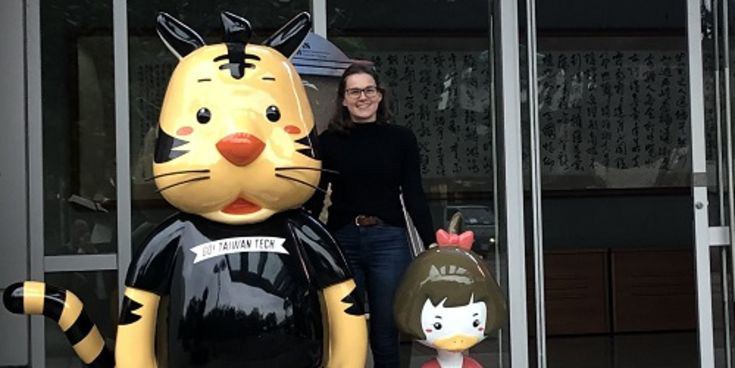
Anna in front of the NTUST

Anna - FB 09 - Taipei/Taiwan

Anna is fascinated by the people in Taiwan and also by how green it is there. She was surprised that the cities were not overcrowded.

In this report, I share my experiences and adventures from my semester abroad at NTUST in Taipei and give some tips for students who also want to spend a semester in Taiwan. Since I had already spent a semester abroad during my bachelor's degree and had only good experiences, I wanted to take advantage of the opportunities to spend another semester abroad during my master's degree.


THE PREPARATION
The search for a suitable university or college was somewhat difficult, as there were only a few partner universities and colleges for my Degree programme that would have come into question. Starting in March, I started looking and finally chose the National Taiwan University of Science and Technology (NTUST) in the capital Taipei, as it had the most courses that appealed to me and was the best fit for my e-business studies.
For the application some documents are necessary, so you have to deal with it some weeks or at best 2-3 months before the application deadline.
After the HS Niederrhein had reviewed the application documents and selected or nominated me, I was able to apply on the NTUST site in the online application system. For this application I also needed a Health Certificate, which was issued to me by a doctor. This is a certificate that I have, for example, the standard vaccinations, such as measles and rubella, and that I do not have tuberculosis. For the tuberculosis certificate, I had to see a radiologist who took an X-ray of my lungs. Not only the application itself is a longer process, but also the various vaccinations that my doctor recommended for Asia took about 4 weeks. I also got rabies, Japanese encephalitis, cholera, typhoid and polio vaccinations because I wanted to travel around Asia a bit after my semester abroad and play it safe. It was also practical and made sense, since my health insurance covered 90% of the vaccination costs (about 500€).

At the beginning of June, I finally got my acceptance for the semester abroad and I could take care of the final preparations, like booking a flight to Taipei, applying for a visa, taking out health insurance abroad.
I booked an AirBnB for the first week in Taipei with another student from the HS Niederrhein to look for an apartment on site. There are also many websites or Facebook groups where rooms are rented, but we were too suspicious, because the pictures can be many years old. We wanted to look at the rooms on site and then found a great shared apartment after 10 days, which we shared with two other Germans. In general, I can recommend living on the red or green MRT line (metro), as they are the best connection to NTUST and are close to the center.


THE SEMESTER
I landed in Taipei at the beginning of September and directly attended the orientation day, where all international students received valuable information about the university and Taiwan itself. At NTUST, the first two weeks of lectures are for orientation and course selection. You can register for courses online or attend courses you are interested in and then register for them. My course selection didn't go completely smoothly because some courses were already full or you need a code from the professor that allows you to register for the course online. I ended up taking the courses "The Strategy & Practice of International Corporate Merger & Acquisition", "Information Systems & Management" and "Social Science Research Methodologies".

The facilities at NTUST are not exceptional compared to the Hochschule Niederrhein, but there is everything you need. For the fact that NTUST is a "Technology & Science" university, I expected more extensive and modern equipment. Unlike at The Hochschule Niederrhein, and especially because many Asians speak very softly, most lecture rooms use microphones. The NTUST campus consists of the individual buildings of the various departments, as well as different small restaurants. There is also a 7-Eleven and some Taiwanese fast food chains on campus. In one of the cafeterias there are also various small food stalls, where every student can find something to his taste, for example dumplings, noodle soups, bubbletea or vegetarian buffets. At NTUST, you can spend a lot of time on campus and there are also enough retreats and seating areas for group work.


TAIWAN
When I came to Taiwan in September, the temperatures were very high. We had about 30 degrees with 80% humidity, which was a total change at first. However, as the semester progressed, the temperatures became more comfortable. In December, it even started to get cool. Due to the high humidity, the nightly 15 degrees felt more like 10 and since the buildings have no heaters, warm clothes were quite important. By the way, warm clothes are also important when touring Taiwan and hiking/driving up higher mountains.


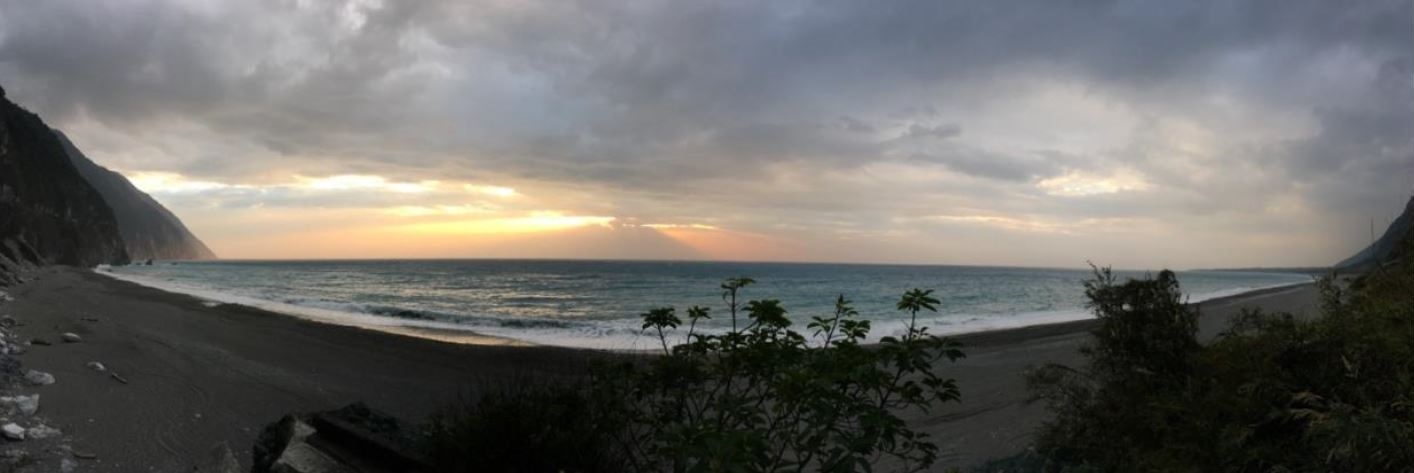
Since my classes were on Mondays, Tuesdays, and Wednesdays, I usually had from Thursday to Sunday to explore the country. Whether going to the east to the beautiful Taroko National Park, to Sun Moon Lake in the center of Taiwan, to the north to swim in the ocean, or to the south to go to various small islands, every trip I took in Taiwan was worthwhile and like no other.


Short trips by plane to surrounding Asian countries like Japan or China are also quite possible for very little money. Of course, there is also an infinite amount to see within Taipei. Alone the countless night markets, which are open from the afternoon, are worth a visit. There you can find typical delicacies and you can try your way through different stalls, preferably in a group.


From Mango Shaved Ice, a super delicious and specially prepared ice cream dish, to traditional Bubble Tea or Stinky Tofu (I haven't tried it myself, as the stench is really off-putting), to Beef Noodles, everyone will find something to their liking. At first, you have to get used to the different and new smells that hit your nose from every street corner, but that is somehow part of the flair of a new culture.


One of the first things our landlord showed us was the garbage system in Taiwan. Each household is responsible for its own waste disposal and is also strictly controlled by the garbage collectors. Plastic and glass bottles, paper, plastic waste, organic waste and 'general waste', i.e. everything that does not fit into any of the other waste, is separated from each other. In the case of organic waste, there is a further separation between food waste, which is then sold to farms for their pigs, and actual organic waste, such as banana peels. In Taiwan itself, there are very, very few trash cans, and yet the country is cleaner than any other I have traveled. Everyone is very mindful of their waste and recycles dutifully, which I found really super.


The transportation system in Taiwan is very efficient. From express trains, sleeper buses, metro (MRT), regular trains and buses, as well as cheap cabs, to per-arrivals, everything is possible, although a metro network is only available in the two cities of Taipei (north) and Kaohsiung (south). In Taipei, it is also very popular to use the so-called 'Ubike' or 'YouBike', with which you can get from A to B quite comfortably and super cheaply. The stations of these bikes can usually be found at metro stations.

It always depends on your budget how fast you travel through Taiwan. For comparison, a trip from Taipei to Kaohsiung takes four to five hours by comfortable sleeper bus (and costs about 17€), while the express train can cover the same distance in about 90 minutes, but costs about 3x as much. In addition to these public transportation options, cabs can also be taken cheaply and Uber is also present in Taiwan.


The cost of living in Taiwan is comparable to Germany, but food (at least the 'western') is much more expensive. However, you can compensate these prices with the cheap food in Taiwanese restaurants and on the night markets. My rent for my shared room was a bit more expensive than in Germany, but it was worth it because I felt super comfortable. However, you can also find cheaper accommodations.


Before I started the semester abroad, I had hardly any expectations or demands on Taiwan, I just wanted to let the country come to me. Now I can say that I am very fascinated by the nature and the people. Taiwan is super green and even within the capital Taipei you are in a green oasis after a 20-minute metro ride. For me, the country felt like a small village because all the people are so warm and helpful and it didn't really feel "crowded" in any of the cities. I think I will miss the nature and the helpful and respectful mentality of the Taiwanese the most and hope that I can maintain this in Germany.

Opening hours of the campus libraries

MG Library
Mönchengladbach Library

Richard-Wagner-Straße 140
41065 Mönchengladbach
Building N, 3rd and 4th floors

Opening hours
Mon–Fri: 8 am–10 pm
Mon–Fri: 8 am–6 pm with service staff

Sa 8 am–5 pm 


KRSüd Library
Krefeld South Library

Reinarzstraße 49
47805 Krefeld
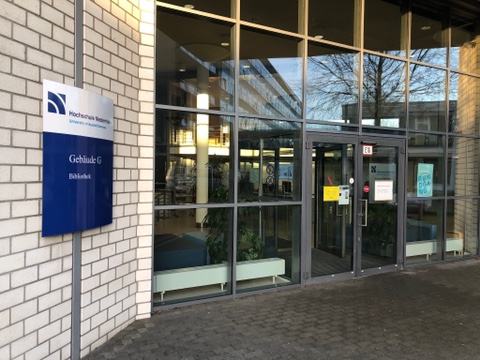
Building G

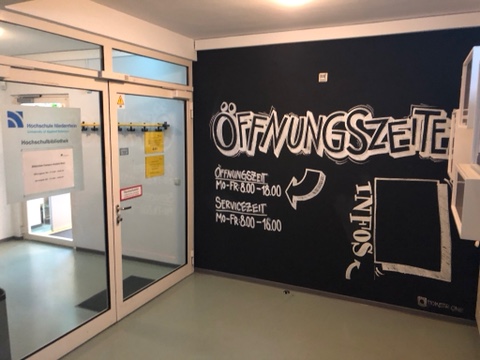
Opening hours
Mon–Fri: 08:00–20:00
Mon–Fri: 08:00–16:00: with service staff

Sat (until 1 August): 08:00–17:00

Open Library Opening hours
No service staff
Mon–Fri: 16:00–20:00
Sat (until 1 August): 08:00–17:00

KRWest Library
Krefeld West Library

Frankenring 20,
, 47798 Krefeld,
, Building N


opening hours: Mon–Fri: 08:00–18:00: with service staff on hand


How do I use the Open Library in Krefeld South?

Here is a YouTube video. Click on it to watch. The data protection regulations of google apply!

Acquisition form for students

Recommended reading for students

All students at the Hochschule Niederrhein may submit a maximum of 10 acquisition requests to the library per calendar year. Where possible, the items will be acquired as e-books. You will be notified immediately once the item has been acquired. If the requested item cannot be acquired as an e-book, it will be ordered as a printed book. You will be notified as soon as the title is ready for collection. Should a acquisition request not be possible, you will be informed immediately. 
 

The following will not be acquired:

  • Items that are already available as e-books or in the latest printed edition, or that will be available again within 14 days.
  • Items from print-on-demand publishers
  • Items costing more than 150.00 euros
  • Items last published more than 10 years ago
  • Journals, individual articles or loose-leaf editions

E-book FAQ

What is the difference between the university’s e-books and privately owned e-books?
Individual licences are usually sold by publishers for specific devices; they are not purchased by the university library. The Hochschule Niederrhein’s e-books are licensed for the entire campus, meaning they can be accessed from any device within the Hochschule Niederrhein’s IP range. Remote access is facilitated via a central login procedure.

Can I also use e-books from home?
Yes. Employees and students at the Hochschule Niederrhein need their university login details to access e-books externally, for example from their home computer.
All e-books are accessible on campus via the university’s IP addresses.

Is a print edition purchased if an e-book is not available?
Yes. If a campus licence cannot be obtained, the required copy is ordered in print form.

Am I allowed to download entire e-books?
Each publisher determines the permitted uses for its titles. Copyright law governs the handling of e-books: it determines whether (parts of) the content may be downloaded, copied or printed. An e-book may only be downloaded in its entirety if the publisher provides a link for a full download (such as SpringerLink). Individual pages or chapters may be saved, copied or printed for personal use or for research purposes. E-books must not be passed on to third parties, either electronically or in printed form. If an e-book is protected by Digital Rights Management (DRM), this protection mechanism must not be circumvented. The respective terms of use of the publishers or providers must be observed.

Why can’t I always print or save all pages?
Many e-book providers, such as Springer or de Gruyter, make their e-books available online without restrictions. However, some providers use Digital Rights Management (DRM) to limit the number of pages that can be copied, printed or saved. The University Library endeavours, wherever possible, to acquire e-books without DRM. Even e-books with DRM can be read in full online.

Do I need an e-book reader?
No. All you need is a computer (desktop, laptop, tablet or smartphone) with a web browser, internet access and a PDF reader (e.g. Adobe Digital Editions, Acrobat Reader).

Does the university library also lend out e-books?
No. The e-books purchased and licensed by the university library are always available, so there is no need to borrow them. However, it may happen that an e-book for which only a single licence for simultaneous access has been purchased is currently ‘in use’ by other users. In this case, you will need to wait until the licence becomes available again.

Can all printed titles also be ordered as e-books?
The full text as a PDF, conveniently downloadable with a single click?
The full text of every book title immediately upon publication?
Unfortunately, this is not always possible, as the providers of our commercially purchased e-books use a wide variety of formats and licence terms.

How can I find out if my e-book has been purchased?
Once the electronic resource has been successfully purchased, you will receive a link to the resource you ordered.

Information on print-on-demand publishers

Publishers such as GRIN, Diplomica, FastBook Publishing, VdM and AV Akademikerverlag, amongst others, publish seminar papers and theses using the ‘print-on-demand’ process. This means that authors release their work for publication at their own request, and the publisher prints it without checking or altering it. There is no quality control in the sense of an editorial review. A paper graded 1 can be published just as easily as one graded 6. Buyers are not informed of how the paper was assessed or whether it represents the author’s own academic work or constitutes plagiarism.

As the content of the published works generally fails to meet academic standards, the library has decided not to include publications from these publishers in its collection. We ask for your understanding.

Acquisition for employees

The form for employees' acquisition can be found on the Hochschule Niederrhein intranet.

Go to the intranet

Privacy Notice

Do you have any questions? We’ve got the answers!

Whether you need a quick piece of information or assistance with a more extensive project, we’re here to help.

Please note that we do not provide medical, legal, tax or patent advice, and all information is provided without guarantee. We do not compile bibliographies. Please renew your media loans yourself via DigiBib after logging in to your library account or at the self-service return points.


Contact us directly:
Simply pop round to one of our service desks.

  • Mönchengladbach Campus, Building N, Mon–Fri 08:00–19:00
  • Krefeld South Campus, Building G, Mon–Fri 08:00–16:00
  • Krefeld West Campus, Building N, Mon–Fri 08:00–18:00

Please email us with your enquiry or give us a call:
We’ll get back to you as soon as possible.
Or use our contact form just below this text.


Your personalised consultation appointment:

Do you have detailed questions about literature research or Citavi / Zotero?
We’d be happy to make time for you! Book your personal consultation hours!

Your enquiry to the library

Auskunft Bibliothek

Loans and use

We have put together the most important information on borrowing materials and using the library for you.

Who is eligible to borrow?

  • Members of the Hochschule Niederrhein (students, staff, lecturers) can find their digital library card in the iHN university app.
  • All residents of North Rhine-Westphalia and students at german universities can submit an application for access online (see ‘Registration’ in the Index).
  • A valid library number is required to borrow items.

Loan period / Renewal

  • The standard loan period is 28 days. The maximum loan period is 140 days. The loan period can be extended as early as the day after the item is borrowed. It is extended by a maximum of 28 days. Items on reserve and interlibrary loans are excluded from renewal.
  • For semesters spent abroad or during internship semesters, as well as for theses, applications can be made for longer loan periods (see ‘Longer loan periods ’ in the A–Z guide).

Fees and late payment

The following overdue charges apply, depending on the length of the delay in returning the item or renewing the loan:

1–10 calendar days: €2.00 per item
11–20 calendar days: €5.00 per item
21–30 calendar days: €10.00 per item
31–40 calendar days: €20.00 per item
41 calendar days or more: €20.00 + €25.00 administration fee + replacement value per medium in the event of permanent loss

Bank details and bank transfer

Please make use of the bank transfer option, providing the following details:

Payee: Hochschule Niederrhein
Bank: Stadtsparkasse Mönchengladbach
Reference: Late payment fee MG/KR / User number
IBAN: DE55 31050000 000 3425451
BIC/Swift code: MGLSDE33


What cannot be borrowed?

  • items with yellow shelf mark labels
  • Journal volumes and issues
  • Loose-leaf editions
  • items from the course reading collections

Further information ...

… please contact

Here is a YouTube video. Click on it to watch. The data protection regulations of google apply!
How does the library work?

We want to improve!

If you have any suggestions, wish to highlight an urgent need for action, or are dissatisfied, please provide us with your feedback. This enables us to take your wishes and needs into account. Our aim is continuous improvement!

You can use the form below to submit your feedback. You can complete it anonymously or provide your contact details. If you would like a response to your feedback, please provide your email address. Your details will be sent in encrypted form and treated confidentially.

Your enquiry will be dealt with within 20 working days.

You are also welcome to speak to our personnel at the service desks at any time.

Your feedback

Items not listed in the Hochschule Niederrhein catalogue can be requested via interlibrary loan from other libraries and delivered to your local library.


Collection & Return

Interlibrary loan items can be collected and returned during the library’s opening hours. You will need your digital library card in the iHN app to do this. If you do not have a digital card, you can ask at the counter for a printed card with a barcode.
 

Pick up
Your ordered items are ready for you at our pick up station. Please ensure you keep the accompanying letter together with the item.
 

Returning items to
There are two ways to return items:

  • At the collection point: Here you can return the items yourself by scanning the accompanying letter.
  • At the counter: Please hand in the item, together with the accompanying letter, directly to personnel.

Returning items to security staff is not permitted.
 

Special case: Items for reading room use only
Some rare or valuableitems may not leave the library and can only be used on the premises. You can view these items during the following times:

  • Mönchengladbach Library: Mon–Fri 08a.m.–19p.m.
  • Krefeld South Library: Mon–Fri 08a.m.–16p.m.
  • Krefeld West Library: Mon–Fri 08a.m.–18p.m.

Ordering process

Please place your order via the Digital Library (DigiBib). The order form can be found in the “Search” menue (ILL).

For detailed information on the ordering process, please refer to the help texts in the ‘Downloads’ or ‘Info’ sections.

Available to order

As a rule, media such as books, extracts from books, journal articles, CDs, CD-ROMs, Blu-rays, DVDs and much more can be ordered.

limitations

The following items cannot be requested via the interlibrary loan service:

  • Items held in the university library’s local collection, even if they are currently on loan or on the reserve list
  • E-books, e-journals, full-text databases
  • Theses (diploma or Bachelor's theses, etc.)
  • Works available in bookshops for up to 15.00 euros
  • For conservation reasons, volumes of newspapers and journals are rarely dispatched
  • Loose-leaf editions and unbound journals (copies available)
  • Works of particular value, especially those from the 16th to the 18th centuries
  • Standards and patents
  • For items published in the current year (new publications), we recommend submitting a purchase proposal, as recent literature is in high demand and rarely available

Fees

A fee of 1.50 euros is charged for each interlibrary loan request and applies even if the requested item cannot be supplied. Multiple consecutive articles must be placed as separate orders.

Delivery

You should allow an average of 10 working days for the delivery of book orders.

For essays, you will receive an email containing a download link to a PDF file, which you can access within 30 days. In exceptional cases, paper copies will still be supplied and made available for you at your chosen collection point. Please allow an average of 5 working days for the delivery of essay orders.

Loan period

The loan period is determined by the lending library’s guidelines and may vary. Extensions are not permitted. If you have any questions regarding the loan period, please contact fernleihe(at)hs-niederrhein.de.

Fernleihe
Here is a YouTube video. Click on it to watch. The data protection regulations of google apply!
How does the interlibrary loan service work?

Rules for using group rooms

  • In the interests of everyone, please avoid making unnecessary noise and keep the noise level to a reasonable level, even in the coworking spaces.
  • Food and drink (apart from drinks in securely sealable bottles) are not permitted.
  • Please leave the room clean and tidy.
  • You can borrow whiteboard materials from the supply shelf under ‘Library of Things’. Please check them out using the self-check-out machine. The boxes must be returned on the same day.

Booking

  • Click on the relevant timetable for your campus on the right.
  • Log in using your university ID and the corresponding password. Enter the university ID of a second person.
  • Booking takes just two clicks. The first click selects the start time, the second click the end time. After the first click, the available booking slot of 3 hours appears in coloured boxes.
  • For bookings for the current day or the following day, the second person must complete the registration process using their university ID and corresponding password. For bookings made further in advance, the second person’s university ID is sufficient; in this case, the room is merely reserved. The second person must confirm the booking by entering their password in the booking portal no later than two days before the desired date; otherwise, the reservation will lapse.
  • You will receive a booking confirmation. Please keep this email so that you can produce it on request.
  • Bookings can be made up to one week in advance. A maximum of 3 hours per day per person can be booked. If you have several bookings in one day, there must be a break of at least 2 hours between them.
  • Your right to the booking will lapse if you do not occupy the reserved room by 15 minutes after the booked start time at the latest.

Cancellation

  • Click on ‘Login’ and log in.
  • In the booking calendar, click on the booking you wish to cancel; this booking will be displayed.
  • Cancel.
Unsere Bibliothek ist Mitglied im Deutschen Bibliotheksverband
Consulting
Accessibility