

Challenge
How can social work students learn the skills to understand deviant behavior, mental disorders, crisis trajectories from the perspective of bio-psycho-social interrelationships collaboratively in a digital seminar without face-to-face client:ing interaction?
Solution
New development of a case-based seminar, in which weekly connected case videos introduce to a problem, which can be solved only collaboratively in the small group and is consolidated in the further course by regular exchange with the other groups.
Advantages
- Students develop a sense of responsibility and commitment through identification with the focus small group and recognize that weekly elaboration is relevant to the individual and overall group process.
- Through the interrelated case scenarios, students learn to analyze factual contexts from multiple perspectives.
Details
- This is the Master's module Biopsychosocial Models of Human Experience and Behavior of the 1st semester of the Master's degree programme Psychosocial Counselling and Mediation at the Department of Applied Social Sciences.
- The module is designed as an interactive online module as well as (online) face-to-face seminar.
- In the first (online) face-to-face seminar, the students will be divided into five or six groups into a total of 5 "evaluation teams".
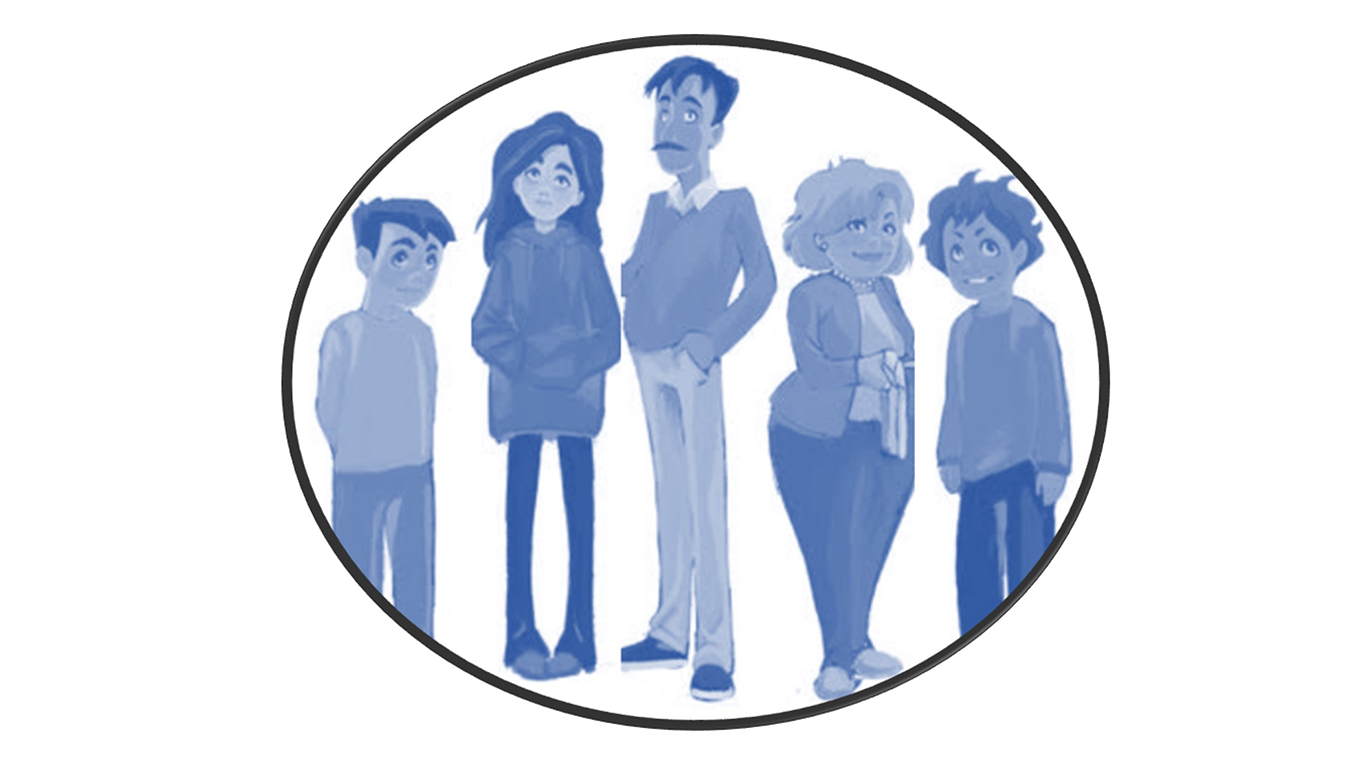
- The students will then work on case constellations of a fictitious family with problematic situations in the teams for the upcoming seminars; in doing so, the groups must accompany one of the 5 family members throughout the entire seminar and evaluate the emerging events with reference to this "focus person".
- As a group, the students have to work on each case (also of the other family members) in interactive self-study every week, always answering the 9 questions from a bio-psycho-social point of view.
- The students bring their solutions to the questions as a group to the (online) face-to-face seminars.
- In the first part of the seminar, the students are each given a time slot of 45 minutes to discuss their results and questions with members of the respective other groups and then a second time slot (20 minutes) with their focus group to record relevant findings from the discussions with the other groups for the respective focus person in the so-called "case documentation".
- In the plenary, the students then have the opportunity for a short joint discussion of new aspects and for a brief teacher feedback.
- In the second part of the seminar, the respective teacher present will deepen case-independent relevant content-related, theoretical topics of their discipline, which are relevant for a multi-perspective understanding of the case from a bio-psycho-social perspective.
- On the last seminar date, the groups are to submit a video of a case conference as a test performance, which the groups create independently on the two previous dates.
- For this purpose, the groups will receive a different role play assignment with distributed roles in advance. (Each member of the group must play the role of a family member or a counselor).
- In the INTERACT media lab (R101/R102), the groups can create a role-play video on a fixed date or they can find another location on their own.
- The case conference videos will be uploaded on Sciebo for all seminar participants to enable a final presentation.
- The individual examination performance consists - based on the role play - of a two-part portfolio of a maximum of 10 pages, in which the students reflect on their own role from the role play in the first part and discuss an elective topic theoretically and scientifically in the second part and present its significance for the above-mentioned family.
- The students choose the elective topic from a given pool of topics.
Teaching/learning methods and/or digital media
- Moodle exercise rooms with different group rooms for the respective focus groups.
- interactive video explaining the seminar process and exam performance
- 10 linked case videos / trick animations with 9 questions each to prepare for the next session
- use of a portfolio template
- Use of a collaborative board to record group findings
Stumbling blocks
- Explaining the seminar concept follows a structured scheme and the seminar has a high degree of complexity. Solution: With an interactive explanatory video that is always available, the pressure is taken off the students to have to understand everything immediately.
- Moodle room maintenance, scheduling of groups, enabling of the collaborative board, scheduling of exchange groups requires the use of a seminar tutor.
- The weekly structure of the inverted/flipped classroom needs to be well instructed, as well as that teachers hold back in the exchange part of the seminar - and explicitly move feedback and coaching to the development times - otherwise there is a risk of establishing a consumer attitude.
Recommendation
- Give students responsibility for their learning success.
- A participatory teaching attitude is beneficial.
Involved
Prof. Dr. med. Anne-Friederike Hübener, M.Sc., M.A.
Participating teachers: Prof. Dr. M. Borg-Laufs and Aida Kopic
participating tutors: Jonas Trenz, Lena Schmideder, Sabrina Lopes Abreu
links/references
Anne-Friederike Hübener | Donors' Association
Topic 3: Diversity and Inclusion (uni-due.de)
(16) ADHD in adulthood - YouTube
(16) Woman with hyperphagia / binge eating / binge eating - YouTube
(16) Leonie - underweight and tired of life? - YouTube
(16) Pascal - School difficulties and fear of the future - YouTube
(16) Kevin - Fear of dogs - dog phobia - YouTube
(16) Death with consequences - YouTube
(16) Dementia - YouTube
(16) Kevin - School truancy - I don't go to school! - YouTube
(16) Leonie - Suddenly pregnant - YouTube
(16) Pascal observed: Man attacks teenager - YouTube